Loniceralanzhouensis (Caprifoliaceae), a new species from Gansu, Northwest China

Abstract
Genes, proteins, chemicals, diseases, species, mutations and cell lines named across the full text — each resolved to its canonical identifier and authoritative record.
Click any figure to enlarge with its caption.
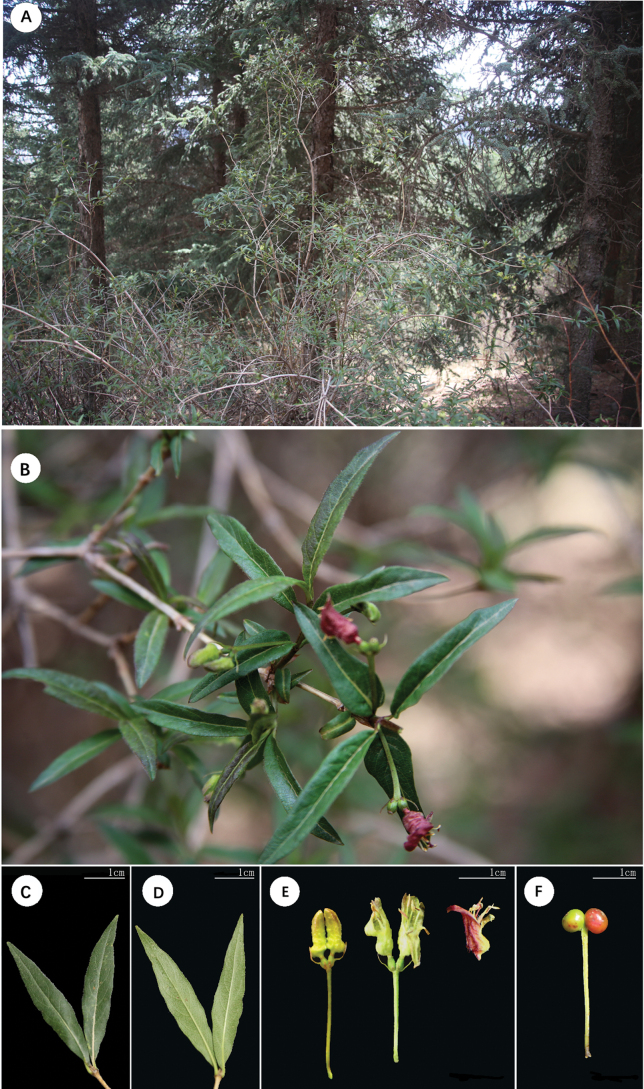 Figure 1
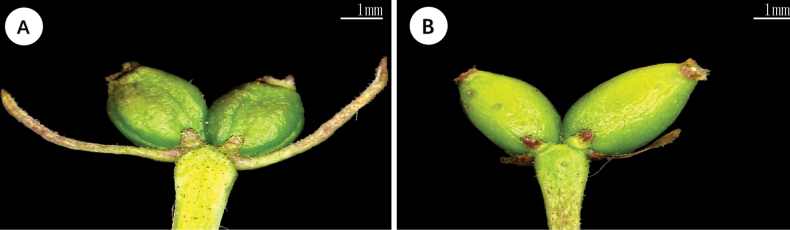 Figure 2
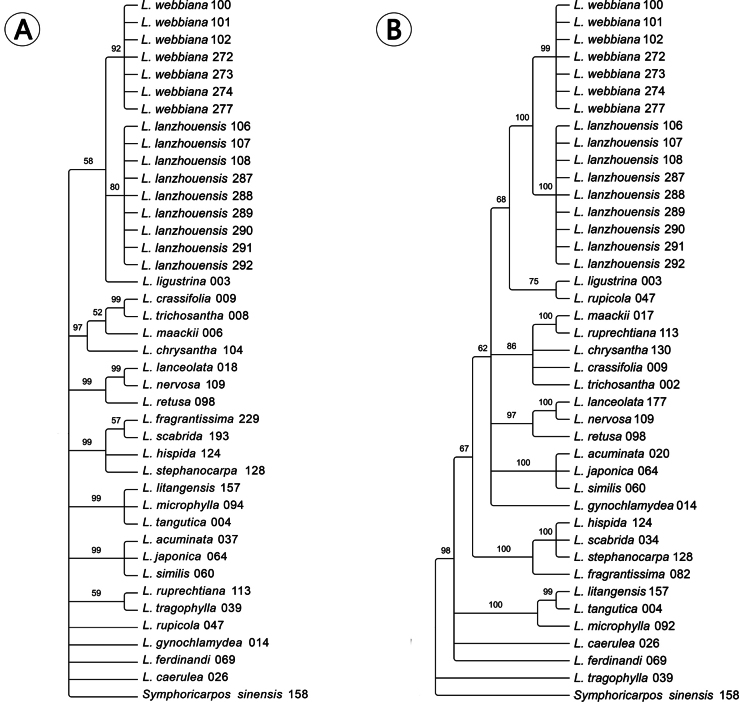 Figure 3
| Taxon | Voucher specimen | Source | Genebank NO. ( | Coordinate | ||
|---|---|---|---|---|---|---|
|
| Ruoergai, Sichuan |
|
|
|
| |
|
| Yongdeng, Gansu |
|
|
|
| |
|
| Kangxian, Gansu |
|
|
|
| |
|
| Menyuan, Qinghai |
|
|
|
| |
|
| Fengxian, Shanxi |
|
|
|
| |
|
| Muli,Sichuan |
|
|
|
| |
|
| Ruoergai, Sichuan |
|
|
|
| |
|
| Liuba, Shanxi |
|
|
|
| |
|
| Songpan, Sichuan |
|
|
|
| |
|
| Tianzhu, Gansu |
|
|
|
| |
|
| Ruoergai, Sichuan |
|
|
|
| |
|
| Shimian, Sichuan |
|
|
|
| |
|
| Liuba, Shanxi |
|
|
|
| |
|
| Huixian, Gansu |
|
|
|
| |
|
| Wenchuan, Sichuan |
|
|
|
| |
|
| Tianzhu, Gansu |
|
|
|
| |
|
| Fengxian, Shanxi |
|
|
|
| |
|
| Tianzhu, Gansu |
|
|
|
| |
|
| Jiulong, Sichuan |
|
|
|
| |
|
| Hanyuan, Sichuan |
|
|
|
| |
|
| Wenxian, Gansu |
|
|
|
| |
|
| Yi’an, Heilongjiang |
|
|
|
| |
|
| Fengxian, Shanxi |
|
|
|
| |
|
| Shimian, Sichuan |
|
|
|
| |
|
| Ruoergai, Sichuan |
|
|
|
| |
|
| Lanzhou, Gansu |
|
|
|
| |
|
| Lanzhou, Gansu |
|
|
|
| |
|
| Lanzhou, Gansu |
|
|
|
| |
|
| Lanzhou, Gansu |
|
|
|
| |
|
| Lanzhou, Gansu |
|
|
|
| |
|
| Lanzhou, Gansu |
|
|
|
| |
|
| Lanzhou, Gansu |
|
|
|
| |
|
| Lanzhou, Gansu |
|
|
|
| |
|
| Lanzhou, Gansu |
|
|
|
| |
|
| Lanzhou, Gansu |
|
|
|
| |
|
| Lanzhou, Gansu |
|
|
|
| |
|
| Lanzhou, Gansu |
|
|
|
| |
|
| Lanzhou, Gansu |
|
|
|
| |
|
| Lanzhou, Gansu |
|
|
|
| |
|
| Lanzhou, Gansu |
|
|
|
| |
|
| Wenxian, Gansu |
|
|
|
| |
Peer Reviews
No public reviews on file for this paper yet. If you reviewed it on a platform where reviews are public (OpenReview, ICLR, NeurIPS, ICML), you can paste yours below so the community can read it here.
Videos
No videos yet. Explain this paper in a talk, walkthrough, or lecture? Add one.
Taxonomy
TopicsPlant and Fungal Species Descriptions · Plant Diversity and Evolution · Plant Pathogens and Fungal Diseases
Introduction
The genus Lonicera, the second largest genus within the family Caprifoliaceae, is characterized by the combination of leaves opposite, cymes opposite and usually reduced to paired flowers, corolla 5-lobed, stamens 5, berry red, black or green. About 180 species were recognized and distributed in North Africa, Asia, Europe and North America, of which 57 can be found in China (Yang et al. 2011). Hsu and Wang (1988) proposed a system for Chinese species, largely following the world-wide monograph of Rehder (1903), by splitting the genus into two subgenera, i.e., Lonicera and Chamaecerasus. Subg. Chamaecerasus is characterized by two-flowered cymes and free leaves, whereas subg. Lonicera has three-flowered cymes in whorls and perfoliate leaves subtending the inflorescences. Subg. Chamaecerasus, consisted of 53 species, was further divided into four sections, i.e., sect. Coeloxylosteum, sect. Isika, sect. Isoxylosteum and sect. Nintooa, based mainly on habit, pith, bracteole, corolla and ovary. The most specious one, sect. Isika, consisting of 35 species, was divided into eight subsections. Among them, subsect. Alpigenae is defined by the combination of shrubs deciduous, corolla bilabiate, corolla lobes longer than tube which is shallowly gibbous toward base, style and the inner side of the gibbous densely villous. Three species were recognized in this subsection, i.e., L.fargesii, L.oblata and L.webbiana. A number of molecular phylogenetic studies have been conducted for Lonicera, while sect. Isika was recovered as polyphyletic, most subsections were proved to be monophyletic (Srivastav et al. 2023; Sun et al. 2023; Yang et al. 2024).
During our fieldwork in Lanzhou City, Gansu Province, China, several interesting specimens of Lonicera were collected. The leaf shape of these individuals was distinctly different from those of the described species of Lonicera. After careful morphological comparisons and literature consulting, we found that these specimens should be a new species belonging to subsect. Alpigenae of sect. Isika of subg. Chamaecerasus and morphologically similar to L.webbiana. The genetic differentiation and phylogenetic analysis using nuclear ribosomal internal transcribed spacer (ITS) and the combined sequences of chloroplast psbA-trnH and matK fragments supported these specimens as a separate species. In this study, we name it as Loniceralanzhouensis Shun Liu & Yu J. Wang.
Material and methods
Nine individuals of the new species were collected from Lanzhou City of Gansu province. At the same time, seven individuals of L.webbiana, morphologically resembling the new species and inhabiting similar altitude, was sampled and careful morphological comparison between the two species was made focusing especially on leaves, bract, bracteole, fruit and corolla in different periods. For phylogenetic analysis, both species, and additionally, 24 species representative of different sections of Lonicera were sampled. In total, 40 samples of ingroups and one sample of outgroup, according to the recent phylogenetic studies (Fan et al. 2018; Wang et al. 2021), were sampled and the accession number and collection information are shown in Table 1.
Total DNA was extracted from fresh leaves using the modified CTAB method (Doyle and Dickson 1987). The nuclear ribosome ITS and the chloroplast psbA-trnH and matK fragments were sequenced and submitted to NCBI following Chen and Wang (2018). We concatenated the two chloroplast fragments into one matrix and two datasets, i.e., ITS and chloroplast (CP) concatenated sequences, were used in the following analyses. MEGA 11.0.13 (Tamura et al. 2021) was used to align the two datasets and calculate the genetic distances. MrBayes 3.1.2 (Huelsenbeck and Ronquist 2001) was used to make Bayesian Inference (BI) under the GTR+G model, with 4 chains run at the same time, the temperature and other parameters of the chain took the default value. The analysis was performed 10 million times, sampling was taken every 1000 generations. The convergence of the data was detected by Tracer1.7 (Rambaut et al. 2018), which ensured that the ESS > efficiently sampled 200. The first 25% of the trees were discarded as burn-in, whereas the remaining trees were used to calculate the 50% majority consensus tree using PAUP4.0 (Swofford 2002).
Results
Besides the conspicuous difference in the shape of leaf, we further found that the new species differentiated from L.webbiana in the shape of bract. At the same time, the color of corolla varied in different periods of blossoms for the new species, but that of L.webbiana remained purple-red for most time (Figs 1, 2). The aligned ITS sequence matrix contained 742, of which 97 were varied and 39 were parsimony informative. The average distance among the ingroups is 2.08%, and ranged from 0 (between L.crassifolia and L.trichosantha) to 5.4% (between L.japonica and L.trichosantha or L.crassifolia). No intraspecies distance was detected within the new species or L.webbiana and the inter-species distance between the two species is 0.27%, identical to that between L.lanceolata and L.nervosa. The phylogenetic analysis recovered 11 well supported clades (Fig. 3), including one composed of the new species, L.webbiana (PP = 58) and L.ligustrina, but the relationship among the clades is unclear. The aligned CP sequence contained 1335 bp, of which 92 are varied and 46 are parsimony informative. The average distance among the ingroups is 1.46%. The distances between L.hispida and L.stephanocarpa (0), L.crassifolia and L.trichosantha (0.01%), L.lanceolata and L.nervosa (0.01%), L.crassifolia and L.chrysantha (0.3%) are among the lowest and the counterpart of ITS are 1.1%, 0, 0, 0.27%, respectively. The distance between L.litangensis and L.retusa (3%) is the largest with a counterpart of ITS 2.8%. The inter-species distance between the new species and L.webbiana is 0.72% and additionally, a deletion of 7-base pairs was detected in the new species. The intraspecies distance within L.webbiana was 0.02% while that within the new species is 0. The results (Fig. 3) from phylogenetic analysis are slightly different from that of ITS, such as the division of two major clades corresponding to the two subgenera. But the close relationship between the new species and L.webbiana is similarly supported in that they formed a subclade (PP = 100) sister to the subclade composed of L.ligustrina from sect. Isika and L.rupicola from sect. Isoxylosteum (PP = 68).
LoniceralanzhouensisA habitat B whole individual C adaxial surface of leaf D abaxial surface of leaf E corolla at different stages F fruit.
The comparison of involucral bracts between L.lanzhouensis (Left) and L.webbiana (Right).
Bayesian Inference (BI) based on ITS (A) and the concatenated sequences of psbA-trnH and matK (B). Posterior probabilities (PP) are indicated above branches. The digits following the species name represent the last three digits of the specimen number.
Discussion
On the basis of erect shrub, bilabiate flower with short tube gibbous on ventral side toward base, the new specie could be easily assigned to subsect. Alpigenae of sect. Isika of subg. Chamaecerasus. Phylogenetic analysis from both CP and ITS revealed that the new species and L.webbiana, a member of subsect. Alpigenae, formed a monophyletic clade within Lonicera. The genetic distances between the new species and L.webbiana, are 0.27% based on ITS or 0.72% based on CP dataset. Such a low distance, on the one hand, supported their similarity in morphology and on the other hand, imply the scenario to treat them as two varieties. But we prefer the treatment of two species in that 1) their distance based on ITS are larger than L.crassifolia and L.trichosantha, from sect. Nintooa and sect. Coeloxylosteum, respectively, 2) their distance based on CP is significant and larger than many species-pairs; 3) the morphological difference in the length of bract, the shape of leaf and the color of corolla is distinct. Therefore, both morphology and molecular evidences, including CP and ITS, are consistent and support the closely relationship between the new species and L.webbiana, and at the same time, their distinction.
Taxonomic treatment
Lonicera
lanzhouensis
Taxon classificationPlantaeDipsacalesCaprifoliaceae
Shun Liu & Yu J. Wang sp. nov.
2EC807E5-DA73-5213-A76F-7D8CF06E67A5
urn:lsid:ipni.org:names:77362013-1
Type.
China • Gansu: Lanzhou, 36.810001°N, 102.994549°E, 3012 m elev., May thirtieth, 2022, Y. J. Wang WYJ201904293 (Holotype, LZU!; Isotypes, LZU!), Figs 1, 2.
Description.
Shrub erect, up to 2 m tall. Stems cylindrical, branched. Branches solid with white pith. Petiole 1.5–2.5 cm long, inconspicuously pubescent. Leaves opposite, leaf blade narrowly lanceolate, stiffly papery, 2–4 cm × 0.5–0.8 cm, hairy, narrow, margin with irregular undulations, entire, apex tapering. Inflorescence thyrsoid, axillary, cymes opposite and reduced to paired flowers, pedunculate with a pair of bracts and 2 pairs of bracteoles; bracts long, ca. 4.5 mm × 0.5 mm, bracteoles wide and short, ca. 0.5 mm × 0.5 mm. Paired flowers with free ovaries. Pedicels 1.5–2.5 cm long, Calyx 5-lobed, with sparse glandular hair. Corolla bilabiate, yellow-green at the beginning, turns into reddish-purple after anthesis, ca. 1.4 × 0.5 cm; tube shallowly to deeply gibbous toward base, outside sparsely spreading hairy, inside puberulent; lower lip slightly recurved; upper lip 4-lobed to middle. Stamens subequaling corolla, filaments pubescent. Ovary inferior, locules 2; style ca. 1.1 cm long, slender, hairy; stigmas capitate. Fruit a berry, round, green, turns red when mature, ca. 0.6 cm in diameter.
L.lanzhouensis is morphologically most similar to L.webbiana and can be readily distinguished from it by having narrow leaves, yellow-green flowers at the beginning and reddish-purple when mature, and long involucrate bracts. In contrast, L.webbiana has ovate-elliptic to ovate-lanceolate leaves, red flowers and short involucrate bracts.
Phenology.
Flowering: May to June, Fruiting: June.
Distribution and habitat.
L.lanzhouensis is found only in Lanzhou, Gansu, China with a population of about 500 individuals. It grows in a spruce forest at elevation of 2870–3300 m.
Additional specimens examined.
China • Gansu: Lanzhou City, Yongdeng County, 36.719479°N, 102.620805°E, 3271 m elev., June 27^th^, 2018, Y. J. Wang WYJ201904106 (LZU!); • 36.712555°N, 102.631604°E, 3254 m elev., June 27^th^, 2018, Y. J. Wang WYJ201904107 (LZU!); • 36.810001°N, 102.994549°E, 3012 m elev., July 1^st^, 2018, Y. J. Wang WYJ201904108 (LZU!); • 36.726978°N, 102.603234°E, 3300 m elev., July 12^th^, 2018, Y. J. Wang WYJ201904287 (LZU!); • 36.727188°N, 102.605435°E, 3211 m elev., July 12^th^, 2018, Y. J. Wang WYJ201904288 (LZU!); • 36.7192°N, 102.621335°E, 3005 m elev., July 13^th^, 2018, Y. J. Wang WYJ201904289 (LZU!); • 36.710396°N, 102.634037°E, 2907 m elev., July 13^th^, 2018, Y. J. Wang WYJ201904290 (LZU!); • 36.707924°N, 102.635953°E, 2878 m elev., July 13^th^, 2018, Y. J. Wang WYJ201904291 (LZU!); • 36.707694°N,102.698808°E, 3297 m elev., August 19^th^, 2019, Y. J. Wang WYJ201904292 (LZU!).
Chinese name.
Lanzhou rendong (兰州忍冬).
Etymology.
The specific epithet indicates its type locality, Lanzhou City, Gansu Province, China.
Supplementary Material
XML Treatment for Lonicera lanzhouensis
The reference list from the paper itself. Each links out to its DOI / PubMed record.
- 1Chen J Wang Y-J (2018) New Saussurea (Asteraceae) species from Bogeda Mountain, eastern Tianshan, China, and inference of its evolutionary history and medical usage. P Lo S ONE 13(7): e 0199416. 10.1371/journal.pone.0199416 PMC 605157230020935 · doi ↗ · pubmed ↗
- 2Doyle JJ Dickson EE (1987) Preservation of plant samples for DNA restriction endonuclease analysis.Taxon 36(4): 715–722. 10.2307/1221122 · doi ↗
- 3Fan W-B Wu Y Yang J Shahzad K Li Z-H (2018) Comparative Chloroplast Genomics of Dipsacales Species: Insights Into Sequence Variation, Adaptive Evolution, and Phylogenetic Relationships. Frontiers in Plant Science 9: 689. 10.3389/fpls.2018.00689 PMC 597416329875791 · doi ↗ · pubmed ↗
- 4Hsu PS Wang HJ (1988) Lonicera. In Hsu PS (Ed.) Flora Reipublicae Popularis Sinicae Vol. 72. Science Press, Beijing, 143–259.
- 5Huelsenbeck JP Ronquist F (2001) MRBAYES: Bayesian inference of phylogenetic trees.Bioinformatics 17(8): 754–755. 10.1093/bioinformatics/17.8.75411524383 · doi ↗ · pubmed ↗
- 6Rambaut A Drummond AJ Xie D Baele G Suchard MA (2018) Posterior summarization in bayesian phylogenetics using tracer 1.7′.Systematic Biology 67(5): 901–904. 10.1093/sysbio/syy 03229718447 PMC 6101584 · doi ↗ · pubmed ↗
- 7Rehder A (1903) Synopsis of the genus Lonicera. Missouri Botanical Garden.Annual Report 14: 27–232. 10.2307/2400049 · doi ↗
- 8Srivastav M Clement WL Landrein S Landrein S Zhang J-N Howarth DG Donoghue MJ (2023) A phylogenomic analysis of Lonicera and its bearing on the evolution of organ fusion. American Journal of Botany 110(4): e 16143. 10.1002/ajb 2.1614336807121 · doi ↗ · pubmed ↗