Allantofuranone Biosynthesis and Precursor-Directed Mutasynthesis of Hydroxylated Analogues
Carsten Wieder, Claudia Simon-Sánchez, Johannes C. Liermann, Rainer Wiechert, Karsten Andresen, Eckhard Thines, Till Opatz, Anja Schüffler

TL;DR
Scientists uncovered how a natural compound called allantofuranone is made and created new versions of it with added hydroxyl groups.
Contribution
The study reveals the biosynthetic pathway of allantofuranone and generates novel hydroxylated analogs through precursor-directed mutasynthesis.
Findings
The biosynthetic route of allantofuranone was elucidated using genome mining and heterologous expression in Aspergillus oryzae.
Combinatorial biosynthesis produced new natural products like deoxyascocorynin, hydroxyterferol, and hydroxyallantofuranone.
AlfB was identified as the enzyme responsible for oxidative cleavage and contraction of the quinol moiety.
Abstract
Genome mining and heterologous reconstitution of biosynthetic genes in Aspergillus oryzae enabled elucidation of the hitherto elusive biosynthetic route that produces allantofuranone (1), a bioactive natural product originally isolated from Allantophomopsis lycopodina. The core non-ribosomal peptide synthetase (NRPS)-like enzyme AlfA of the alf BGC produces polyporic acid (2) from phenylpyruvic acid. In subsequent reactions, compound 2 is reductively dehydrated by the bifunctional enzyme AlfC and methylated by AlfD to produce terferol (6). In a final step, the quinol moiety of compound 6 is oxidatively cleaved and contracted by the aromatic ring cleavage dioxygenase AlfB. Using combinatorial biosynthesis, we were able to manipulate the biosynthetic route to yield hydroxylated pathway congeners, most notably the new natural products deoxyascocorynin (10), hydroxyterferol (11), and…
Genes, proteins, chemicals, diseases, species, mutations and cell lines named across the full text — each resolved to its canonical identifier and authoritative record.
Click any figure to enlarge with its caption.
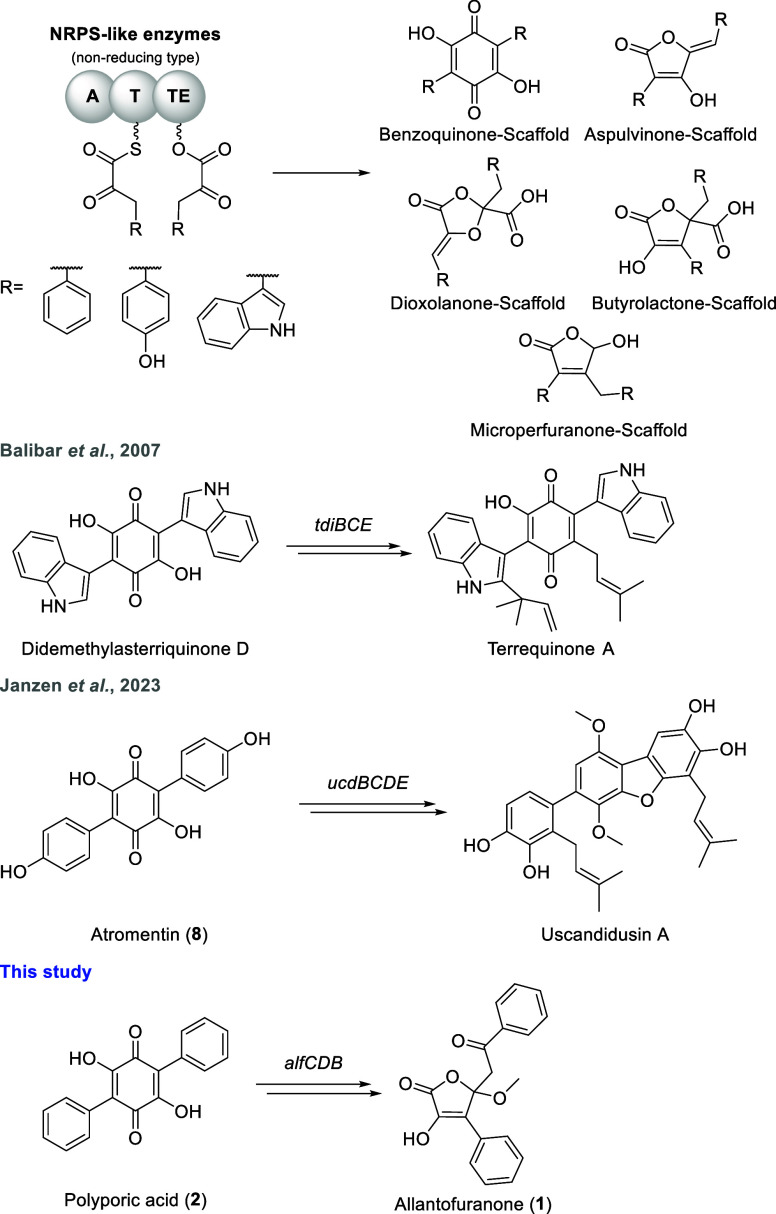 Figure 1
 Figure 2
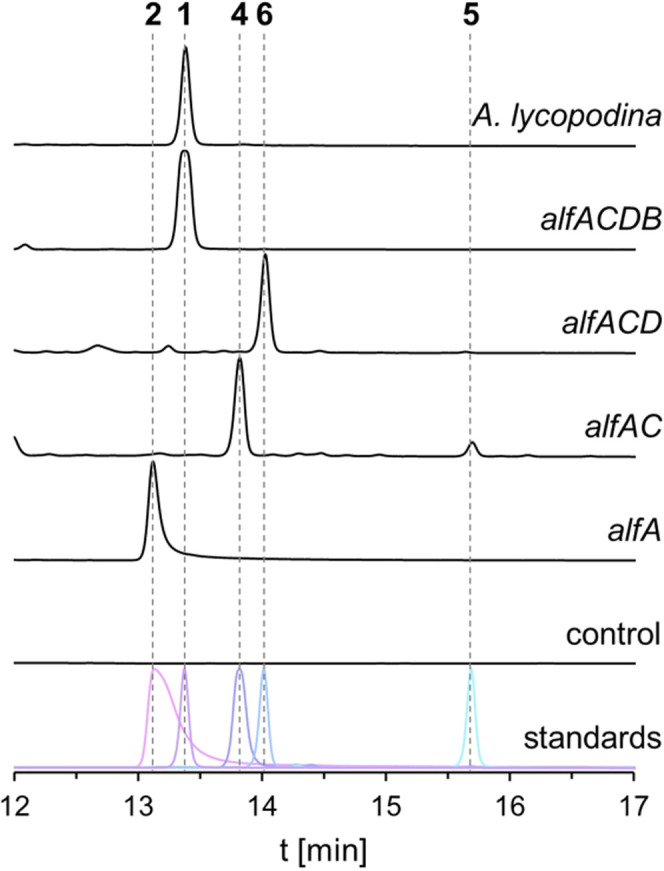 Figure 3
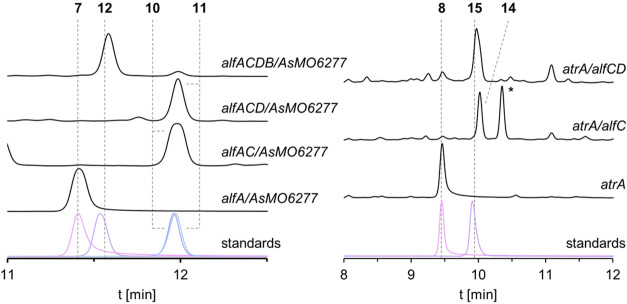 Figure 4
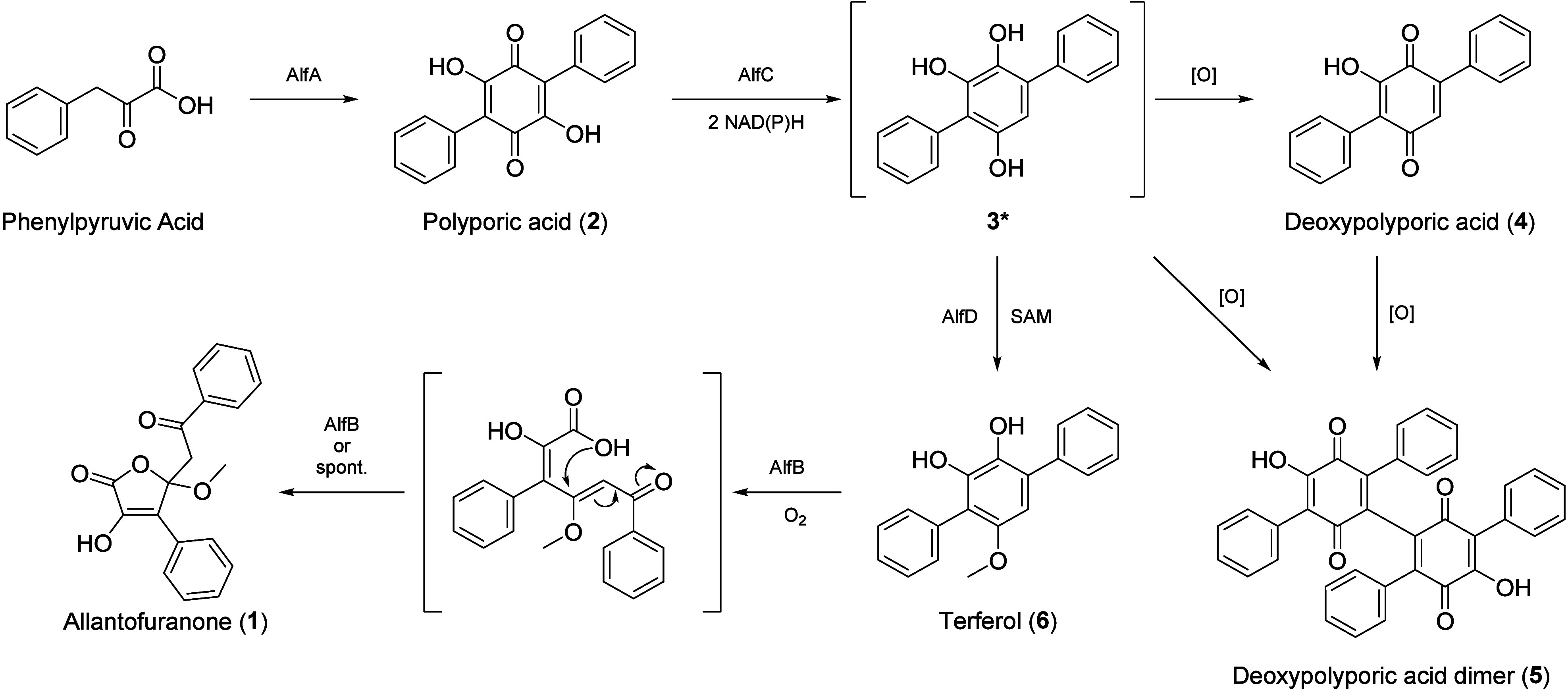 Figure 5
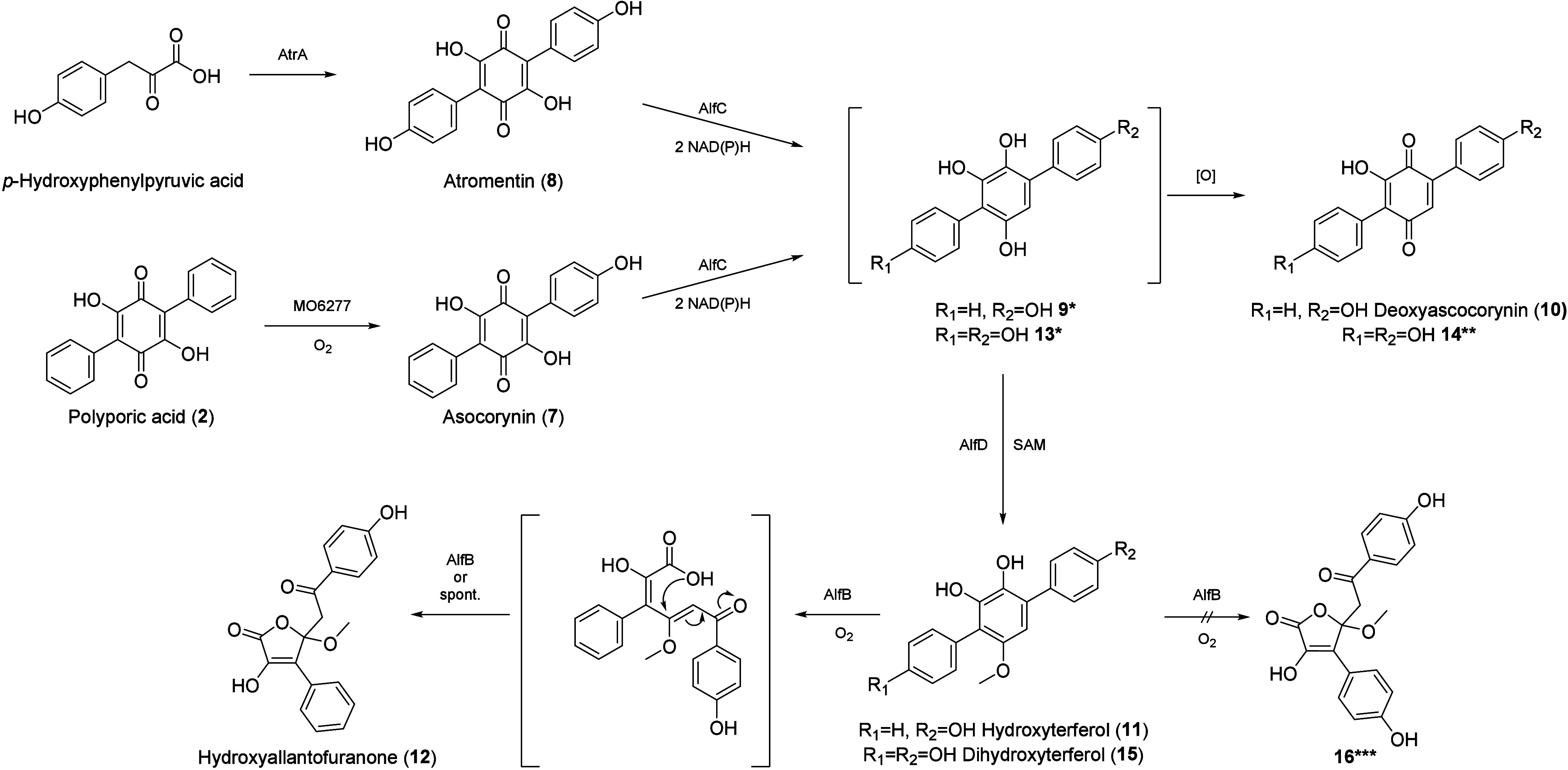 Figure 6
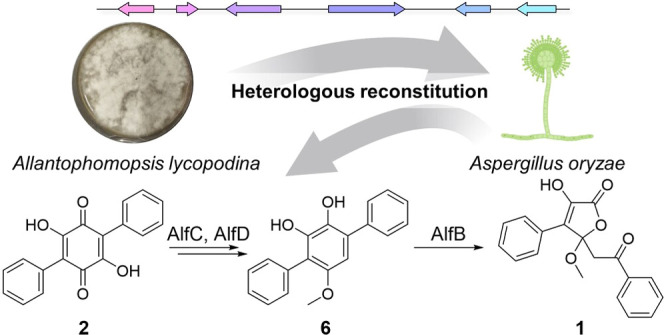 Figure 7
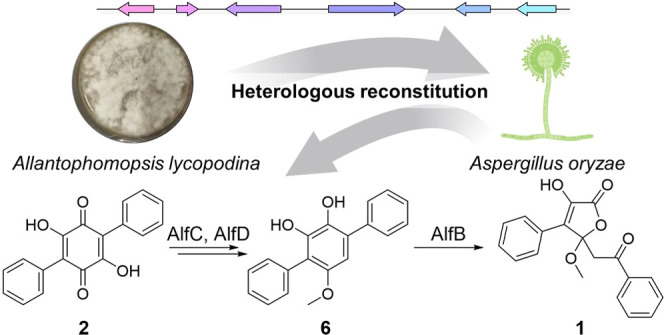 Figure 8
Peer Reviews
No public reviews on file for this paper yet. If you reviewed it on a platform where reviews are public (OpenReview, ICLR, NeurIPS, ICML), you can paste yours below so the community can read it here.
Videos
No videos yet. Explain this paper in a talk, walkthrough, or lecture? Add one.
Taxonomy
TopicsMicrobial Natural Products and Biosynthesis · Marine Sponges and Natural Products · Synthetic Organic Chemistry Methods