Pair Natural Orbitals for Coupled Cluster Quadratic Response Theory
Jose P. Madriaga, Monika Kodrycka, T. Daniel Crawford

TL;DR
This paper explores how using pair natural orbitals can improve the efficiency of quantum chemistry calculations for large molecules.
Contribution
The paper introduces and evaluates new methods combining pair natural orbitals with response property optimizations for coupled cluster calculations.
Findings
PNO++ methods improve accuracy in response properties compared to standard PNOs.
Combined-PNO++ maintains CCSD correlation energy accuracy while reducing computational cost.
Truncation errors were analyzed using electric dipole hyperpolarizability metrics.
Abstract
Reduced-scaling approaches have yielded significant improvements in the computational efficiency of coupled cluster methods, making them more feasible for studying large molecules. In this work, we extend the use of pair natural orbitals (PNOs) to frequency-dependent quadratic response properties. We evaluate the performance of PNOs alongside methods optimized for response properties that derive from an approximate field-perturbed density matrix known as perturbation-aware PNOs (PNO++). Additionally, we concatenate the PNO and PNO++ spaces to obtain the combined-PNO++ method, which is tailored to simultaneously maintain the accuracy of the CCSD correlation energies and response properties. We analyze the truncation errors associated with these methods using first electric dipole hyperpolarizability – specifically the average second-harmonic generation and optical refractivity, using…
Genes, proteins, chemicals, diseases, species, mutations and cell lines named across the full text — each resolved to its canonical identifier and authoritative record.
Click any figure to enlarge with its caption.
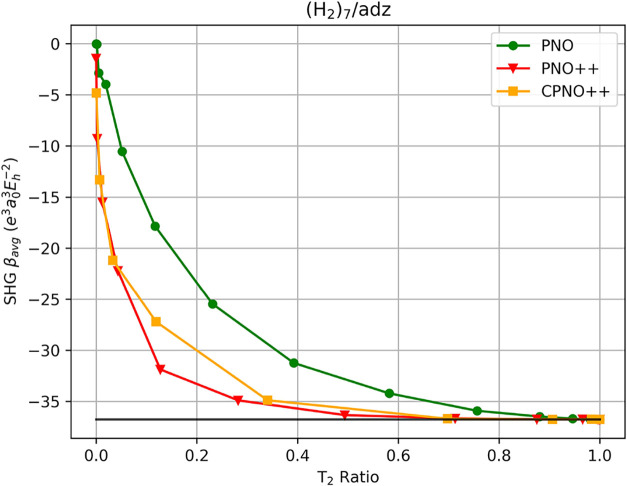 Figure 1
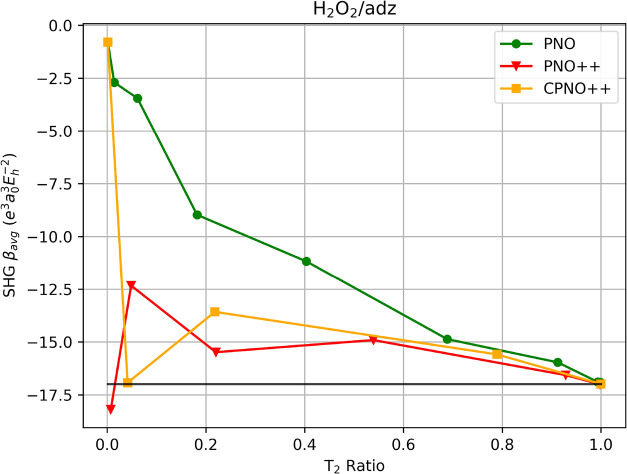 Figure 2
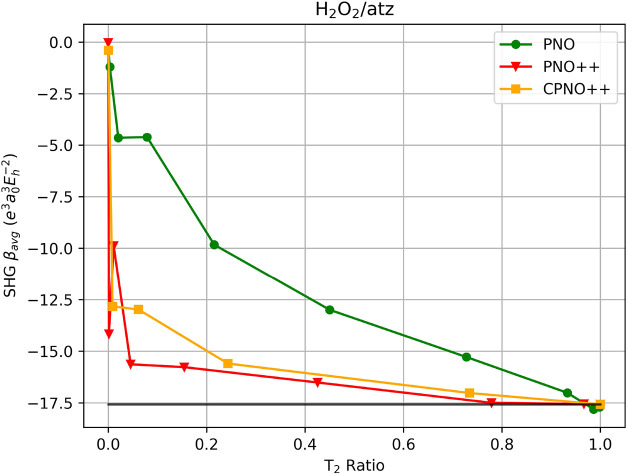 Figure 3
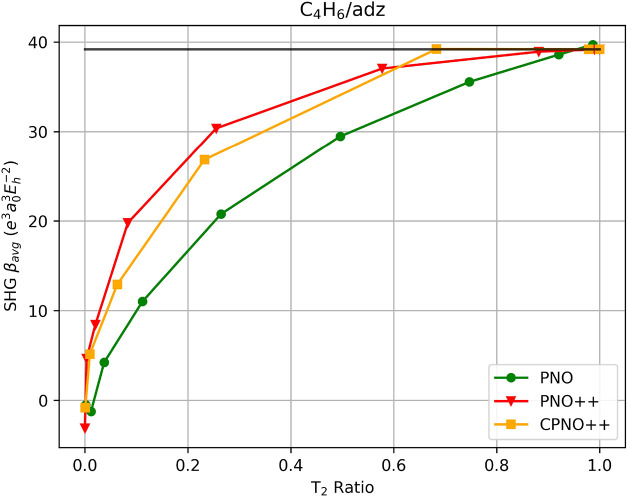 Figure 4
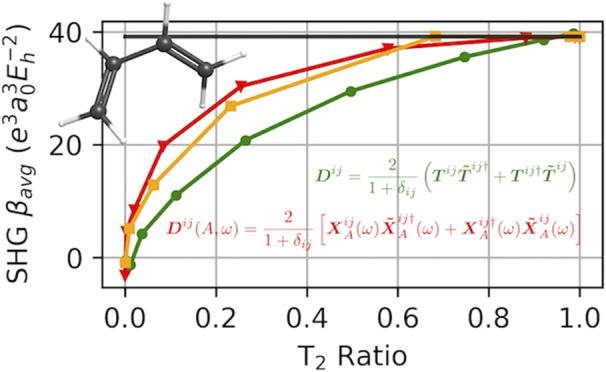 Figure 5
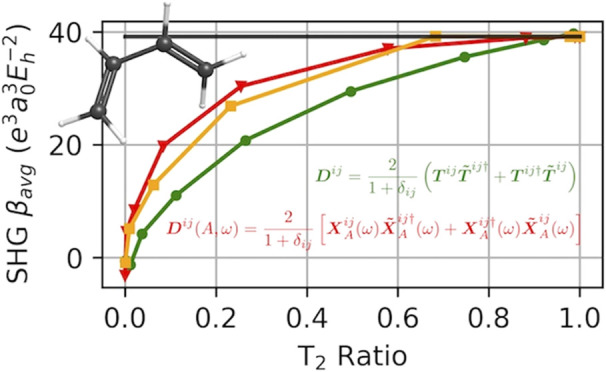 Figure 6
 Figure 7
 Figure 8
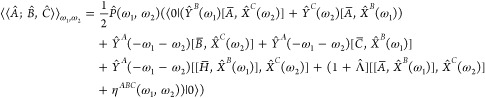 Figure 9
 Figure 10
 Figure 11
 Figure 12
 Figure 13
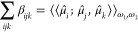 Figure 14
 Figure 15
 Figure 16
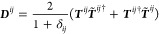 Figure 17
 Figure 18
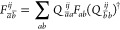 Figure 19
 Figure 20
 Figure 21
 Figure 22
 Figure 23
 Figure 24
 Figure 25
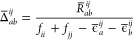 Figure 26
 Figure 27
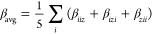 Figure 28
Peer Reviews
No public reviews on file for this paper yet. If you reviewed it on a platform where reviews are public (OpenReview, ICLR, NeurIPS, ICML), you can paste yours below so the community can read it here.
Videos
No videos yet. Explain this paper in a talk, walkthrough, or lecture? Add one.
Taxonomy
TopicsMolecular spectroscopy and chirality · Synthesis and Properties of Aromatic Compounds · Spectroscopy and Quantum Chemical Studies