Bowman’s layer and corneal thickness in health and disease
Yaochun Shen, Yalin Zheng, Alfredo Borgia, Matteo Posarelli, Rose Herbert, Tom Sharp, Luca Pagano, Vito Romano, Andrea Madden, Alexander Undan, Stephen B Kaye

TL;DR
This study measures the thickness of Bowman’s layer in healthy and diseased corneas, finding it is consistently related to overall corneal thickness but not influenced by age, sex, or other factors.
Contribution
The study introduces a novel automated segmentation method to measure central Bowman’s layer thickness in corneal diseases.
Findings
Central Bowman’s layer thickness is on average 3% of central corneal thickness.
Bowman’s layer thickness is independent of age, sex, corneal curvature, and epithelial thickness.
Keratoconus patients have thinner central Bowman’s layer than those with corneal dystrophies.
Abstract
To investigate central Bowman’s layer thickness (BT) in relation to central corneal thickness (CCT) and curvature, and epithelial thickness in healthy and disease corneas. Patients with keratoconus (KC), corneal dystrophies (CD) and healthy controls (HC) were included. Linnik and Mirau versions of an ultra-high axial resolution line field spectral domain optical coherence tomography device were used to image the cornea, in addition to commercially available devices. A supervised automated segmentation process was used to extract the quasi-point thickness of Bowman’s layer. 62 participants: 24 with KC, 20 with CD and 18 HC were included. Mean central BT was 15.41 µm (SD 0.49; min-max: 12.28–19.54) in HC, 14.27 µm (SD:0.43; min-max: 11.22–18.25) in KC and 15.65 µm (SD 0.64; min-max: 12.42–20.06) in CD (mainly Fuchs CD). Patients with KC had thinner central BT than those with CD…
Genes, proteins, chemicals, diseases, species, mutations and cell lines named across the full text — each resolved to its canonical identifier and authoritative record.
Click any figure to enlarge with its caption.
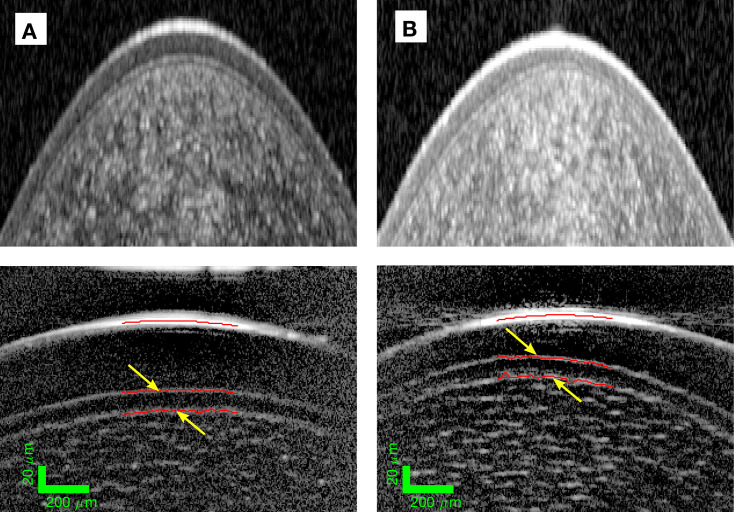 Figure 1
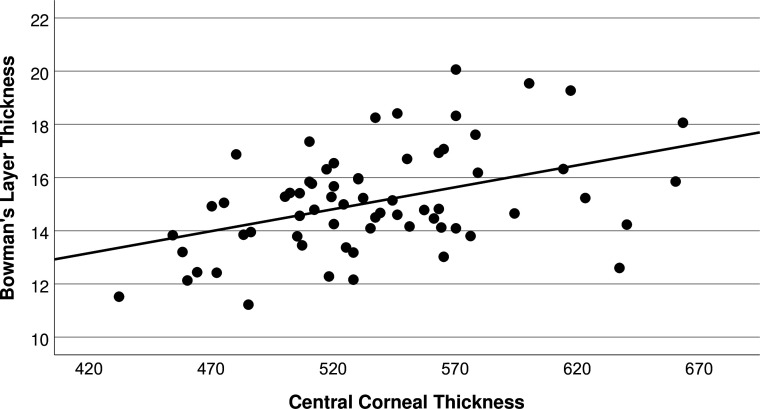 Figure 2
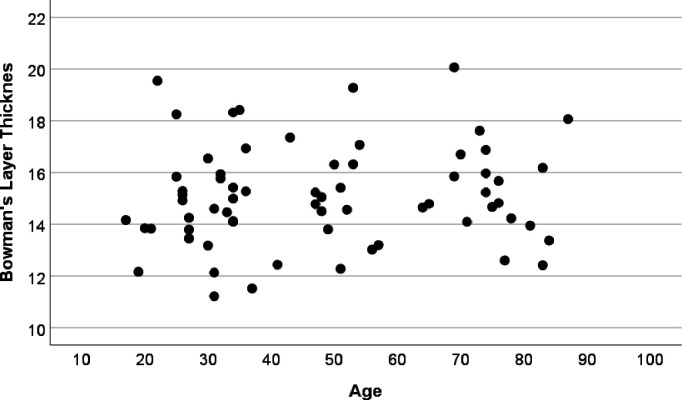 Figure 3
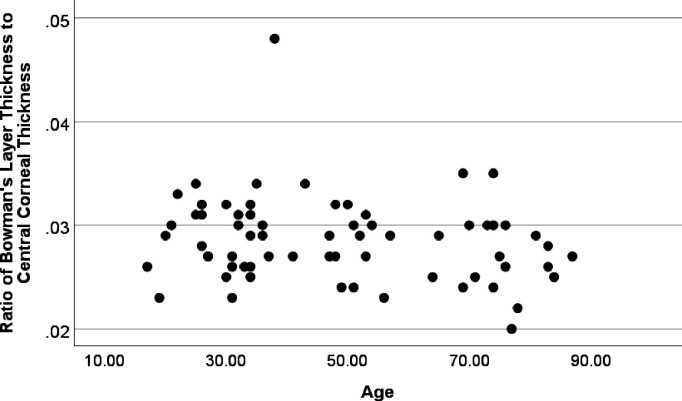 Figure 4
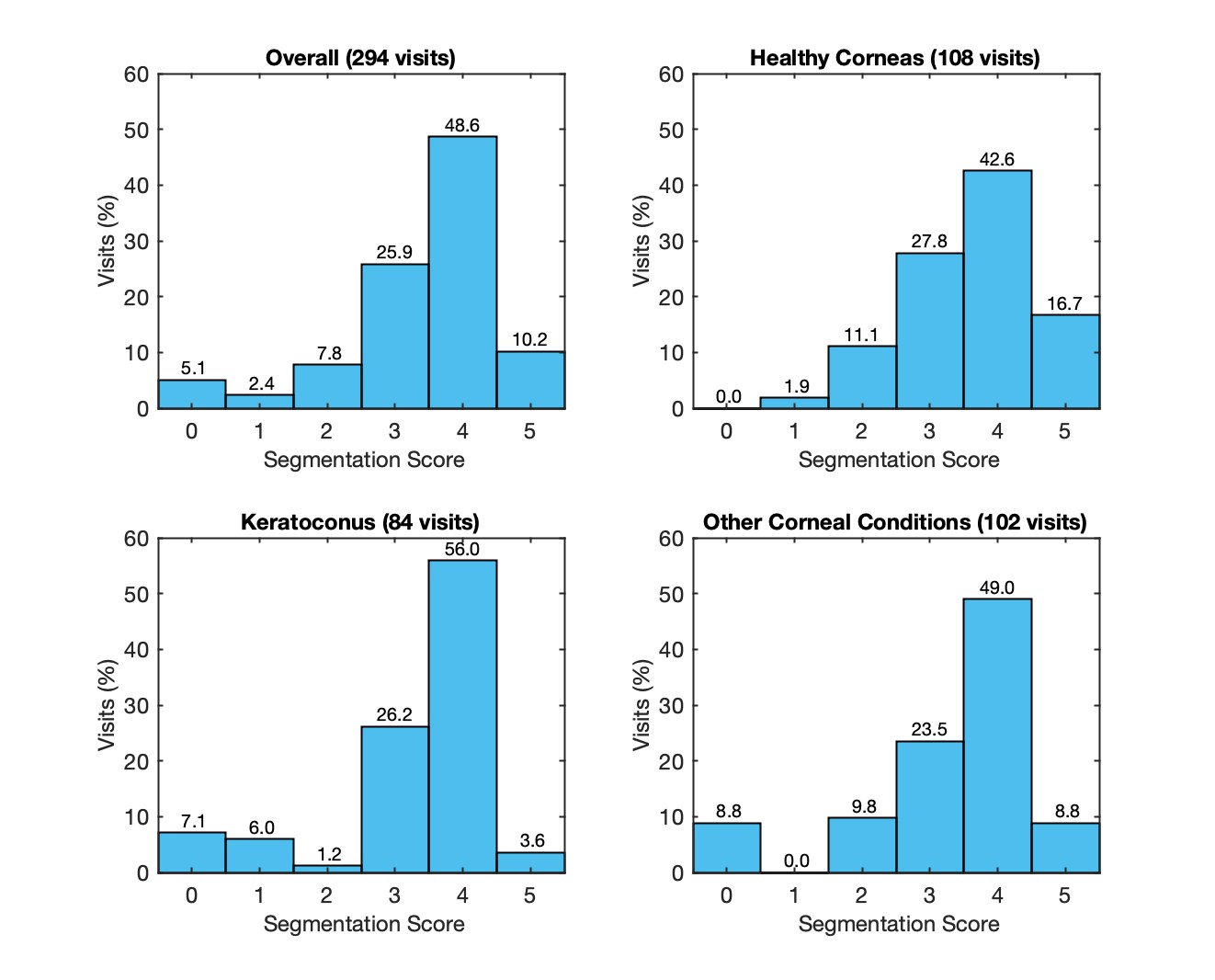 Figure 5
Peer Reviews
No public reviews on file for this paper yet. If you reviewed it on a platform where reviews are public (OpenReview, ICLR, NeurIPS, ICML), you can paste yours below so the community can read it here.
Videos
No videos yet. Explain this paper in a talk, walkthrough, or lecture? Add one.
Taxonomy
TopicsCorneal surgery and disorders · Glaucoma and retinal disorders · Ocular Surface and Contact Lens