Rationale and design of ‘discontinuing statins in multimorbid older adults without cardiovascular disease (STREAM)’: study protocol of a randomised non-inferiority clinical trial
Philipp Stefan Aebi, Luise Adam, Moa Haller, Julia Bianca Bardoczi, Baris Gencer, Fabrice Bonnet, Jürg-Hans Beer, Sebastian Carballo, Mirjam Christ-Crain, Martin Feller, Luca Gabutti, Alan G Haynes, Elisavet Moutzouri, Patricia Orializ Chocano-Bedoya, Stefano Bassetti

TL;DR
This study tests if stopping statins in older adults without heart disease is as safe as continuing them, focusing on health outcomes and quality of life.
Contribution
The study introduces a large-scale randomized non-inferiority trial to evaluate statin discontinuation in multimorbid older adults without cardiovascular disease.
Findings
The trial compares major cardiovascular events and death between statin discontinuation and continuation groups.
It assesses quality of life and side effects like muscle pain and sarcopenia in older patients.
Results will clarify if stopping statins is safe for primary prevention in this aging population.
Abstract
Statins are among the most widely used drugs. While they are effective for primary and secondary prevention of cardiovascular (CV) disease in middle-aged subjects, their benefits for prevention in older adults (aged ≥70 years) without CV disease are uncertain, particularly for those with multimorbidity. Statin side effects and drug interactions are common in older patients and may negatively impact quality of life. To date, the only randomised controlled trial (RCT) investigating statin discontinuation in older adults has demonstrated no difference in survival but did note a small improvement in quality of life for those who discontinued statins. However, this trial exclusively enrolled patients with a life expectancy <1 year. Therefore, the present RCT aims to assess the safety and potential benefits of statin discontinuation in primary prevention for the ever-growing population of…
Genes, proteins, chemicals, diseases, species, mutations and cell lines named across the full text — each resolved to its canonical identifier and authoritative record.
Click any figure to enlarge with its caption.
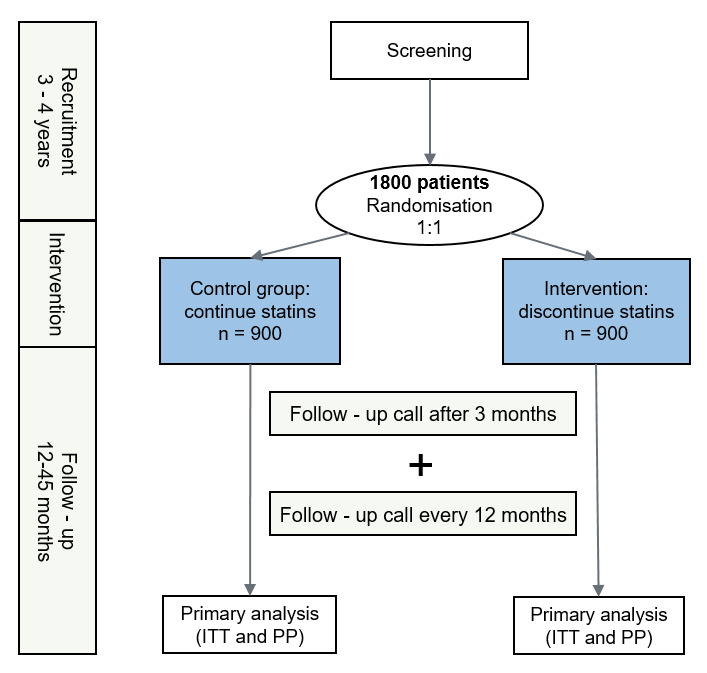 Figure 1
Peer Reviews
No public reviews on file for this paper yet. If you reviewed it on a platform where reviews are public (OpenReview, ICLR, NeurIPS, ICML), you can paste yours below so the community can read it here.
Videos
No videos yet. Explain this paper in a talk, walkthrough, or lecture? Add one.
Taxonomy
TopicsHealth Systems, Economic Evaluations, Quality of Life · Lipoproteins and Cardiovascular Health · Pharmaceutical Practices and Patient Outcomes