Exploring the impact of housing routine on lying behavior in horses measured with triaxial accelerometer
Elena Gobbo, Chiara Maccario, Manja Zupan Šemrov, Marco Bovo, Elie Atallah, Michela Minero, Emanuela Dalla Costa

TL;DR
This study examines how changes in housing routines affect lying behavior in horses using accelerometers, finding no major impact but noting group size influences behavior synchronization.
Contribution
The novel use of triaxial accelerometers to non-invasively monitor equine lying behavior in different housing conditions.
Findings
No significant difference in total lying duration between ordinary and modified housing routines.
Larger groups showed synchronized lying behavior with longer bouts, while smaller groups lay more frequently.
Accelerometers proved effective for monitoring natural equine behaviors related to housing management.
Abstract
Methods to assess the positive behavior of horses in relation to their environment can be used to provide information to enhance animal welfare. One of the most important experiences that can be observed in mammals is sleep, a universal behavior relevant for the welfare of all species. To achieve paradoxical sleep, horses must lie down in lateral recumbency for a sufficient time, but they only do so when feeling safe and comfortable. Recently, technological tools like accelerometers have opened the possibility of non-invasive continuous monitoring of lying behavior, thus implementing the way we assess equine behavior in relation to their management and environment. The aim of this study was to investigate whether a sudden change in housing routine affects lying behavior in horses. In 10 riding school horses, lying behavior was continuously monitored using triaxial accelerometers for…
Genes, proteins, chemicals, diseases, species, mutations and cell lines named across the full text — each resolved to its canonical identifier and authoritative record.
Click any figure to enlarge with its caption.
 Figure 1
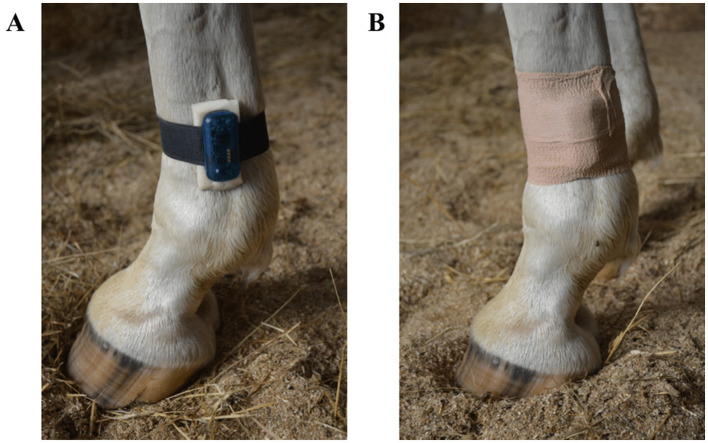 Figure 2
 Figure 3
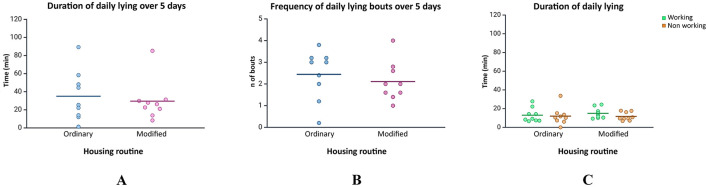 Figure 4
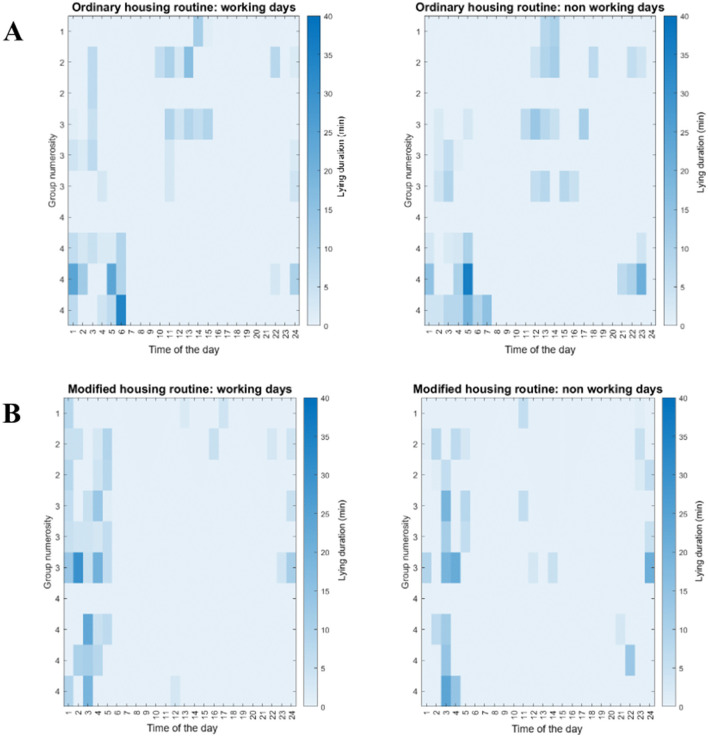 Figure 5
Peer Reviews
No public reviews on file for this paper yet. If you reviewed it on a platform where reviews are public (OpenReview, ICLR, NeurIPS, ICML), you can paste yours below so the community can read it here.
Videos
No videos yet. Explain this paper in a talk, walkthrough, or lecture? Add one.
Taxonomy
TopicsVeterinary Equine Medical Research · Animal Behavior and Welfare Studies · Sports Performance and Training