Screening of candidate analgesics using a patient‐derived human iPSC model of nociception identifies putative compounds for therapeutic treatment
Jack R. Thornton, Alberto Capurro, Sally Harwood, Thomas C Henderson, Adrienne Unsworth, Franziska Görtler, Sushma Nagaraja‐Grellscheid, Vsevolod Telezhkin, Majlinda Lako, Evelyne Sernagor, Lyle Armstrong

TL;DR
Researchers used patient-derived stem cells to find four new pain-relief compounds that could help treat inherited erythromelalgia and other pain disorders.
Contribution
The study introduces a novel iPSC-based screening method for identifying analgesic compounds targeting pain mechanisms in patient-specific models.
Findings
Four compounds (AZ106, AZ129, AZ037, AZ237) significantly reduced spontaneous firing in IEM patient-derived sensory neurons.
The compounds showed minimal toxicity and potential efficacy based on calculated IC50 values.
Electrophysiological analysis confirmed their ability to modulate the NaV 1.7 channel for targeted analgesia.
Abstract
In this study, we applied an induced pluripotent stem cell (iPSC)‐based model of inherited erythromelalgia (IEM) to screen a library of 281 small molecules, aiming to identify candidate pain‐modulating compounds. Human iPSC‐derived sensory neuron‐like cells, which exhibit action potentials in response to noxious stimulation, were evaluated using whole‐cell patch‐clamp and microelectrode array (MEA) techniques. Sensory neuron‐like cells derived from individuals with IEM showed spontaneous electrical activity characteristic of genetic pain disorders. The drug screen identified four compounds (AZ106, AZ129, AZ037 and AZ237) that significantly decreased spontaneous firing with minimal toxicity. The calculated IC50 values indicate the potential efficacy of these compounds. Electrophysiological analysis confirmed the compounds’ ability to reduce action potential generation in IEM…
Genes, proteins, chemicals, diseases, species, mutations and cell lines named across the full text — each resolved to its canonical identifier and authoritative record.
Click any figure to enlarge with its caption.
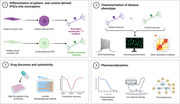 Figure 1
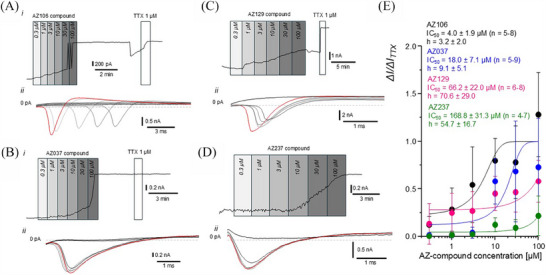 Figure 2
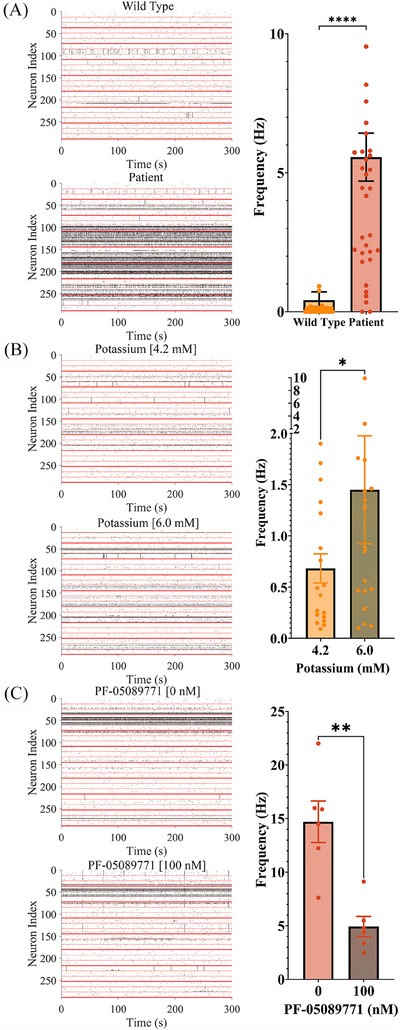 Figure 3
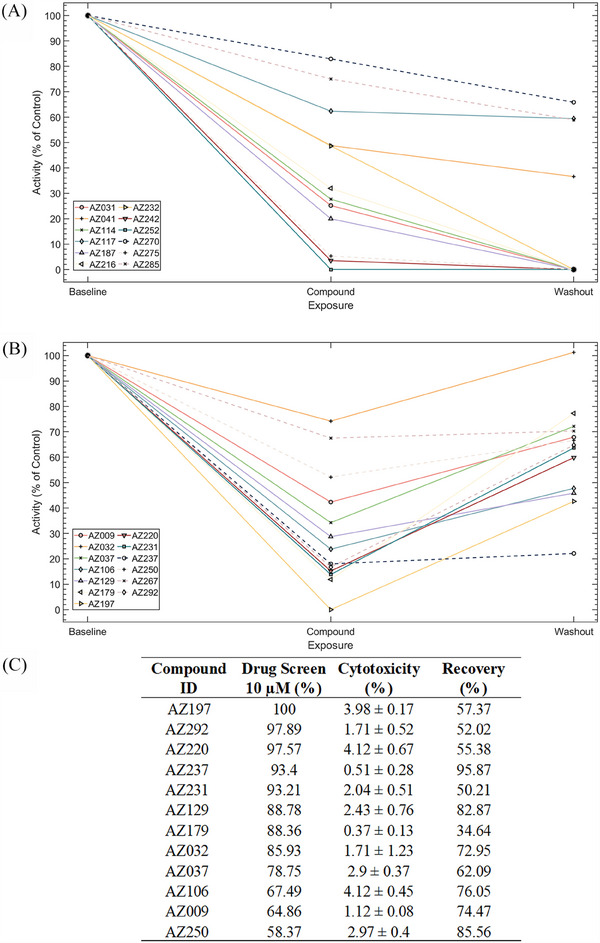 Figure 4
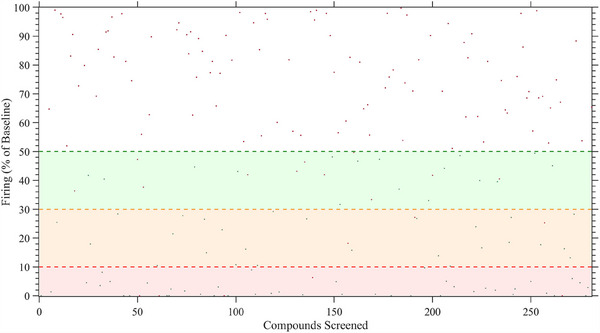 Figure 5
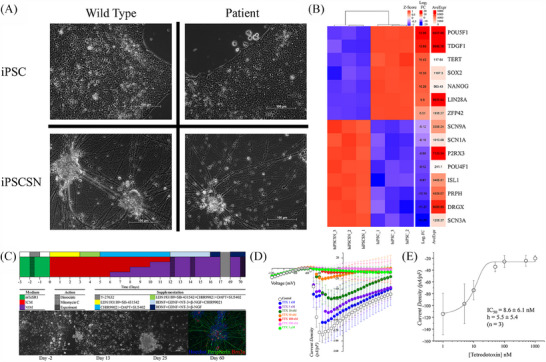 Figure 6
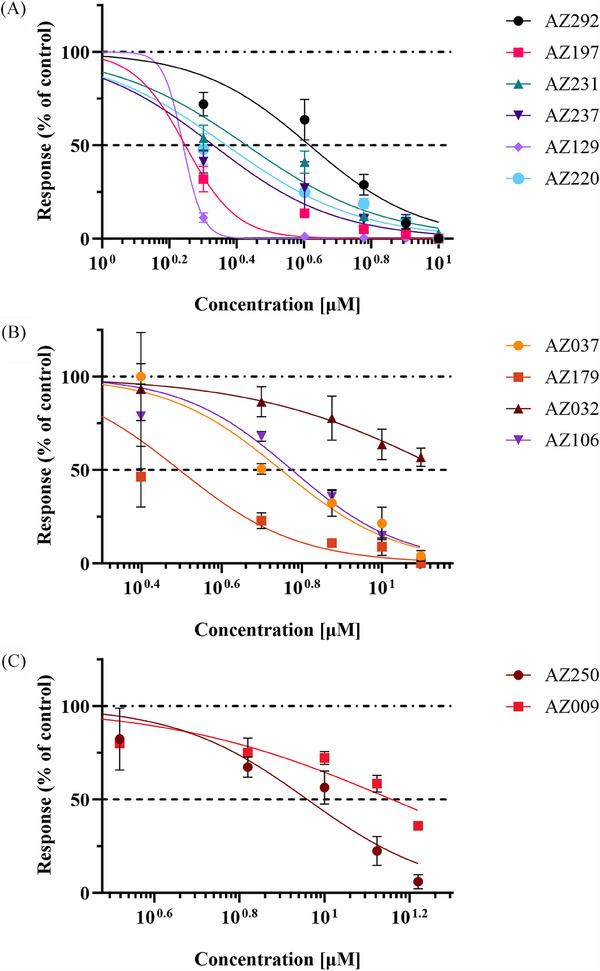 Figure 7
Peer Reviews
No public reviews on file for this paper yet. If you reviewed it on a platform where reviews are public (OpenReview, ICLR, NeurIPS, ICML), you can paste yours below so the community can read it here.
Videos
No videos yet. Explain this paper in a talk, walkthrough, or lecture? Add one.
Taxonomy
TopicsPain Mechanisms and Treatments · Neuroscience and Neural Engineering · Nerve injury and regeneration