Corchorus olitorius exhibits antiproliferative potential supported by metabolic profiling and integrative biological analyses
Salma Sameh, Maha R. A. Abdollah, Ahmed M. Elissawy, Eman Al-Sayed, Rola M. Labib, Lan Ye, Fang-Rong Chang, Abdel Nasser B. Singab

TL;DR
Corchorus olitorius leaves show anticancer potential in lab and animal studies, with identified compounds that bind well to cancer-related proteins.
Contribution
The study demonstrates the antiproliferative and anti-angiogenic potential of Corchorus olitorius and identifies bioactive compounds with drug-like properties.
Findings
The bioactive fraction of Corchorus olitorius showed strong in vitro antiproliferative activity against A549 cells with an IC50 of 7.8 µg/mL.
In vivo experiments showed a 33.7% reduction in tumor volume in mice treated with the fraction.
UPLC-ESI-MS/MS identified 25 compounds with favorable binding affinities to EGFR, CDK2, and VEGF-A.
Abstract
Herbal nutraceuticals could be employed as alternative or complementary routes for alleviating cancer. Corchorus olitorius (Malvaceae) was employed traditionally in the management of tumors. The study aimed to investigate the antiproliferative activity of C. olitorius leaves. In vitro cytotoxic and anti-angiogenic activities of C. olitorius were estimated. The bioactive fraction was subjected to in vivo study on BALB/ c female mice using Ehrlich Ascites Carcinoma model. UPLC-ESI-MS/MS analysis was done to determine the phytometabolites followed by in silico studies on the major identified compounds. The bioactive fraction possessed potent in vitro activity against A549 cells with IC50 = 7.8 µg/mL and exhibited strong anti-angiogenic activity. The in vivo study revealed the safety of the fraction and confirmed its anticancer activity. The tumor volume in the fraction treated group was…
Genes, proteins, chemicals, diseases, species, mutations and cell lines named across the full text — each resolved to its canonical identifier and authoritative record.
Click any figure to enlarge with its caption.
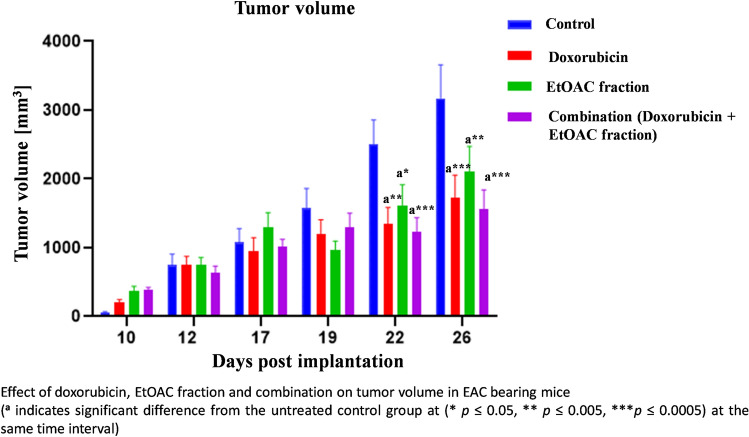 Figure 1
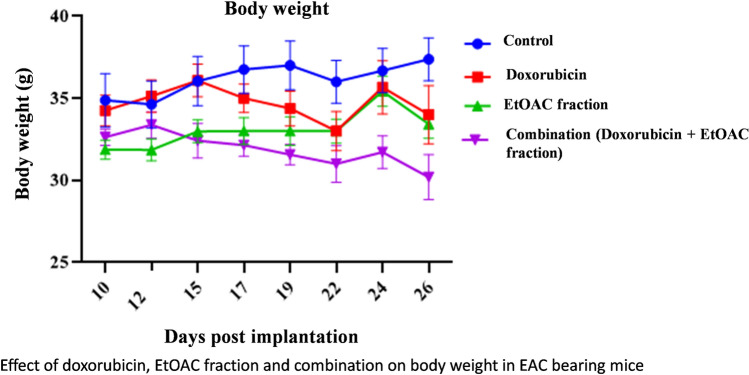 Figure 2
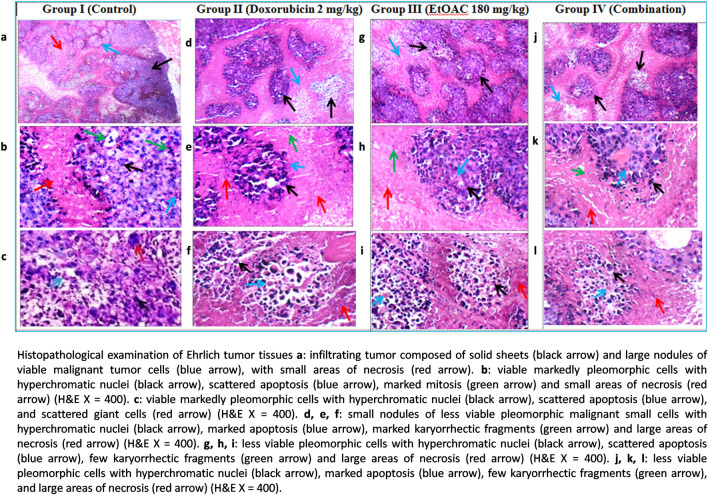 Figure 3
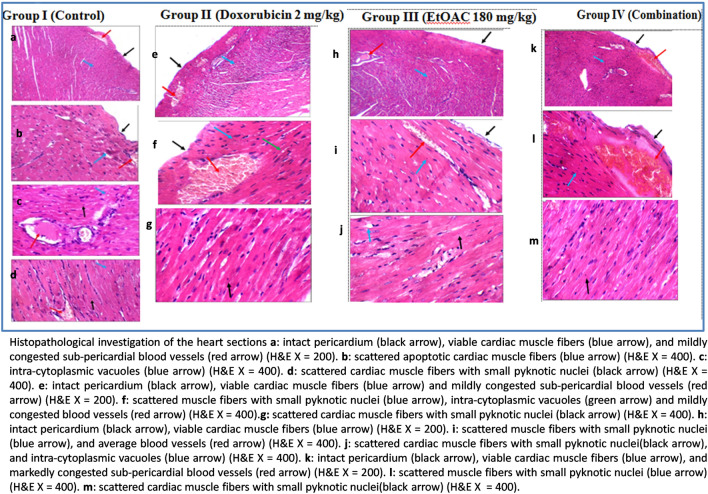 Figure 4
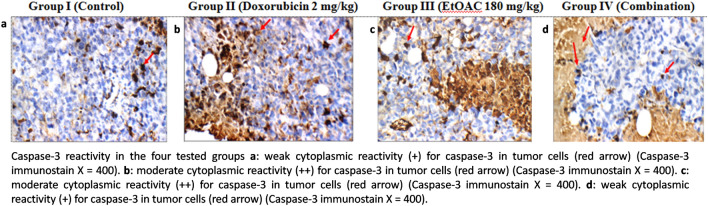 Figure 5
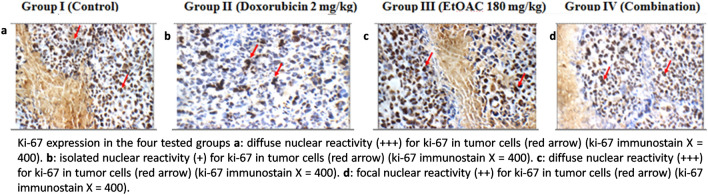 Figure 6
Peer Reviews
No public reviews on file for this paper yet. If you reviewed it on a platform where reviews are public (OpenReview, ICLR, NeurIPS, ICML), you can paste yours below so the community can read it here.
Videos
No videos yet. Explain this paper in a talk, walkthrough, or lecture? Add one.
Taxonomy
TopicsSeed and Plant Biochemistry · Microbial Metabolites in Food Biotechnology · Medicinal Plants and Neuroprotection