Development of nifedipine isosteres: an integrated approach to the design, synthesis, and biological assessment of calcium channel blockers
Yasser M. Zohny, Samir M. Awad, Omar Alsaidan, Maha A. Rabie

TL;DR
This study develops new calcium channel blockers by modifying the nifedipine structure and testing their effectiveness in reducing blood pressure in rats.
Contribution
The paper introduces novel nifedipine isosteres with trifluoromethyl substitutions and evaluates their antihypertensive and calcium channel-blocking activities.
Findings
Ortho-substituted derivatives showed the highest antihypertensive activity, with about 30% efficacy compared to nifedipine.
Compound 9a had the highest docking score against receptor proteins 6M7H and 4MS2, indicating strong binding potential.
The synthesized DHP derivatives were amides formed using aniline and substituted anilines.
Abstract
This study reports the synthesis of a series of calcium channel blockers via Biginelli’s reaction. The core dihydropyridine (DHP) scaffold, an isostere of nifedipine, was synthesized using three aldehydes incorporated with trifluoromethyl (–CF3) substitutions at the ortho, meta, and para positions. The resulting series (4a–c to 9a–c) was evaluated for antihypertensive and calcium channel-blocking activities in male and female rats, administered intraperitoneally. Among the synthesized compounds, the ortho-substituted derivatives (4a, 7a, 8a, and 9a) demonstrated the highest antihypertensive activity, exhibiting approximately 30% efficacy relative to nifedipine. These compounds also displayed IC50 values comparable to nifedipine and were further assessed for binding affinity with 6M7H and 4MS2 through molecular docking studies. The final DHP derivatives were amides, synthesized through…
Genes, proteins, chemicals, diseases, species, mutations and cell lines named across the full text — each resolved to its canonical identifier and authoritative record.
Click any figure to enlarge with its caption.
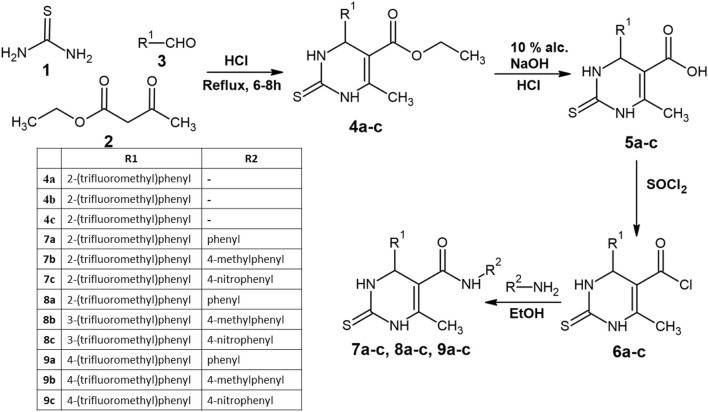 Figure 1
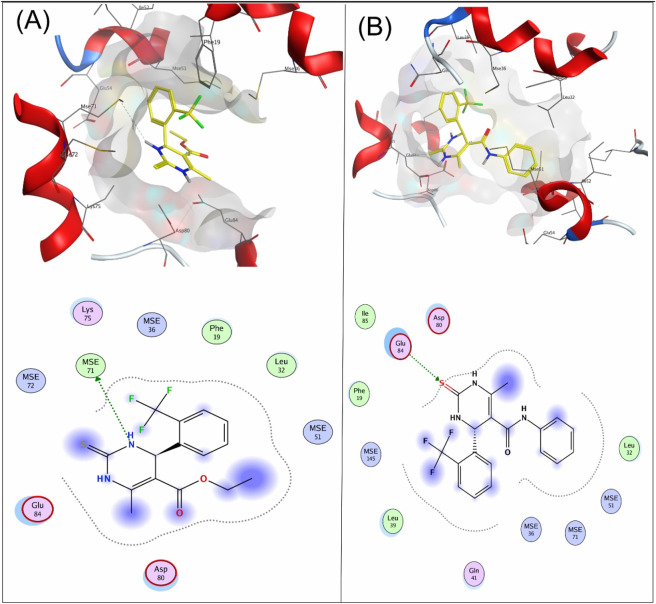 Figure 2
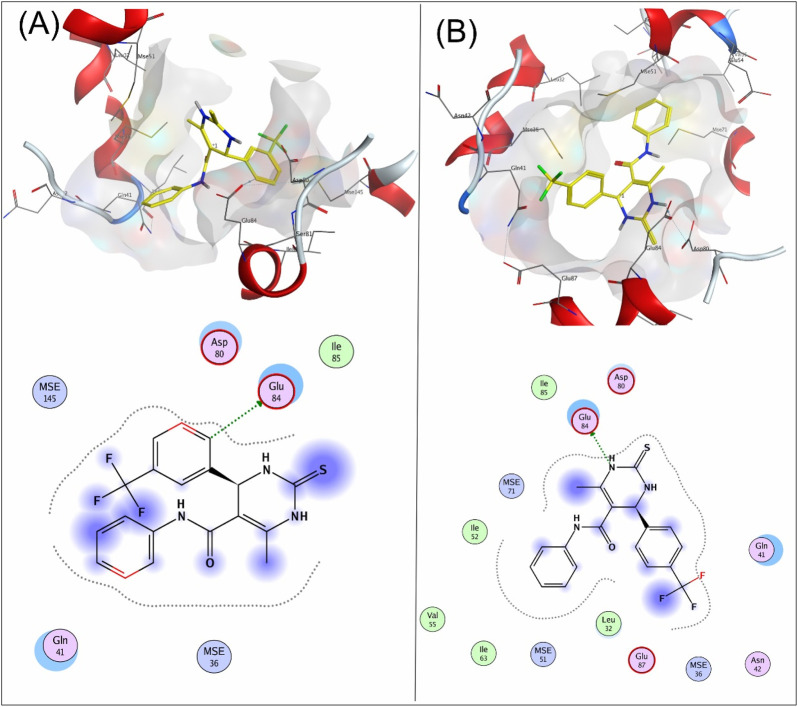 Figure 3
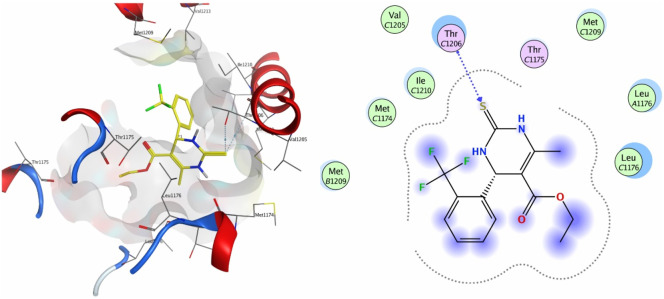 Figure 4
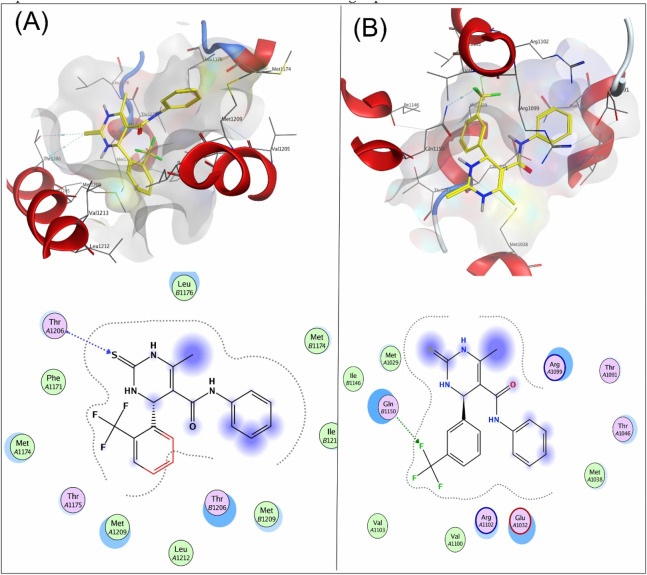 Figure 5
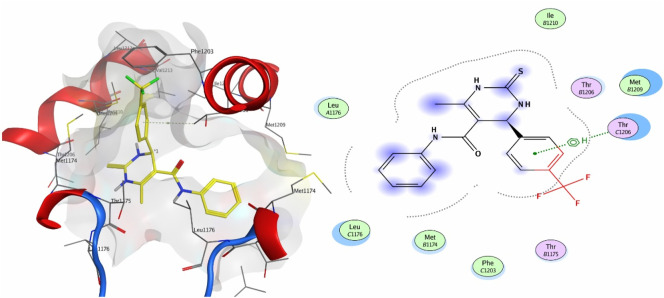 Figure 6
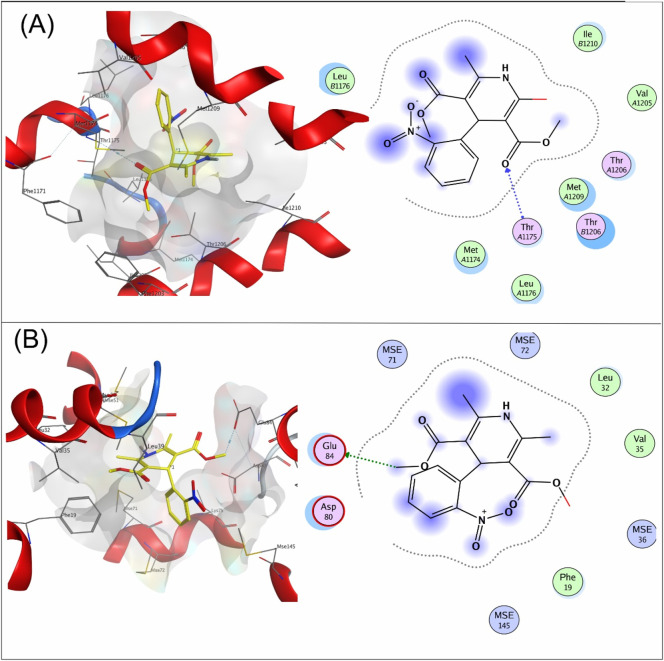 Figure 7
Peer Reviews
No public reviews on file for this paper yet. If you reviewed it on a platform where reviews are public (OpenReview, ICLR, NeurIPS, ICML), you can paste yours below so the community can read it here.
Videos
No videos yet. Explain this paper in a talk, walkthrough, or lecture? Add one.
Taxonomy
TopicsPhosphodiesterase function and regulation · Pharmacological Receptor Mechanisms and Effects · Epilepsy research and treatment