Microfluidic transection injury and high-shear thrombus formation demonstrate increased hemostatic efficacy of cold-stored platelets and in vitro resuscitation in induced coagulopathy models
Emily P. Mihalko, Refael Munitz, Devin M. Dishong, Skye Clayton, Susan M. Shea

TL;DR
This study shows that cold-stored platelets perform better in stopping bleeding under simulated injury conditions compared to room-temperature stored platelets, especially in coagulopathic models.
Contribution
The study introduces a microfluidic model to evaluate the hemostatic efficacy of stored platelets under flow conditions relevant to trauma.
Findings
Cold-stored platelets retained function longer than room-temperature stored platelets in high-shear microfluidic models.
Cold-stored platelets showed improved hemostatic resuscitation in thrombocytopenia models compared to room-temperature stored platelets.
Room-temperature stored platelets did not improve hemostasis in dilutional coagulopathy models.
Abstract
Hemostatic resuscitation is an essential aspect of treating traumatic bleeding. Trauma-induced coagulopathy is a multifactorial disorder that can lead to increased transfusion requirements. However, little is known about the interplay between coagulopathies and stored blood products used for hemostatic resuscitation, which themselves acquire dysfunction in the form of a storage lesion. Physiologically relevant models can aid in the study of trauma and hemostatic resuscitation by incorporating important aspects such as biological surfaces and flow regimes that mimic injury. This study aims to evaluate the contribution of platelet products under varying storage conditions in coagulopathic states. This study utilized microfluidic platforms of high shear, a flow regime relevant to injury, including a stenotic straight channel and a severe transected vessel injury device. Apheresis platelet…
Genes, proteins, chemicals, diseases, species, mutations and cell lines named across the full text — each resolved to its canonical identifier and authoritative record.
Click any figure to enlarge with its caption.
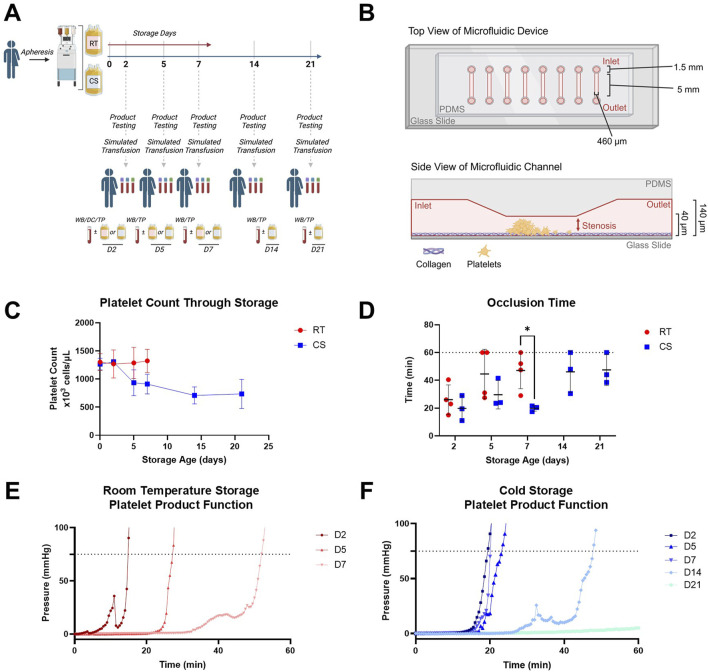 Figure 1
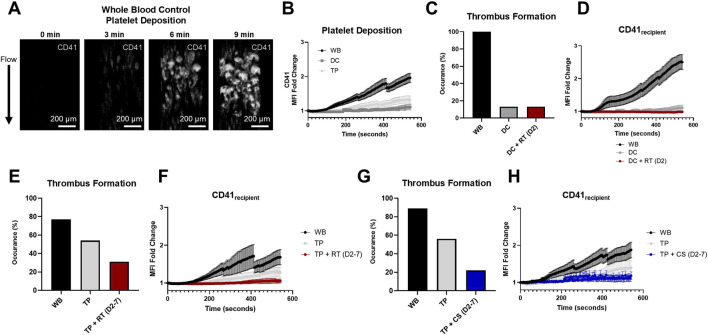 Figure 2
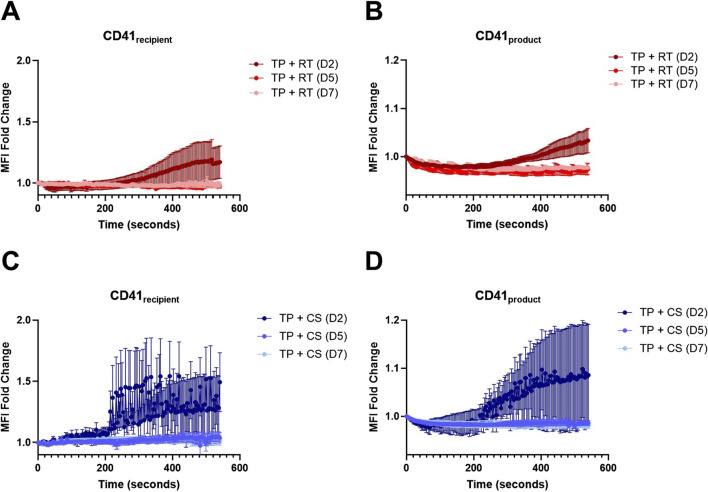 Figure 3
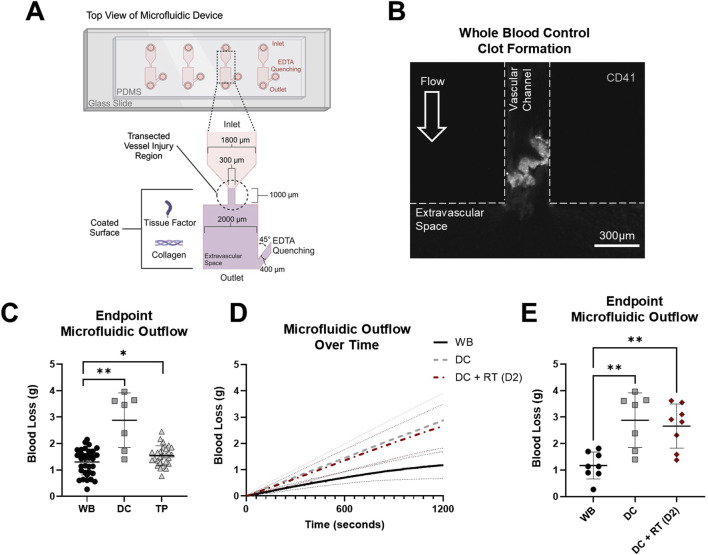 Figure 4
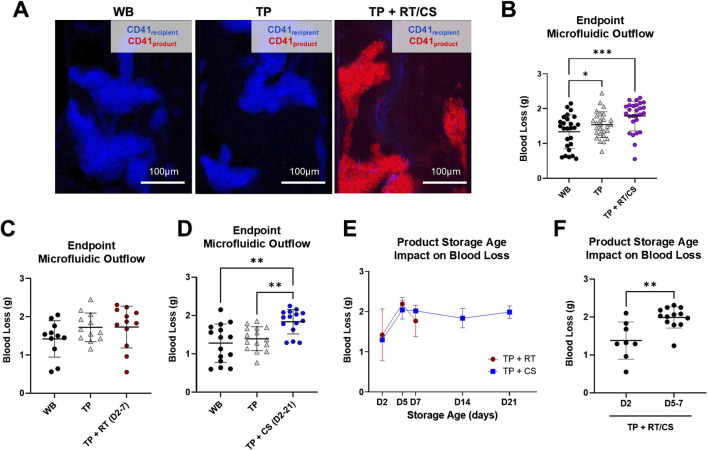 Figure 5
 Figure 6
Peer Reviews
No public reviews on file for this paper yet. If you reviewed it on a platform where reviews are public (OpenReview, ICLR, NeurIPS, ICML), you can paste yours below so the community can read it here.
Videos
No videos yet. Explain this paper in a talk, walkthrough, or lecture? Add one.
Taxonomy
TopicsTrauma, Hemostasis, Coagulopathy, Resuscitation · Blood transfusion and management · Blood donation and transfusion practices