Chrysin attenuates intervertebral disk degeneration via dual inhibition of matrix metalloproteinases and senescence: integrated network pharmacology, molecular docking, and experimental validation
Zeyu Pang, Junxian Hu, Chen Zhao, Xiaoxiao Li, Yibo Zhu, Xiangwei Li, Yiyang Wang, Qiang Zhou, Pei Li

TL;DR
Chrysin, a natural compound, may help treat intervertebral disk degeneration by reducing cell aging and matrix damage.
Contribution
This study reveals chrysin's dual mechanism in inhibiting matrix metalloproteinases and senescence in disk degeneration.
Findings
Chrysin inhibits MMP2 and MMP9, key enzymes in extracellular matrix degradation.
Chrysin reduces senescence markers and restores ECM components in nucleus pulposus cells.
Molecular docking and experimental validation confirm chrysin's protective effects against oxidative stress.
Abstract
Intervertebral disk degeneration (DDD) caused by nucleus pulposus cell (NPCs) senescence, oxidative stress, and extracellular matrix (ECM) degradation is one of the leading causes of chronic low back pain, yet effective treatments remain elusive. This study investigated the potential of chrysin, a natural flavonoid with antioxidant and anti-inflammatory properties, to alleviate NPCs aging and ECM dysregulation. Through network pharmacology, researchers identified 89 overlapping targets between chrysin and DDD, including MMP2, MMP9, and TGFB1. Enrichment analyses revealed key pathways in cancer, such as JAK-STAT signaling, efflux cells, and central carbon metabolism. Molecular docking showed that chrysin has a strong binding affinity for MMP2 (–8.4 kcal/mol) and MMP9 (–8.2 kcal/mol), key enzymes for ECM degradation. Molecular dynamics simulations demonstrated that the Chrysin-MMP-9 and…
Genes, proteins, chemicals, diseases, species, mutations and cell lines named across the full text — each resolved to its canonical identifier and authoritative record.
Click any figure to enlarge with its caption.
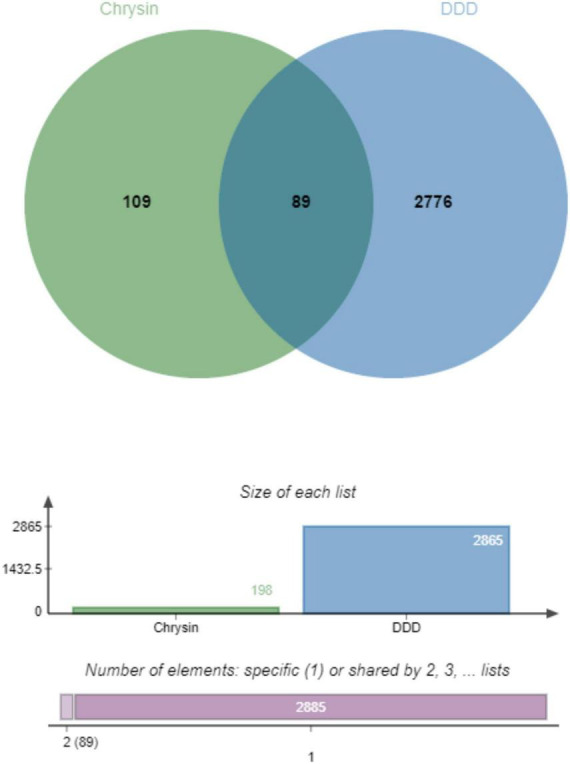 Figure 1
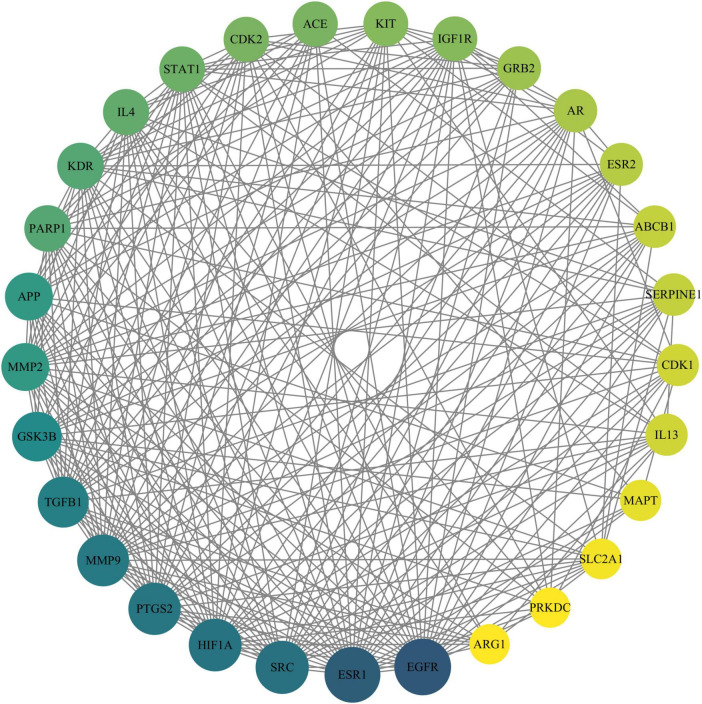 Figure 2
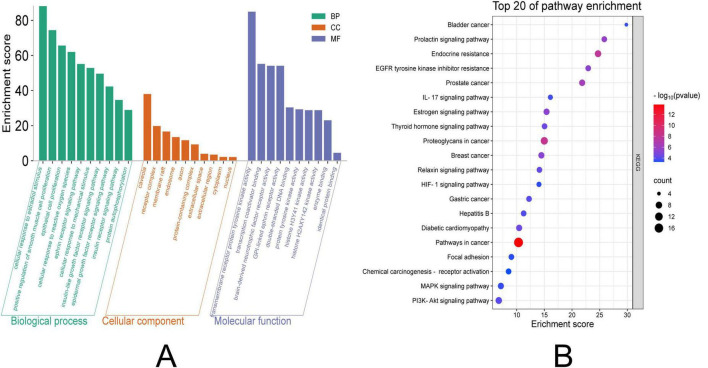 Figure 3
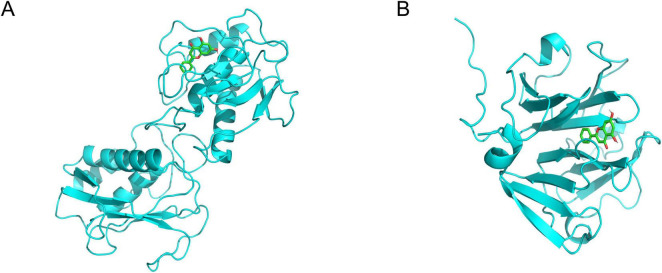 Figure 4
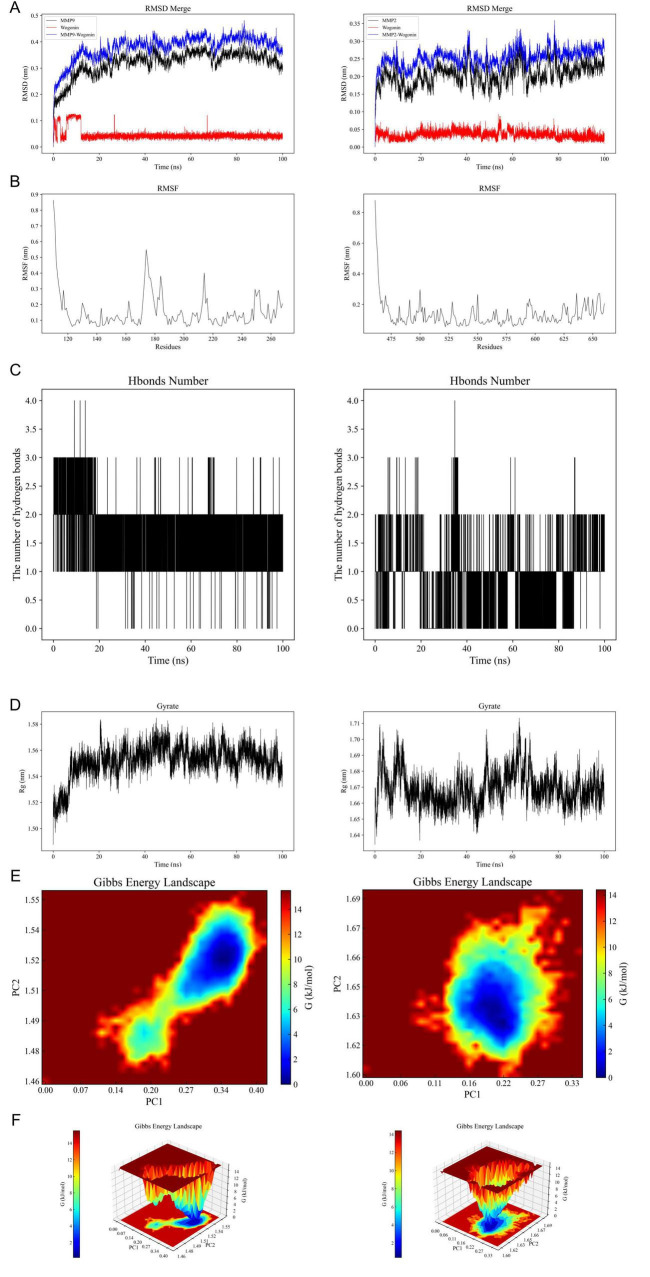 Figure 5
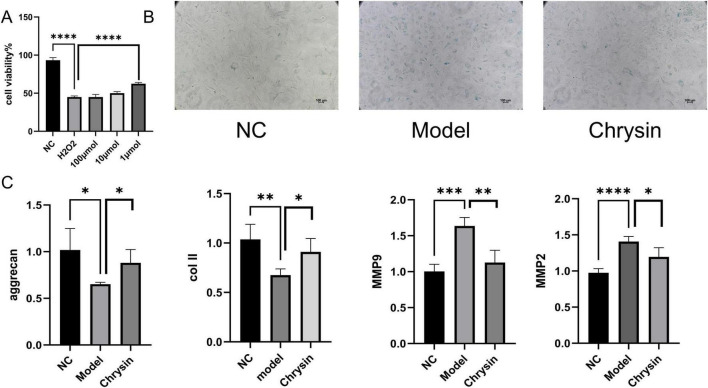 Figure 6
Peer Reviews
No public reviews on file for this paper yet. If you reviewed it on a platform where reviews are public (OpenReview, ICLR, NeurIPS, ICML), you can paste yours below so the community can read it here.
Videos
No videos yet. Explain this paper in a talk, walkthrough, or lecture? Add one.
Taxonomy
TopicsSpine and Intervertebral Disc Pathology · Musculoskeletal pain and rehabilitation · Flavonoids in Medical Research