Bayesian Estimation of Individual Gray Whale Space Use Reveals Differential Exposure to Stressors
Lisa Hildebrand, Leslie New, Enrico Pirotta, Joshua D. Stewart, Ines Hildebrand, Carrie Newell, K. C. Bierlich, Clara N. Bird, Alejandro Fernandez Ajó, Daniel Turek, Leigh G. Torres

TL;DR
This study uses Bayesian methods to track individual gray whale movements and assess their exposure to human-related stressors in Oregon.
Contribution
The study introduces a Bayesian spatially explicit capture-recapture model to estimate individual gray whale space use and stressor exposure.
Findings
Gray whale space use and stressor exposure vary significantly among individuals and years.
Some whales show long-term site fidelity to small areas, which is uncommon for large baleen whales.
Juveniles concentrate their activity near a port and whale watching zones, increasing their exposure to certain stressors.
Abstract
This study quantifies the individual space use patterns of Pacific Coast Feeding Group gray whales ( Eschrichtius robustus ) from photographic capture‐recapture data, collected in central Oregon, U.S.A., within a Bayesian framework. We evaluate the potential exposure of individuals to six anthropogenic stressors given their space use patterns. We used an 8‐year dataset of spatially explicit encounter histories collected via photo‐identification during continuous boat surveys to inform a Bayesian spatially explicit capture‐recapture model and estimate space use of individual whales. Space use estimates were combined with exposure values of four static (distance from two ports, distance from an effluent discharge site, area of whale watching) and two dynamic (commercial Dungeness crab pots, recreational fishing) anthropogenic stressors or their proxies to estimate relative individual…
Genes, proteins, chemicals, diseases, species, mutations and cell lines named across the full text — each resolved to its canonical identifier and authoritative record.
Click any figure to enlarge with its caption.
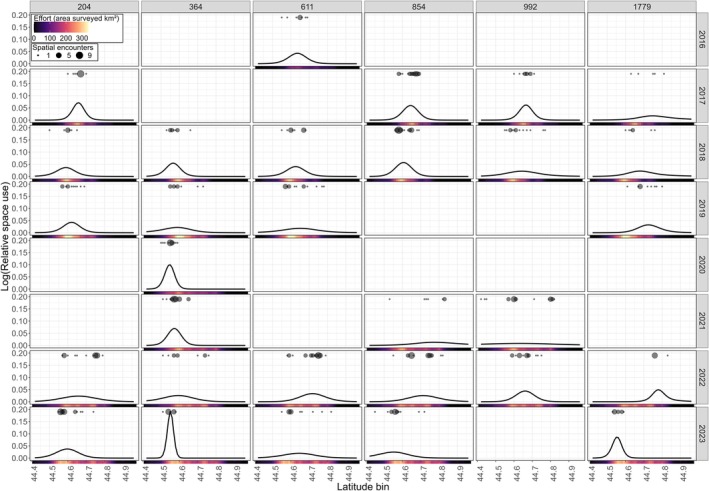 Figure 1
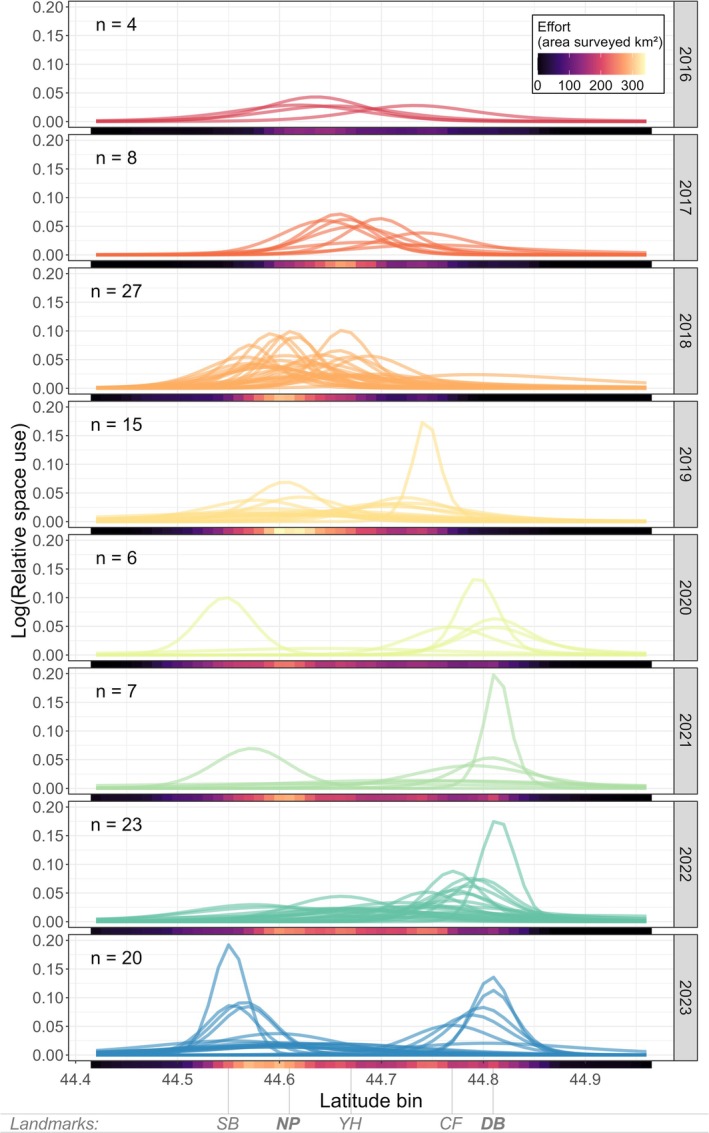 Figure 2
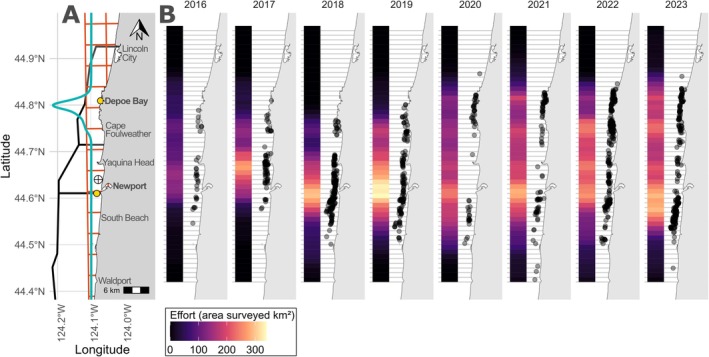 Figure 3
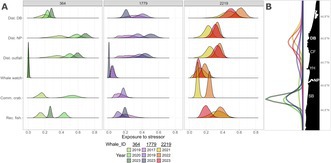 Figure 4
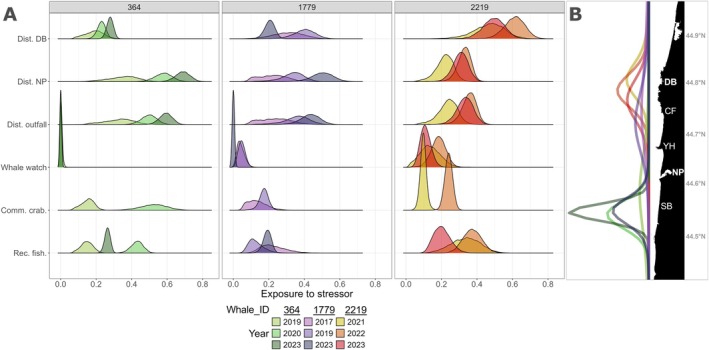 Figure 5
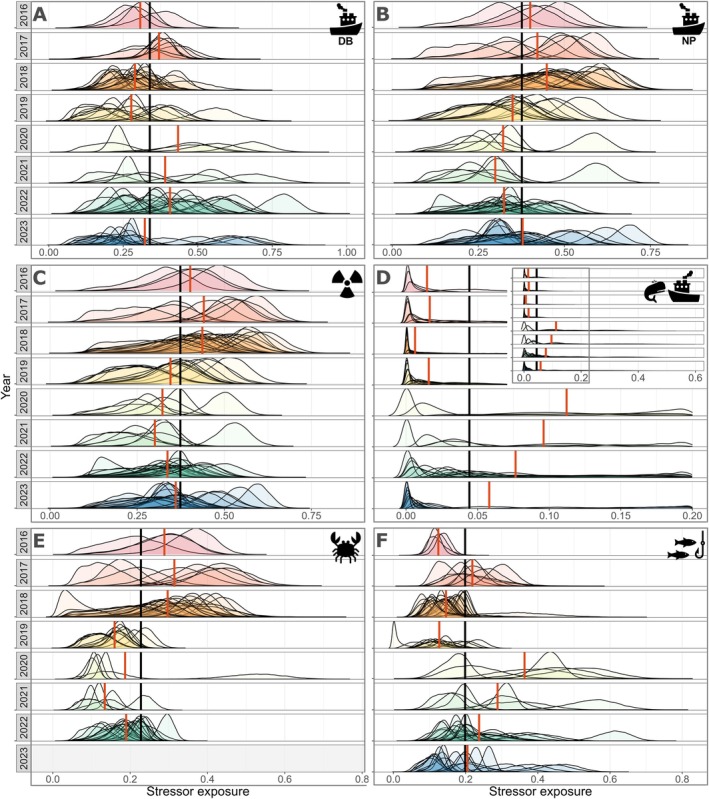 Figure 6
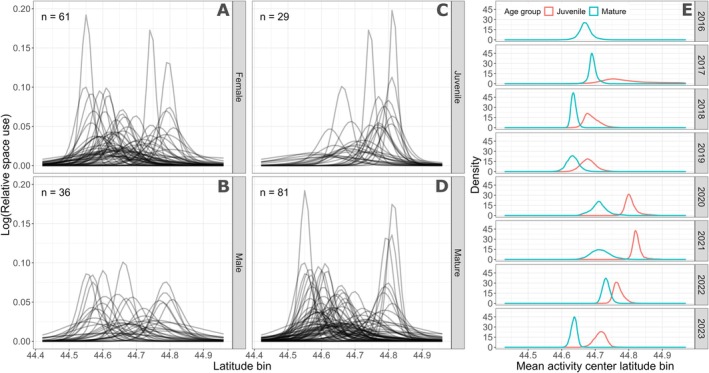 Figure 7
Peer Reviews
No public reviews on file for this paper yet. If you reviewed it on a platform where reviews are public (OpenReview, ICLR, NeurIPS, ICML), you can paste yours below so the community can read it here.
Videos
No videos yet. Explain this paper in a talk, walkthrough, or lecture? Add one.
Taxonomy
TopicsMarine animal studies overview · Marine and coastal plant biology · Coral and Marine Ecosystems Studies