Deletion of succinic semialdehyde dehydrogenase sad and chromosomal expression of phosphoenolpyruvate carboxylase as metabolic requirements for improved production of 2,4-dihydroxybutyric acid via malyl-P pathway using E. coli
T. A. Stefanie Nguyen, Ceren Alkim, Nadine Ihle, Thomas Walther, Cláudio J. R. Frazão

TL;DR
This paper describes how deleting a specific enzyme and modifying another in E. coli improves the production of a chemical precursor using a synthetic metabolic pathway.
Contribution
The study identifies key metabolic modifications for efficient DHB production via the MalP pathway in E. coli.
Findings
Deleting the Sad gene increased DHB production by 3-fold compared to the wildtype host.
Chromosomal expression of the mutant ppc K620S gene further improved DHB yield to 0.22 mol mol-1.
The optimized pathway achieved 17% of the theoretical maximum yield under aerobic conditions.
Abstract
The fermentative production of the functional precursor 2,4-dihydroxybutyrate (DHB) enables sustainable synthesis of the methionine analogue hydroxy-4-(methylthio) butyrate, which is currently still produced from fossil fuels. In this work, we aimed to optimize the aerobic production of DHB from glucose through the synthetic malyl phosphate (MalP) pathway, which comprises the conversion of the natural TCA cycle intermediate malate into MalP and the subsequent reactions to yield malate semialdehyde (MalSA) and finally DHB. We first implemented the synthetic pathway in an engineered Escherichia coli strain previously reported to over-produce malate through the oxidative TCA cycle. However, DHB was only detected in trace amounts, while acetate and malate were secreted in high quantities. Subsequent construction of strains producing malate, but negligible amounts of acetate, revealed that…
Genes, proteins, chemicals, diseases, species, mutations and cell lines named across the full text — each resolved to its canonical identifier and authoritative record.
Click any figure to enlarge with its caption.
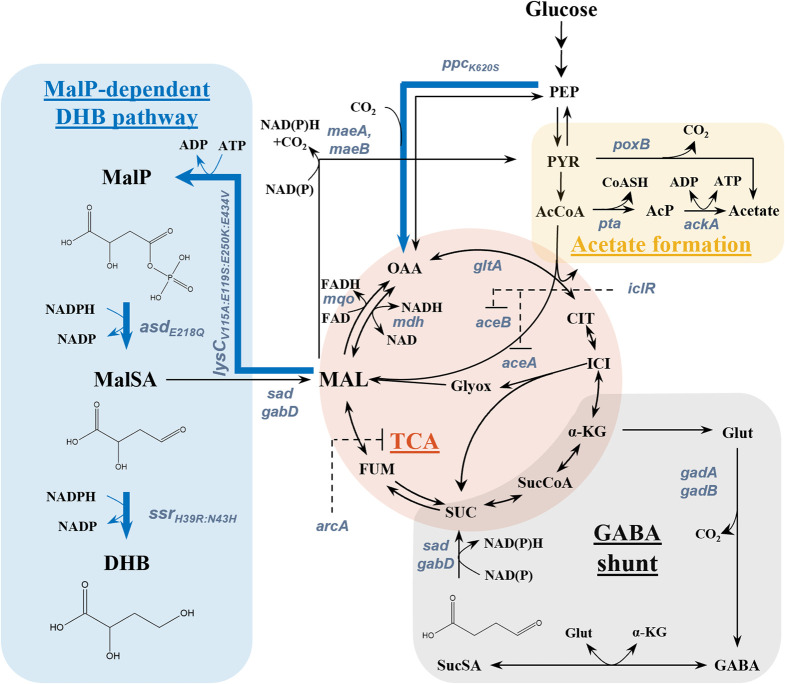 Figure 1
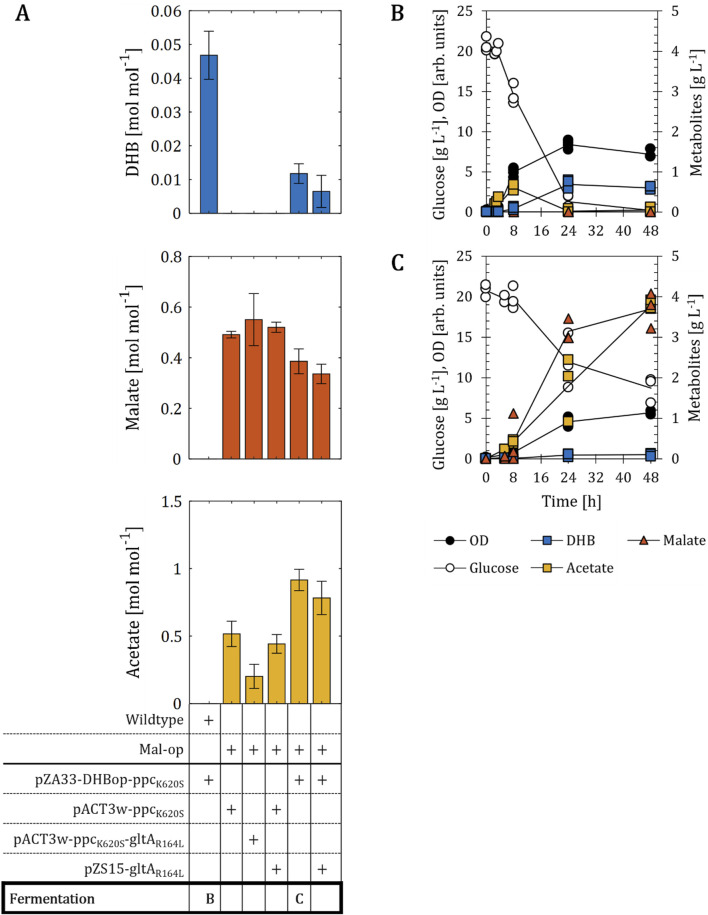 Figure 2
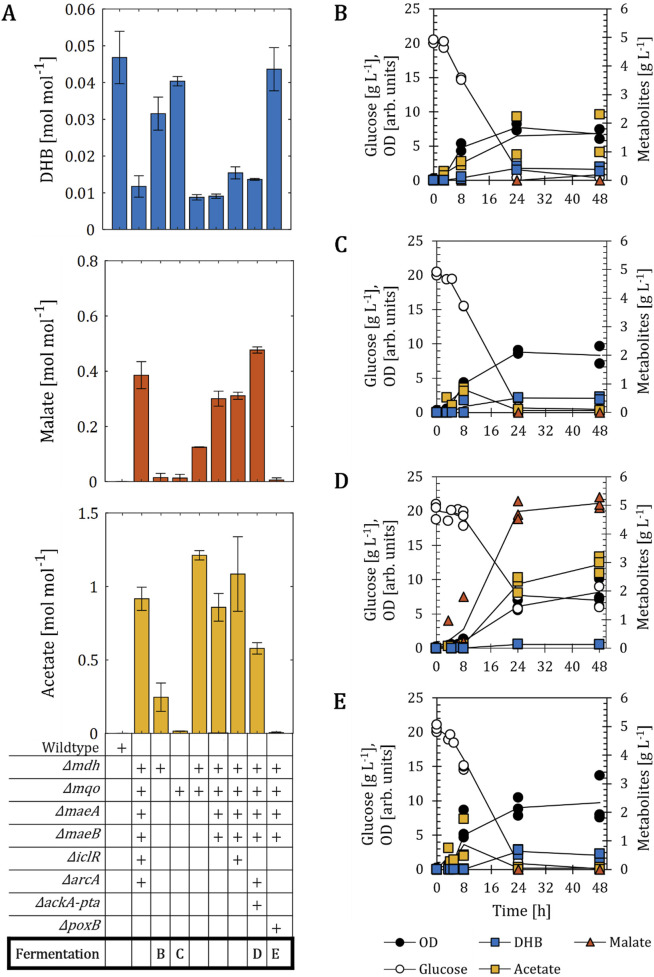 Figure 3
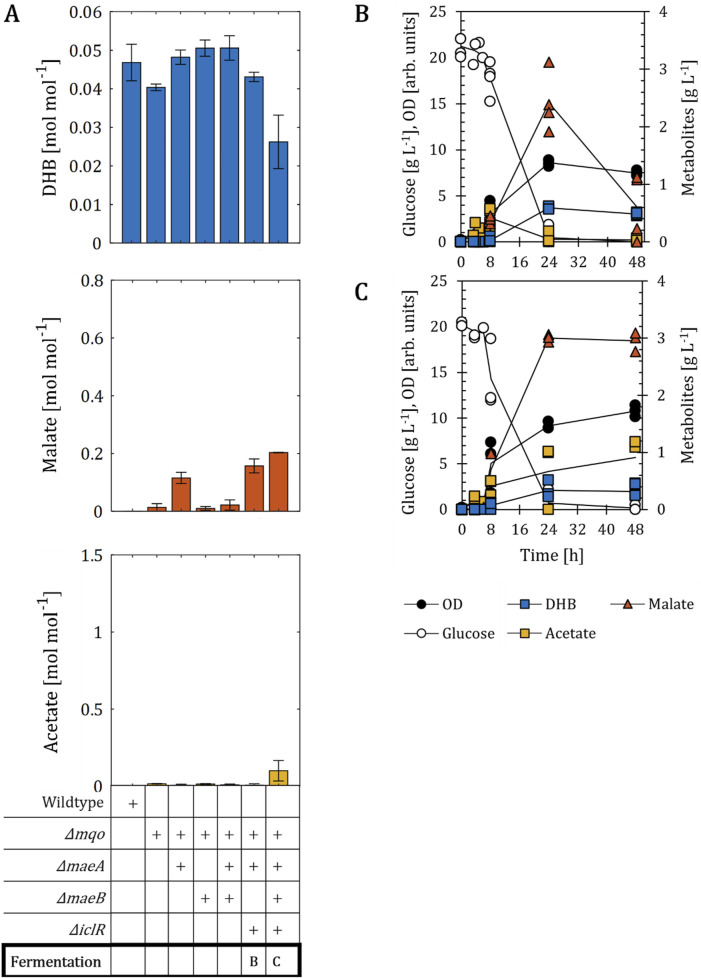 Figure 4
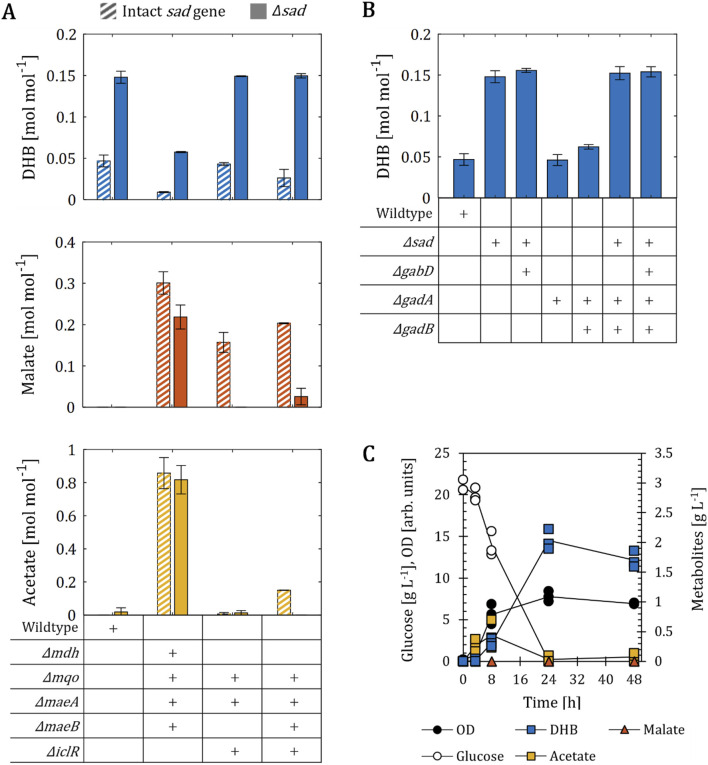 Figure 5
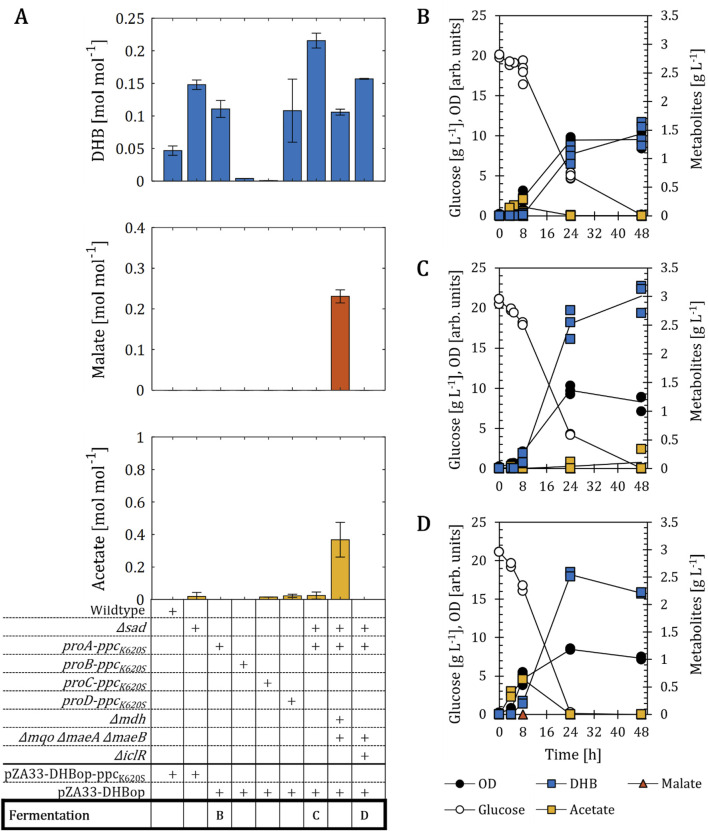 Figure 6
Peer Reviews
No public reviews on file for this paper yet. If you reviewed it on a platform where reviews are public (OpenReview, ICLR, NeurIPS, ICML), you can paste yours below so the community can read it here.
Videos
No videos yet. Explain this paper in a talk, walkthrough, or lecture? Add one.
Taxonomy
TopicsMicrobial Metabolic Engineering and Bioproduction · Biofuel production and bioconversion · Biochemical Acid Research Studies