High serum glial fibrillary acidic protein levels are associated with increased risk of post-stroke cognitive impairment
Wanying Shan, Rui Jiang, Jing Wang, Guoli Xu, Jie Zhao, Guojie Zhai, Jiaxin Shao

TL;DR
High levels of a brain protein called GFAP in the blood are linked to a higher risk of cognitive problems after a stroke.
Contribution
This study identifies serum GFAP as a potential biomarker for predicting post-stroke cognitive impairment.
Findings
Higher serum GFAP levels were independently associated with post-stroke cognitive impairment.
A linear relationship between GFAP concentrations and cognitive impairment risk was confirmed.
48.8% of stroke patients experienced cognitive impairment within 90 days.
Abstract
The correlation between glial fibrillary acidic protein (GFAP) and cognitive impairment in acute ischemic stroke patients remains uncertain. We aimed to evaluate GFAP in serum as predictor of post-stroke cognitive impairment (PSCI) at 90 days. From March 2022 to February 2023, patients with first-ever ischemic stroke were prospectively enrolled. Serum GFAP concentrations were measured within 24 h after admission using an enzyme-linked immunosorbent assay. Cognitive function measurement was performed at the 90 days follow-up using the Mini-mental state examination (MMSE). A MMSE score <27 was defined as PSCI. Multiple logistic regression and restricted cubic spline were performed to examine the association between GFAP and cognitive impairment. A total of 336 patients (mean age: 66.3 ± 9.0 years; 58.3% male) with acute ischemic stroke were included. The median GFAP levels were 0.73…
Genes, proteins, chemicals, diseases, species, mutations and cell lines named across the full text — each resolved to its canonical identifier and authoritative record.
Click any figure to enlarge with its caption.
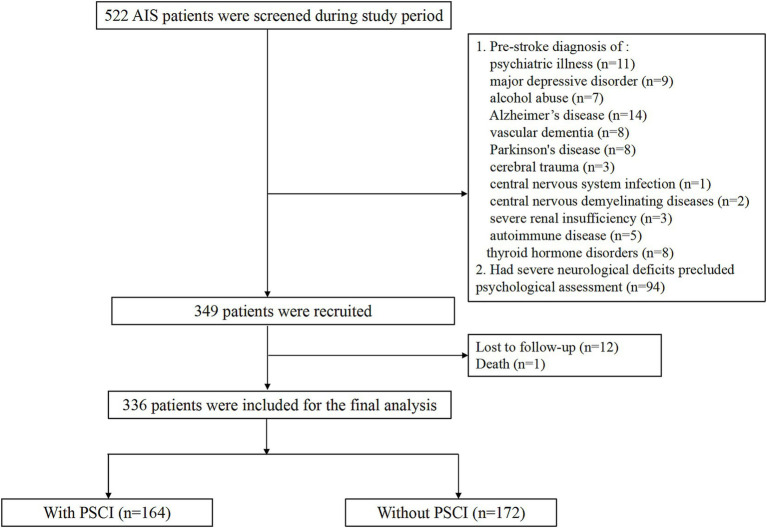 Figure 1
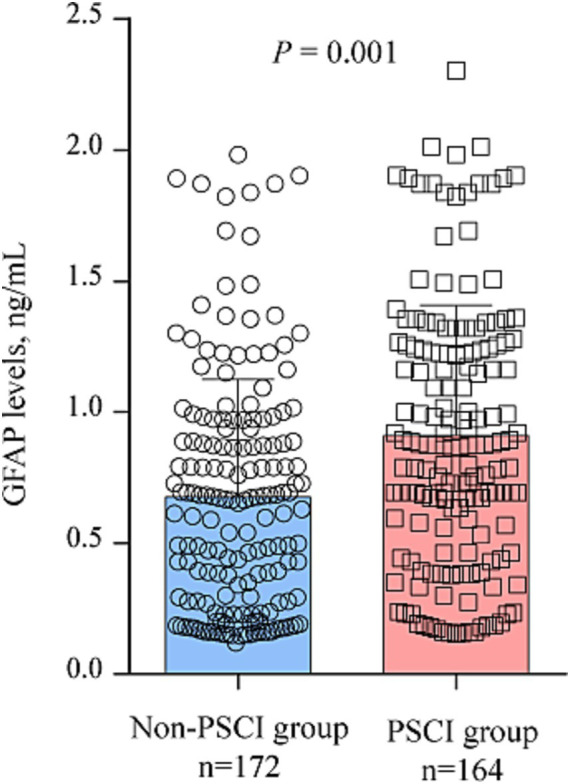 Figure 2
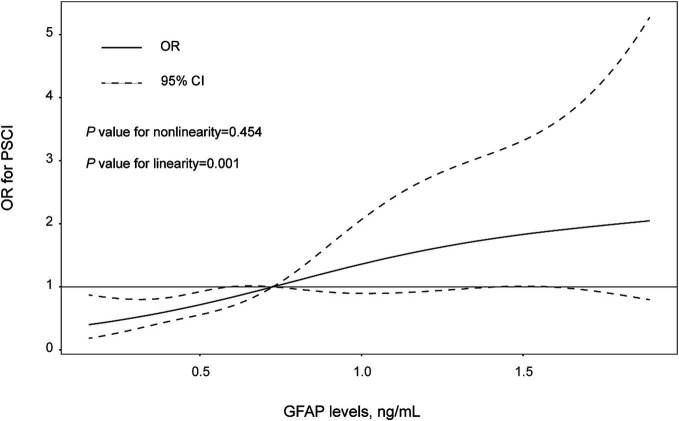 Figure 3
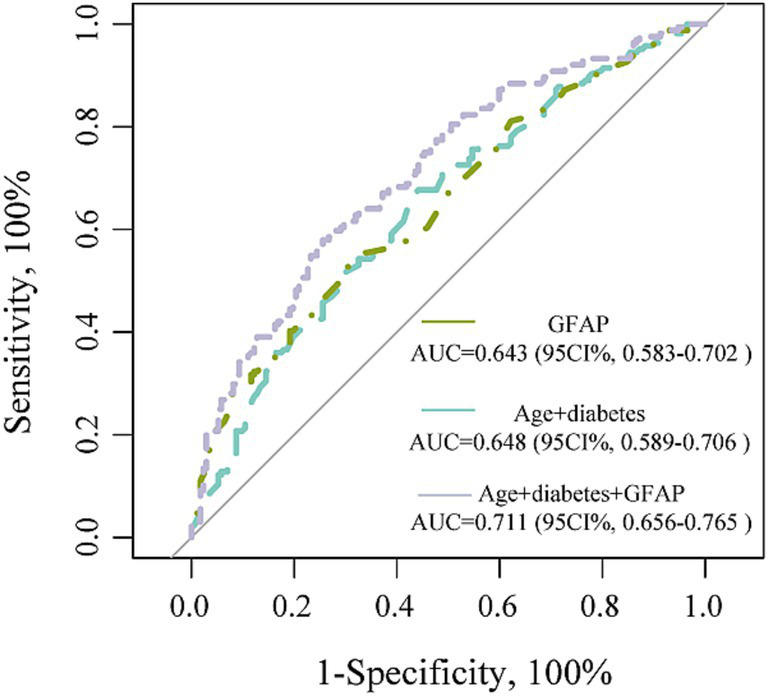 Figure 4
Peer Reviews
No public reviews on file for this paper yet. If you reviewed it on a platform where reviews are public (OpenReview, ICLR, NeurIPS, ICML), you can paste yours below so the community can read it here.
Videos
No videos yet. Explain this paper in a talk, walkthrough, or lecture? Add one.
Taxonomy
TopicsNeurological Disorders and Treatments · S100 Proteins and Annexins · Acute Ischemic Stroke Management