Case Report: A novel likely pathogenetic variant of the MEN1 gene in multiple endocrine neoplasia type 1
Mengli Sun, Xinxia Chang, Xianen Huang, Liangmiao Chen, Mengmeng Peng, Xiqiang Zhong

TL;DR
A 50-year-old patient with a novel MEN1 gene variant was diagnosed with multiple endocrine neoplasia type 1, highlighting the importance of screening for this rare condition in patients with recurrent urinary stones.
Contribution
The study identifies a novel likely pathogenetic variant in the MEN1 gene (c.1257_1268del) associated with multiple endocrine neoplasia type 1.
Findings
The patient exhibited high PTH, blood calcium, and low blood phosphorus, consistent with MEN1.
Loss of menin expression was observed in pancreatic tumor tissues.
A novel MEN1 gene variant (c.1257_1268del) was identified and linked to the patient's condition.
Abstract
Multiple endocrine neoplasia type 1 (MEN1) is a rare disease caused by mutations in the oncosuppressor gene MEN1 and characterized by co-occurrence of tumors of the parathyroid gland, pancreas, and pituitary gland. The clinical manifestations of MEN1 are varied, and misdiagnosis is common. The life expectancy of patients with untreated MEN1 is short. Here, we report a case of a 50-year-old patient with recurrent urinary calculi for more than 10 years who had a pancreatic neuroendocrine tumor and parathyroid adenoma. The patient received a definitive diagnosis of MEN1. We analyze his clinical characteristics and describe our approach to management. Laboratory tests showed high parathyroid hormone (PTH), high blood calcium, and low blood phosphorus levels and increased excretion of urinary calcium. Immunohistochemical analysis showed loss of menin expression in pancreatic tumor tissues.…
Genes, proteins, chemicals, diseases, species, mutations and cell lines named across the full text — each resolved to its canonical identifier and authoritative record.
Click any figure to enlarge with its caption.
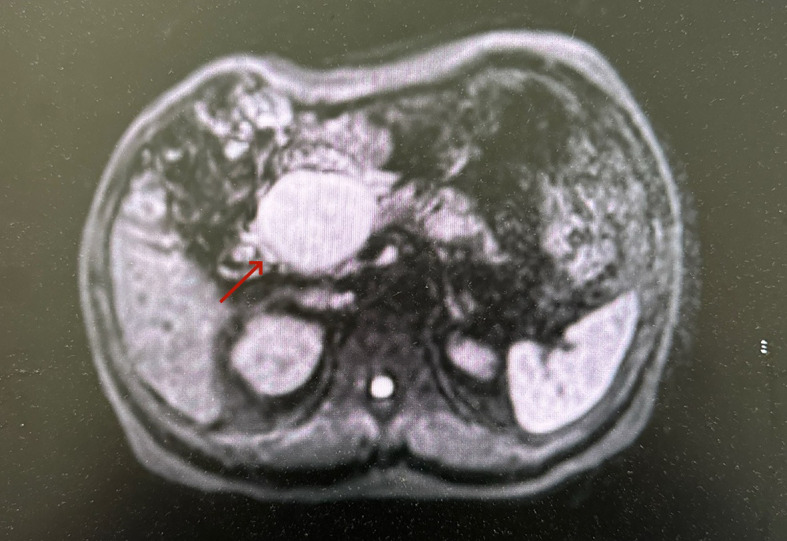 Figure 1
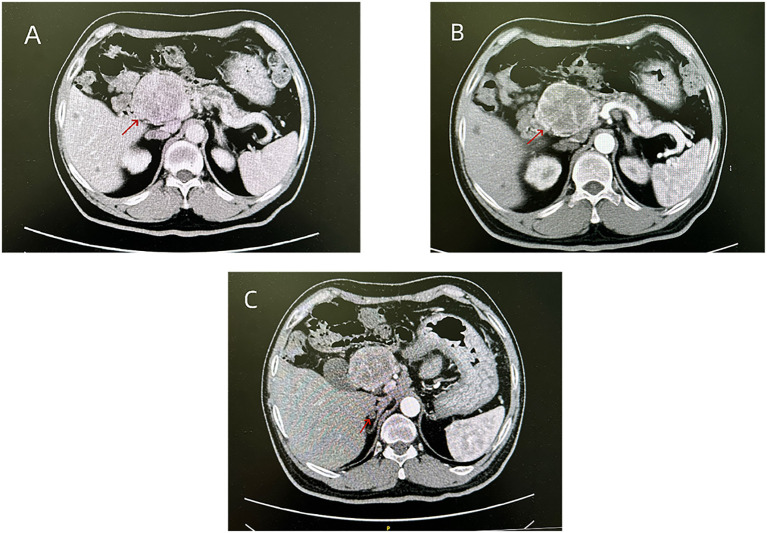 Figure 2
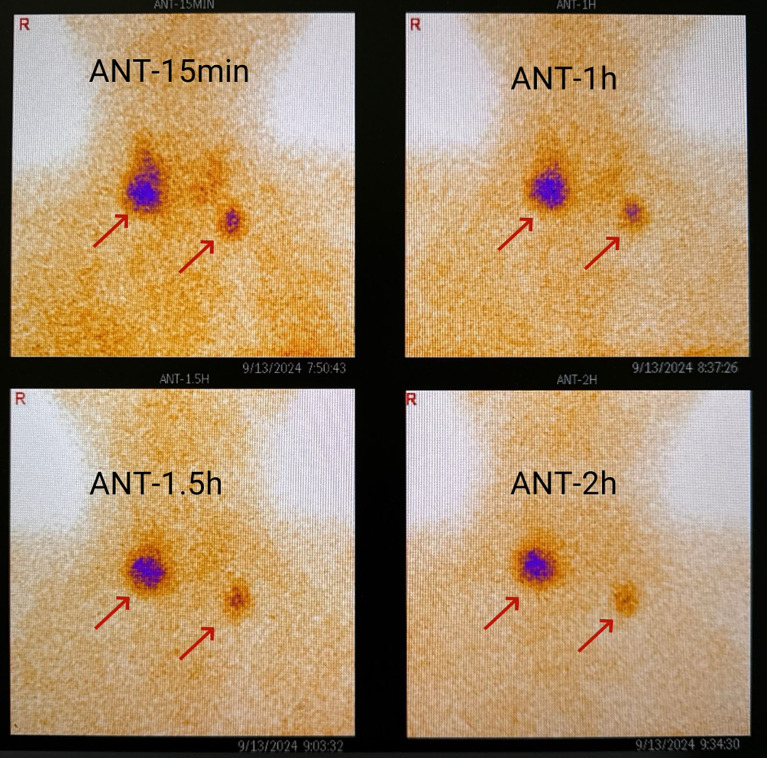 Figure 3
Peer Reviews
No public reviews on file for this paper yet. If you reviewed it on a platform where reviews are public (OpenReview, ICLR, NeurIPS, ICML), you can paste yours below so the community can read it here.
Videos
No videos yet. Explain this paper in a talk, walkthrough, or lecture? Add one.
Taxonomy
TopicsNeuroendocrine Tumor Research Advances · Neuroblastoma Research and Treatments · Lung Cancer Research Studies