Development and application of a UHPLC-MS/MS method for the simultaneous determination of firmonertinib and its main metabolite AST-5902 in rat plasma: a study on the in vivo drug interaction between firmonertinib and paxlovid
Peng-Fei Tang, Su-Su Bao, Wei-Fei Xie, Zhong-Xiang Xiao, Xue-Meng Wu, Hong-Lei Ge

TL;DR
This study developed a method to measure firmonertinib and its metabolite in rat blood and found that combining it with paxlovid increases firmonertinib levels while reducing its metabolite.
Contribution
A new UHPLC-MS/MS method was developed and applied to study drug interactions between firmonertinib and paxlovid in vivo.
Findings
The AUC and Cmax of firmonertinib were significantly increased when combined with paxlovid.
The AUC, Tmax, and Cmax of AST-5902 were significantly decreased when combined with paxlovid.
The developed UHPLC-MS/MS method is accurate, stable, rapid, and simple for in vivo drug interaction studies.
Abstract
Due to the potential occurrence of drug interactions, the combined application of firmonertinib and paxlovid carries a relatively high risk. Nevertheless, as of now, there has been no comprehensive research on the interaction between firmonertinib and paxlovid. Our aim was to establish and validate an accurate, stable, rapid and simple UPLC-MS/MS method for the simultaneous determination of firmonertinib and its metabolite AST-5902 in rat plasma, which was applied to the study of the in vivo interaction between firmonertinib and paxlovid. Gefitinib was selected as the internal standard. After protein precipitation of the plasma samples with acetonitrile, the separation was carried out on a Shimadzu LC-20AT UHPLC. The chromatographic column was a Shim-pack Volex PFPP column (50 mm × 2.1 mm, 1.8 μm), and the mobile phase was composed of 0.1% formic acid - water and 0.1% formic acid -…
Genes, proteins, chemicals, diseases, species, mutations and cell lines named across the full text — each resolved to its canonical identifier and authoritative record.
Click any figure to enlarge with its caption.
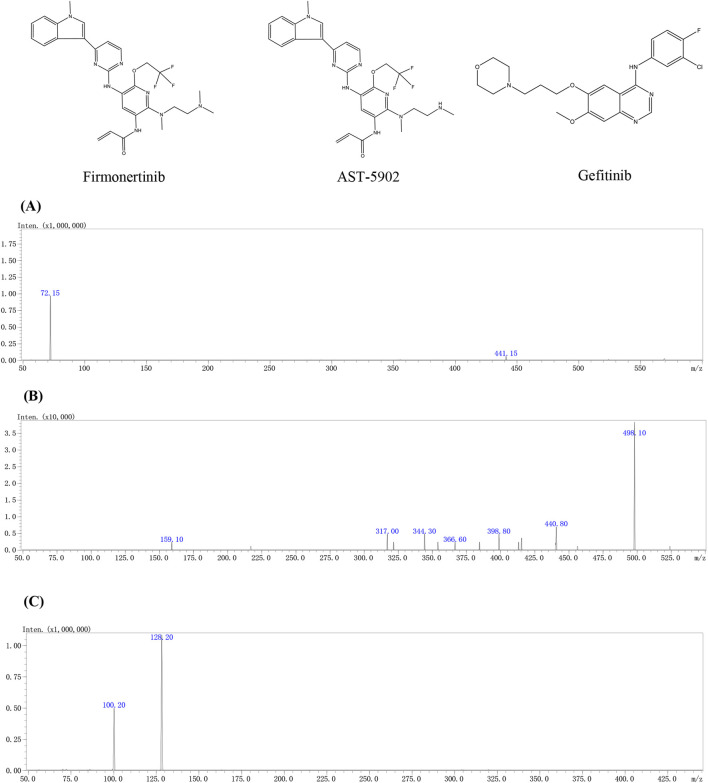 Figure 1
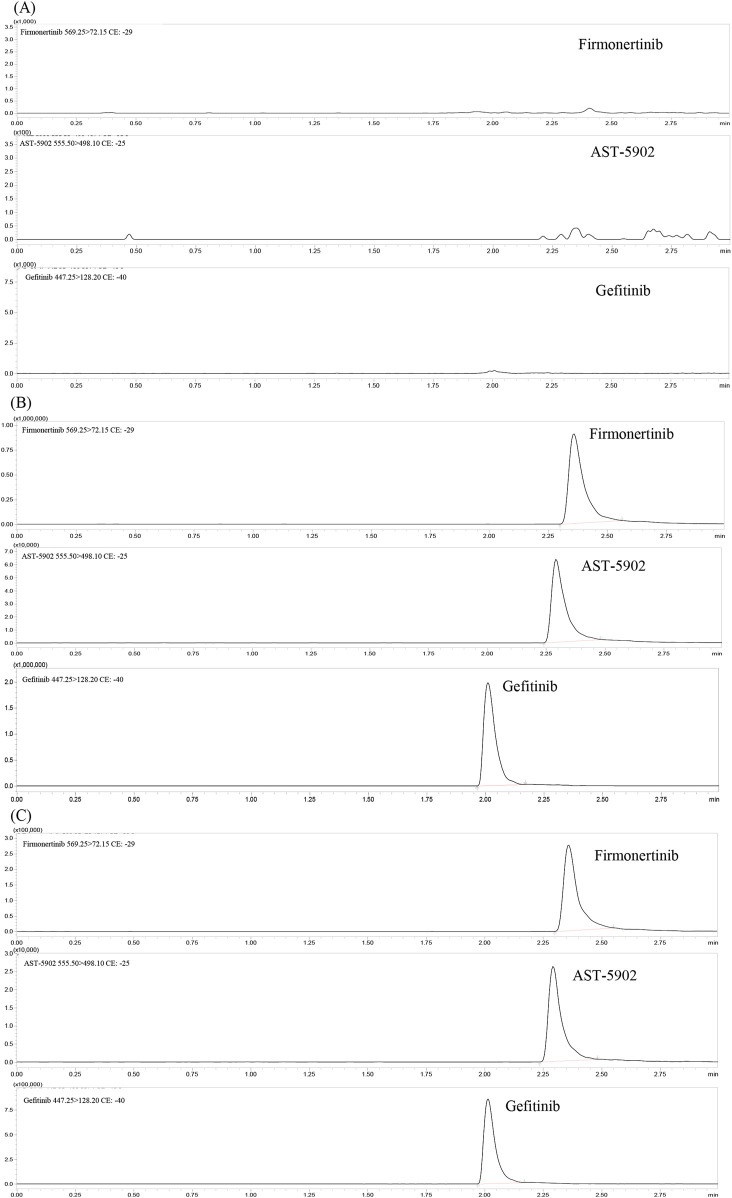 Figure 2
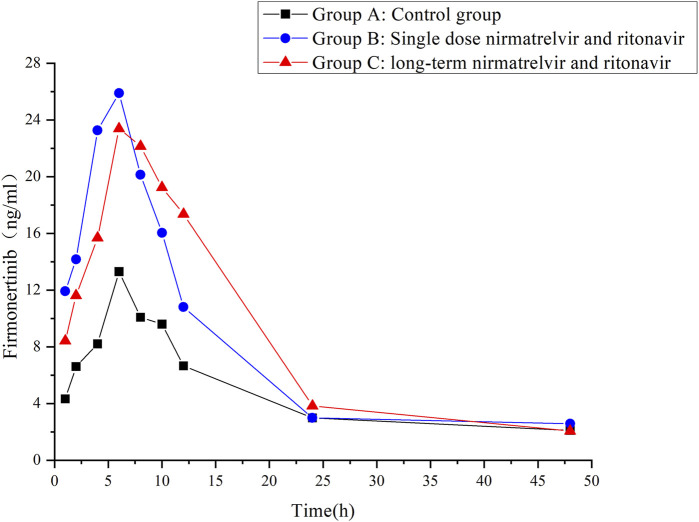 Figure 3
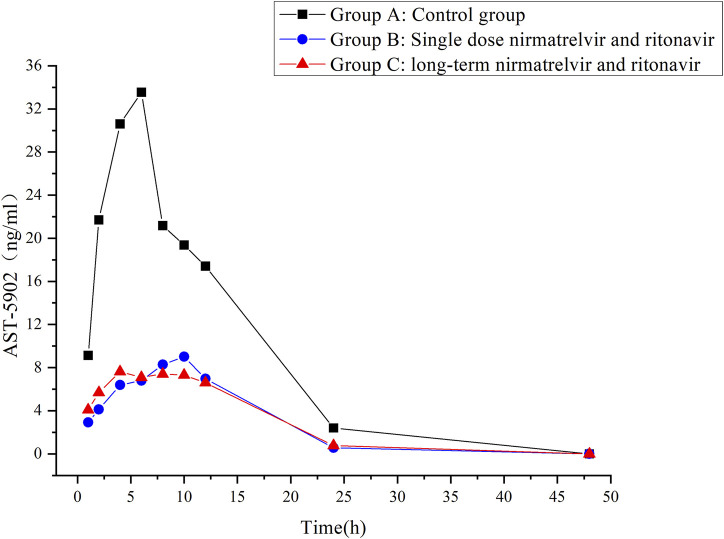 Figure 4
Peer Reviews
No public reviews on file for this paper yet. If you reviewed it on a platform where reviews are public (OpenReview, ICLR, NeurIPS, ICML), you can paste yours below so the community can read it here.
Videos
No videos yet. Explain this paper in a talk, walkthrough, or lecture? Add one.
Taxonomy
TopicsChronic Myeloid Leukemia Treatments · Chronic Lymphocytic Leukemia Research · Acute Lymphoblastic Leukemia research