Treatment pathways and rebound-rate of prehospital viral croup attacks—data from a prehospital pediatric physician led emergency service—a prospective observational follow-up study
Florian Hey, Victoria Lieftüchter, Martin Olivieri, Sebastian Zimatschek, Florian Hoffmann, Daniel Pfeiffer

TL;DR
This study examines how prehospital emergency services treat croup in children and finds that most cases don't require hospitalization or invasive care.
Contribution
The study identifies key factors influencing treatment pathways and suggests a potential algorithm for managing croup in prehospital settings.
Findings
Most croup patients received steroids, adrenaline, and cold air treatments without needing hospitalization.
Only 7% of patients experienced a croup attack recurrence within 12 hours.
Telemedical consultations may be feasible for croup management due to low risk of severe outcomes.
Abstract
Respiratory illnesses, often caused by upper or lower airway obstruction, represent one of the most common pediatric emergencies. Croup syndrome is the most frequent cause of inspiratory stridor. The study aims to record the incidence, current treatment, and further care measures. Additionally feasibility and suitability of future telemedical consultations for pseudo-croup syndrome should be evaluated. A prospective observational follow-up study of children aged 0–18 years who were seen by the Munich physician-led prehospital pediatric emergency service from October 15, 2020 to April 30, 2023. The attending emergency physician completed an anonymous questionnaire with treatment information. The child's parents provided a second questionnaire regarding the clinical course and further care in the 12 h following the initial presentation. A total of 226 patients, 154 (68.1%) with a…
Genes, proteins, chemicals, diseases, species, mutations and cell lines named across the full text — each resolved to its canonical identifier and authoritative record.
Click any figure to enlarge with its caption.
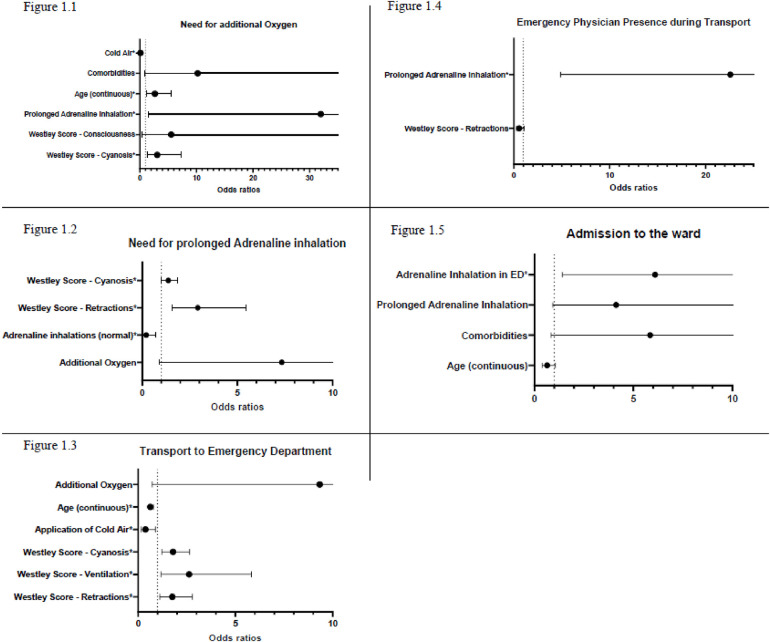 Figure 1
 Figure 2
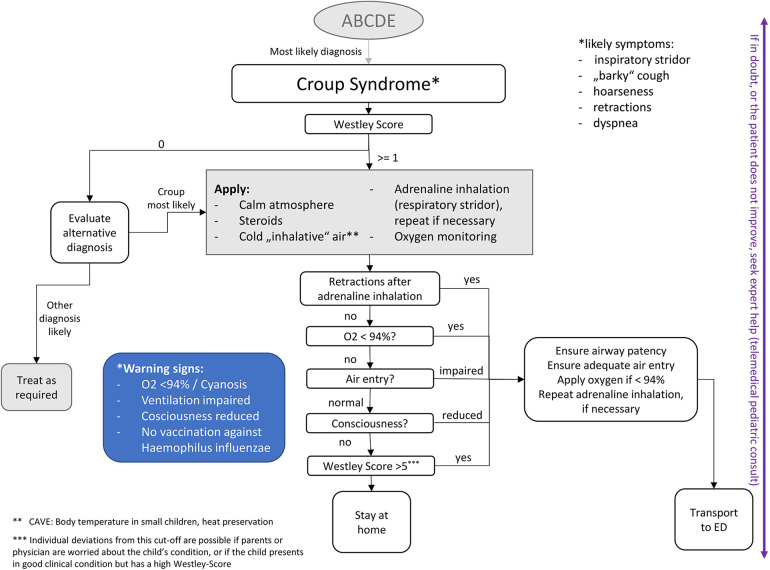 Figure 3
Peer Reviews
No public reviews on file for this paper yet. If you reviewed it on a platform where reviews are public (OpenReview, ICLR, NeurIPS, ICML), you can paste yours below so the community can read it here.
Videos
No videos yet. Explain this paper in a talk, walkthrough, or lecture? Add one.
Taxonomy
TopicsOtolaryngology and Infectious Diseases · Emergency and Acute Care Studies · Streptococcal Infections and Treatments