Clinical and Morphological Bone Marrow Characteristics of Pearson Syndrome: About Three Consecutive Cases and Review of the Literature
Gaetan-Nagim Degroot, Aurélie Empain, Laurence Dedeken, Anne Demulder, Laurence Rozen

TL;DR
Pearson syndrome is a rare, fatal disorder with early anemia and bone marrow changes; this study reports three cases and reviews clinical features.
Contribution
The paper provides new clinical insights and emphasizes the importance of bone marrow analysis in diagnosing Pearson syndrome.
Findings
Vacuolization of bone marrow precursors is a consistent feature in Pearson syndrome patients regardless of age.
Ring sideroblasts become more frequent after six months of age in Pearson syndrome cases.
Bone marrow analysis is recommended for all suspected cases, even without anemia.
Abstract
Pearson syndrome (PS) is a rare and fatal multisystem disorder caused by a mitochondrial DNA (mtDNA) deletion. Most patients develop refractory anemia in early infancy, rapidly followed by multiple complications such as failure to thrive, muscle hypotonia, pancreatic insufficiency, and renal tubulopathy. Although the definitive diagnosis is established by mtDNA sequencing, bone marrow (BM) cytology is a cornerstone of diagnosis, typically revealing precursor vacuolization and ring sideroblasts. We report here three cases of patients with PS encountered in our institution and summarize the clinical and hematological features of PS through a systematic review of the literature. The first symptoms mostly appear during the first month of life and rarely after 18 months. Hyporegenerative anemia, a hallmark of the disease, is the most common initial symptom, followed at a distance by…
Genes, proteins, chemicals, diseases, species, mutations and cell lines named across the full text — each resolved to its canonical identifier and authoritative record.
Click any figure to enlarge with its caption.
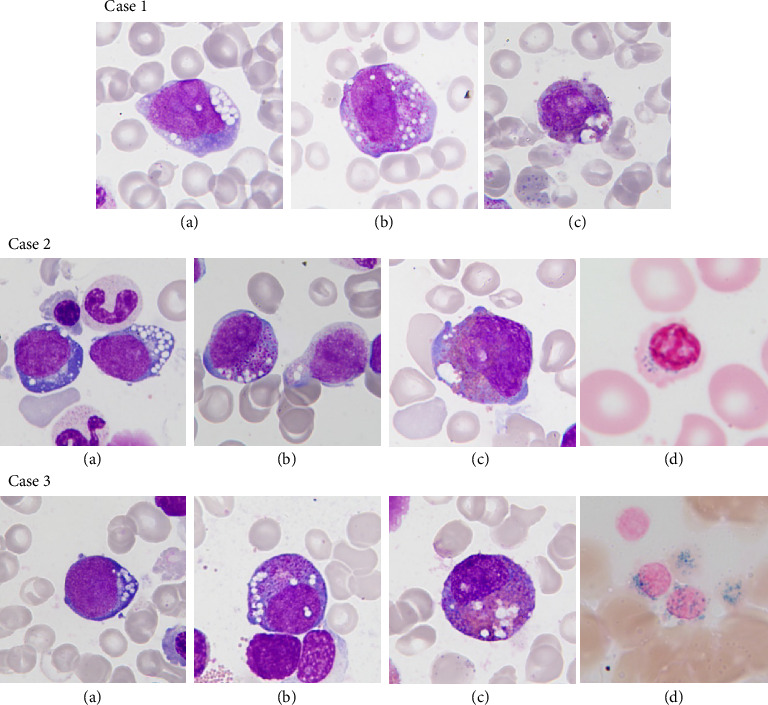 Figure 1
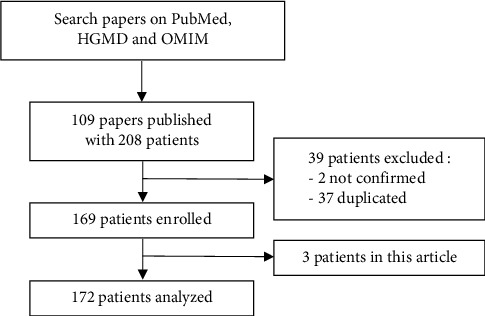 Figure 2
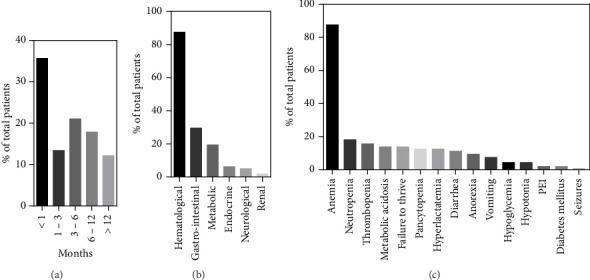 Figure 3
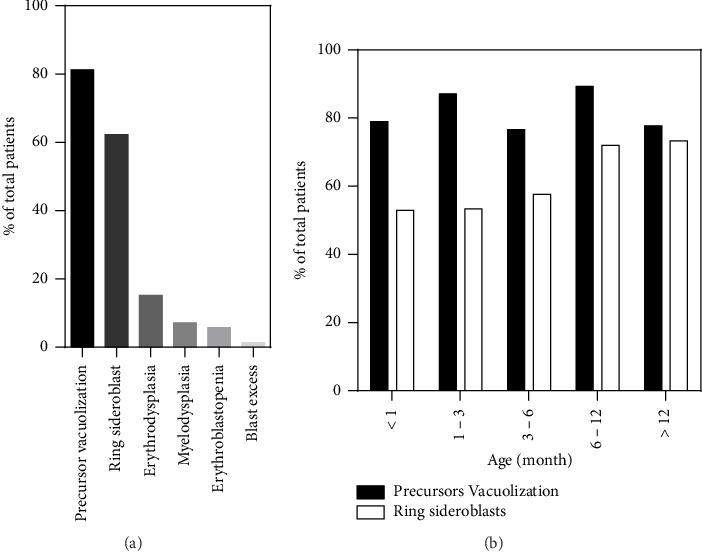 Figure 4
 Figure 5
 Figure 6
Peer Reviews
No public reviews on file for this paper yet. If you reviewed it on a platform where reviews are public (OpenReview, ICLR, NeurIPS, ICML), you can paste yours below so the community can read it here.
Videos
No videos yet. Explain this paper in a talk, walkthrough, or lecture? Add one.
Taxonomy
TopicsBlood disorders and treatments · Metabolism and Genetic Disorders · Mitochondrial Function and Pathology