Comparative genomic analysis of Mycoplasma agalactiae strain GM139 highlights unique surface architecture and pathogenic determinants
Rohini Chopra-Dewasthaly, Katja Sommer, Maysa Santos Barbosa, Joachim Spergser

TL;DR
This study compares the genome of a Mycoplasma agalactiae strain to others, revealing unique surface proteins and genetic features that may explain its pathogenicity and host adaptation.
Contribution
The study identifies a unique vpma locus structure and genetic elements in strain GM139 that correlate with distinct antigenic and pathogenic properties.
Findings
Strain GM139 has a longer vpma locus with ten genes, including a chimera and five unique vpmas.
Genetic features like an intact gsmA and ICE elements may influence pathogenicity and host range.
Strains cluster into two phylogenetic groups based on a new cgMLST scheme.
Abstract
Mycoplasma agalactiae causes one of the most serious forms of mycoplasmosis in small ruminants that is notifiable to the World Organization for Animal Health (WOAH). Possessing a plastic genome, its Vpma and other surface antigenic variations play important roles in its pathogenesis and systemic spread within the goat or sheep host, as well as its ability to jump to wild animals. The Vpma phenotypic profile of strain GM139 was recently compared to that of the type strain PG2, whereby GM139 predominantly exhibited stable expression of a single VpmaV protein in comparison with the high-frequency variable expression of all six Vpma proteins in PG2. The complete genome sequence of GM139 was generated, annotated for detailed analysis of the vpma locus and compared with the finished genomes of three distinct M. agalactiae strains (PG2, 5632, and GrTh01). Interestingly, GM139 presented a…
Genes, proteins, chemicals, diseases, species, mutations and cell lines named across the full text — each resolved to its canonical identifier and authoritative record.
Click any figure to enlarge with its caption.
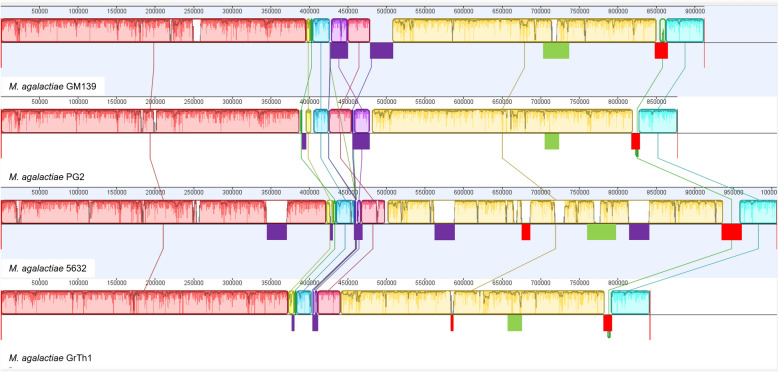 Figure 1
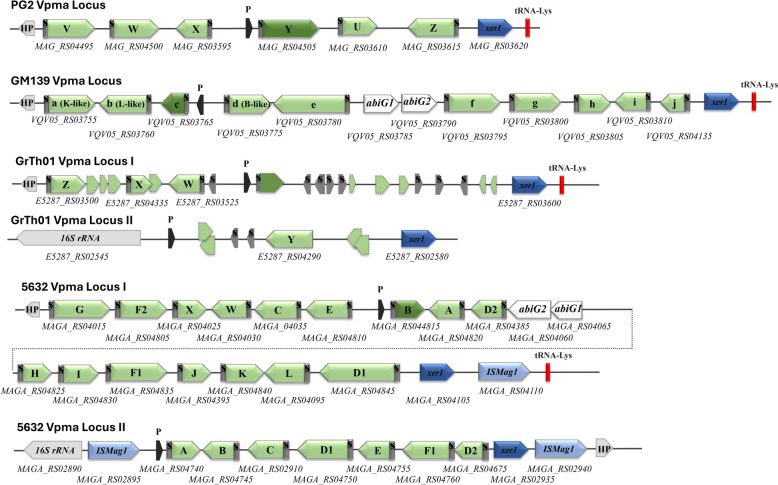 Figure 2
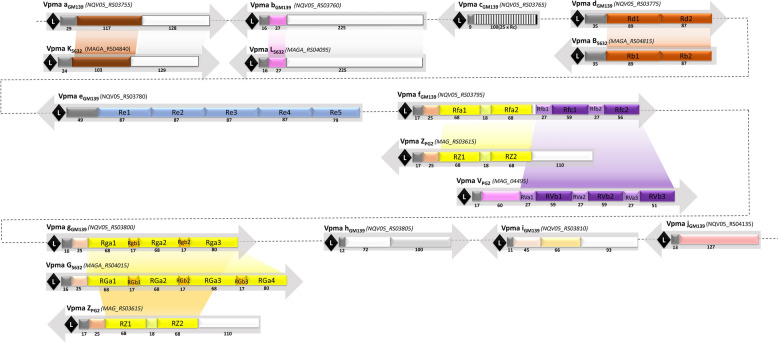 Figure 3
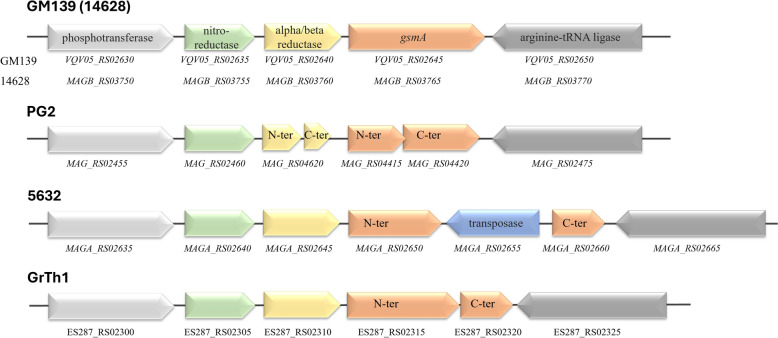 Figure 4
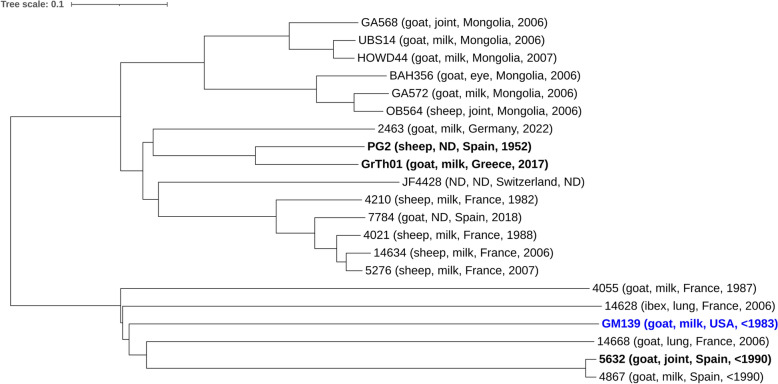 Figure 5
Peer Reviews
No public reviews on file for this paper yet. If you reviewed it on a platform where reviews are public (OpenReview, ICLR, NeurIPS, ICML), you can paste yours below so the community can read it here.
Videos
No videos yet. Explain this paper in a talk, walkthrough, or lecture? Add one.
Taxonomy
TopicsMicrobial infections and disease research · Bacteriophages and microbial interactions · Aquaculture disease management and microbiota