Fournier's Gangrene During Lenvatinib Treatment for Hepatocarcinoma
Simone Rota, Marco de Scordilli, Riccardo Vida, Michela Guardascione, Paola Di Nardo, Arianna Fumagalli, Adrian Zdjelar, Stefania Bottos, Paolo Cabas, Federica Maffeis, Elena Ongaro, Luisa Foltran, Fabio Puglisi

TL;DR
A patient with liver cancer developed a rare and severe infection called Fournier's gangrene while being treated with lenvatinib, highlighting the need for vigilance with this drug.
Contribution
This is the first reported case of Fournier's gangrene in a European hepatocarcinoma patient treated with lenvatinib at an 8 mg daily dose.
Findings
A hepatocarcinoma patient on lenvatinib developed Fournier's gangrene after seven months of treatment.
Emergency surgery was required, followed by multiple procedures to remove necrotic tissue.
This case emphasizes the importance of monitoring rare but severe side effects of antiangiogenic drugs.
Abstract
Antiangiogenic drugs such as lenvatinib have demonstrated significant benefits in patients with hepatocarcinoma (HCC), with an acceptable safety profile. However, serious side effects have been documented, though rare. In this report, we describe the case of a severe and unexpected toxicity encountered after about seven months of lenvatinib treatment. The patient developed a septic state, widespread cutaneous erythema with extensive necrotic involvement of the pelvic floor, with a diagnosis of Fournier's gangrene (FG). Emergency surgery, including sigmoidostomy and wide necrosectomy, was necessary, and further surgeries were performed in the following days due to persistent necrotic tissue. FG is a rare form of necrotizing fasciitis that has been described as rarely associated with several antiangiogenics, even in the absence of major risk factors. Cases of FG have been rarely…
Genes, proteins, chemicals, diseases, species, mutations and cell lines named across the full text — each resolved to its canonical identifier and authoritative record.
Click any figure to enlarge with its caption.
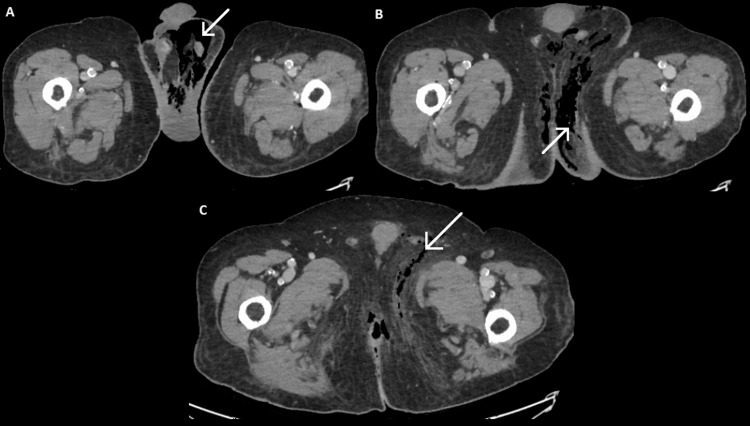 Figure 1
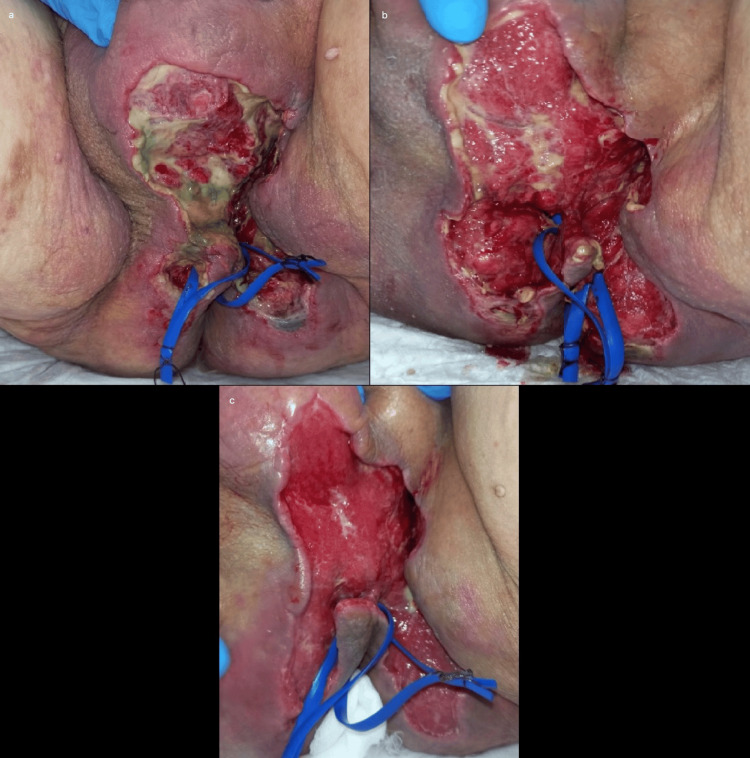 Figure 2
Peer Reviews
No public reviews on file for this paper yet. If you reviewed it on a platform where reviews are public (OpenReview, ICLR, NeurIPS, ICML), you can paste yours below so the community can read it here.
Videos
No videos yet. Explain this paper in a talk, walkthrough, or lecture? Add one.
Taxonomy
TopicsLeprosy Research and Treatment · Autoimmune and Inflammatory Disorders