A Rare Presentation of a T-shaped Uterus in the Post-diethylstilbestrol Era: A Case Report and Literature Review
Riya Pathare, Omar Abuzeid

TL;DR
A 29-year-old woman with a T-shaped uterus and recurrent pregnancy loss is reported, highlighting the need to consider uterine anomalies in infertility cases.
Contribution
This case report adds to the limited literature on T-shaped uterus in the post-DES era and emphasizes its clinical relevance.
Findings
A T-shaped uterus was identified in a patient with recurrent pregnancy loss.
The patient was referred for surgical evaluation to address potential reproductive outcomes.
Uterine anomalies should be considered in infertility cases with negative thrombophilia workups.
Abstract
The T-shaped uterus is a rare congenital uterine anomaly characterized by a narrowed endometrial cavity with lateral constriction, deviating from the typical triangular shape. Historically, this anomaly has been strongly associated with in-utero exposure to diethylstilbestrol (DES) in the mid-20th century; however, since the discontinuation of DES, no primary cause has been identified. We present the case of a 29-year-old female with a history of recurrent pregnancy loss found to have a T-shaped uterus on sonohysterography. The patient was subsequently referred for surgical evaluation. In patients with recurrent pregnancy loss and nonsignificant inherited and acquired thrombophilia workups, structural uterine abnormalities should be considered in the differential diagnosis. While a T-shaped uterus is associated with infertility and adverse pregnancy outcomes, further research is needed…
Genes, proteins, chemicals, diseases, species, mutations and cell lines named across the full text — each resolved to its canonical identifier and authoritative record.
Click any figure to enlarge with its caption.
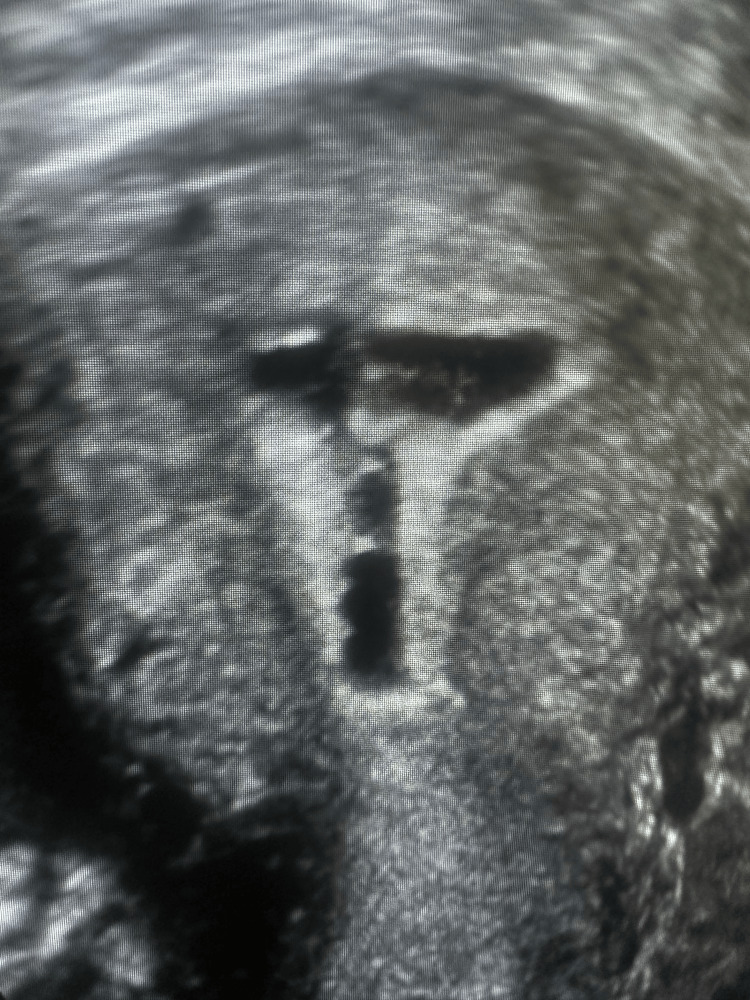 Figure 1
Peer Reviews
No public reviews on file for this paper yet. If you reviewed it on a platform where reviews are public (OpenReview, ICLR, NeurIPS, ICML), you can paste yours below so the community can read it here.
Videos
No videos yet. Explain this paper in a talk, walkthrough, or lecture? Add one.
Taxonomy
TopicsGynecological conditions and treatments · Uterine Myomas and Treatments