Travelling-wave gel dipolophoresis of hydrophobic conducting colloids
Touvia Miloh, Eldad J. Avital

TL;DR
This paper presents a new theoretical model for the movement of hydrophobic colloids in a porous medium under electric fields.
Contribution
A unified weak-field formulation for dipolophoresis in a Brinkman-hydrogel medium is introduced.
Findings
Explicit expressions for dipolophoretic mobility are derived using Brinkman, Navier slip, and Debye length scales.
A rigorous derivation of the Helmholtz–Smoluchowski slip velocity is provided for hydrophobic colloids in porous media.
New solutions for mobility and electroosmotic velocity under sinusoidal excitation are presented.
Abstract
A unified ‘weak-field’ formulation is provided for calculating the combined nonlinear effect of dielectrophoresis and the induced-charge electrophoresis (dipolophoresis) of polarized rigid hydrophobic spherical colloids freely suspended in an electrolyte-saturated Brinkman-hydrogel (porous) medium under a general (direct or alternating currents) non-uniform electric forcing. Explicit expressions for the modified total dipolophoretic mobility of a conducting (metallic) spherical colloid are given in terms of the Brinkman (Darcy), Navier slip, and Debye (screening) length scales. Also presented is a rigorous derivation of the Helmholtz–Smoluchowski slip velocity in terms of these three length scales, including the induced electroosmotic flow field around a hydrophobic rigid colloid embedded in a Brinkman medium that is forced by an arbitrary (non-uniform) ambient electric field. The…
Genes, proteins, chemicals, diseases, species, mutations and cell lines named across the full text — each resolved to its canonical identifier and authoritative record.
Click any figure to enlarge with its caption.
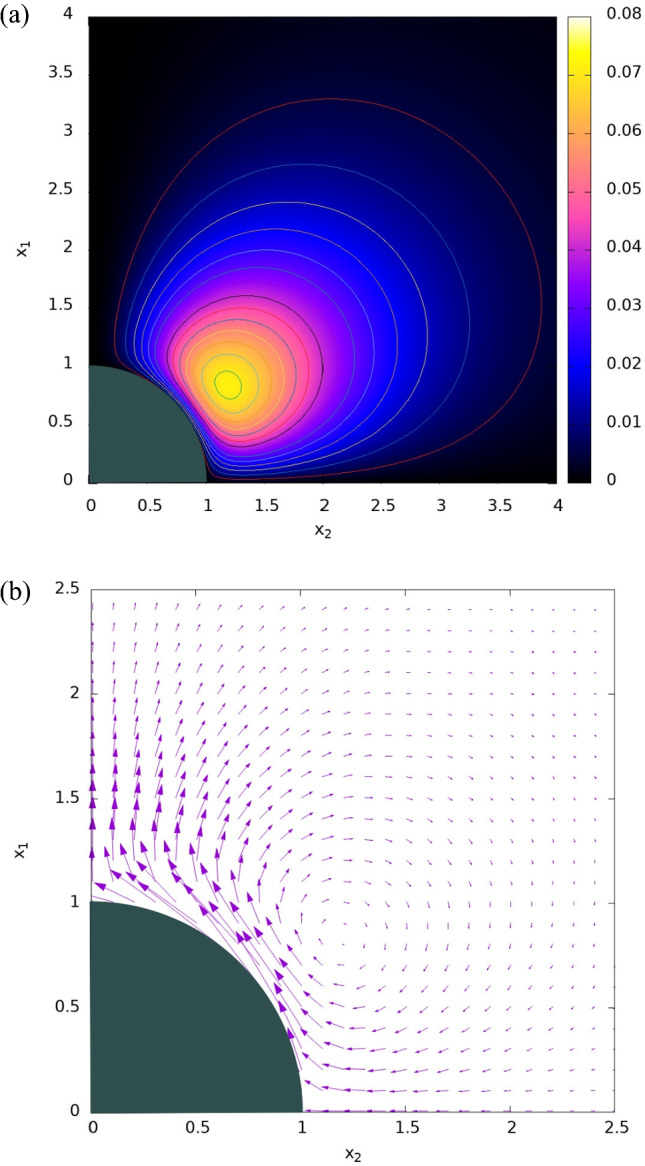 Figure 1
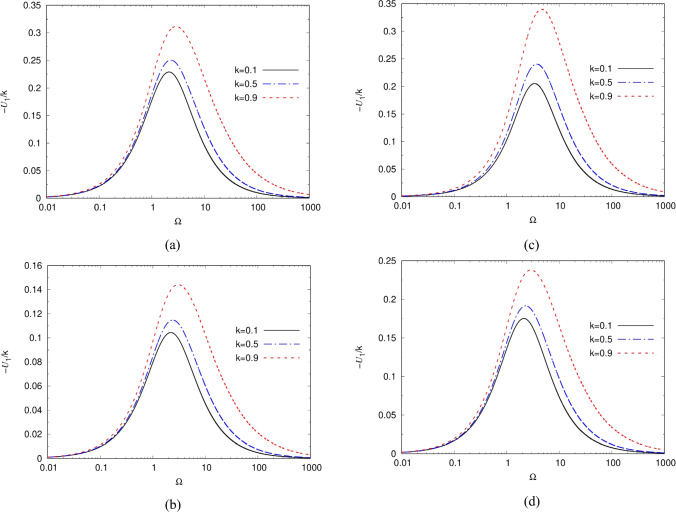 Figure 2
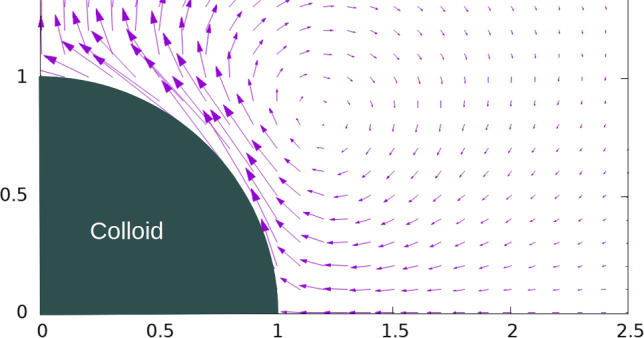 Figure 3
Peer Reviews
No public reviews on file for this paper yet. If you reviewed it on a platform where reviews are public (OpenReview, ICLR, NeurIPS, ICML), you can paste yours below so the community can read it here.
Videos
No videos yet. Explain this paper in a talk, walkthrough, or lecture? Add one.
Taxonomy
TopicsMicrofluidic and Bio-sensing Technologies · Electrostatics and Colloid Interactions · Microfluidic and Capillary Electrophoresis Applications