Performance of EMA algorithm, 2022 ACR/EULAR criteria, and EMA-ACR/EULAR algorithm in classifying pediatric ANCA-associated vasculitis: a national cohort study in China
Zhe Lu, Li-Wen Tan, Hong Xu, Zheng-Kun Xia, Xiao-Yun Jiang, Xiao-Chuan Wu, Fang Wang, Xiao-Rong Liu, Cheng-Guang Zhao, Xiao-Zhong Li, Jian-Hua Mao, Xiao-Wen Wang, Wen-Yan Huang, Xiao-Shan Shao, Jian-Jiang Zhang, Shi-Pin Feng, Jun Yang, Qiu Li, Ai-Hua Zhang, Mo Wang

TL;DR
This study evaluates classification methods for pediatric vasculitis in China, proposing a new algorithm combining EMA and ACR/EULAR criteria to improve accuracy.
Contribution
A new EMA-ACR/EULAR algorithm is introduced to address duplicate classification and refine pediatric AAV diagnosis.
Findings
The EMA-ACR/EULAR algorithm showed positive Net Reclassification Index (NRI) for GPA and MPA classifications.
The new algorithm reduced duplicate classifications seen in the 2022 ACR/EULAR criteria.
The Kappa values indicated moderate agreement between EMA and ACR/EULAR criteria for GPA and MPA.
Abstract
Anti-neutrophil cytoplasmic antibody-associated vasculitis (AAV) is a type of necrotizing vasculitis with poor prognosis, which is more severe in children. Classifying AAV patients may be helpful for diagnosis and management. However, present classification criteria for pediatric AAV are developed mainly based on adults, which have limitations in clinical practice. In this study, we introduced an updated algorithm based on the European Medicines Agency (EMA) algorithm in conjunction with the American College of Rheumatology (ACR)/European Alliance of Associations for Rheumatology (EULAR) criteria. This new approach aims to resolve the issue of duplicate classification present in the 2022 ACR/EULAR criteria and to refine the existing EMA algorithm. This study included 179 pediatric patients diagnosed with AAV across 17 centers in China. Patients were classified using the EMA algorithm,…
Genes, proteins, chemicals, diseases, species, mutations and cell lines named across the full text — each resolved to its canonical identifier and authoritative record.
Click any figure to enlarge with its caption.
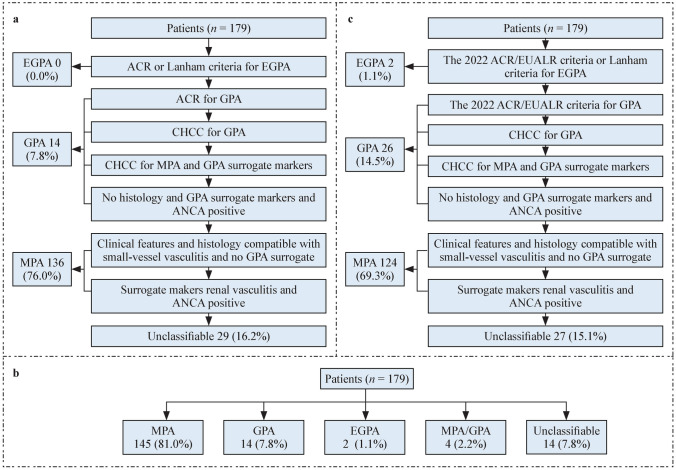 Figure 1
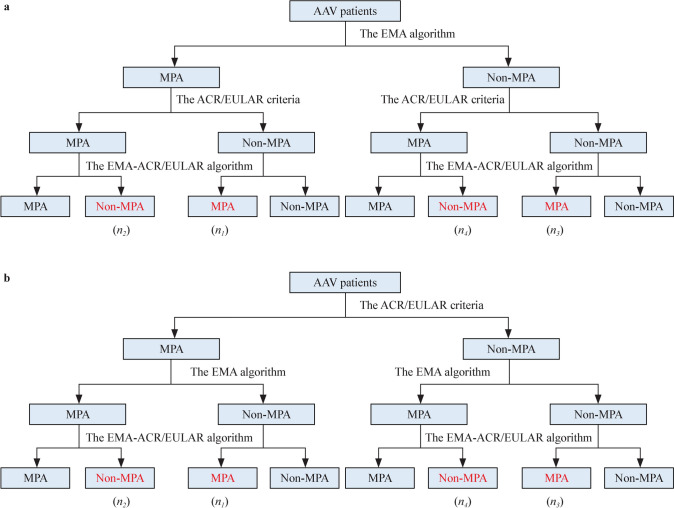 Figure 2
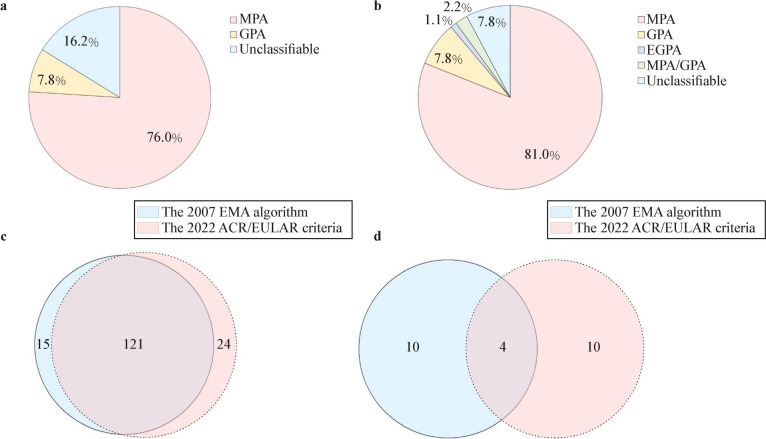 Figure 3
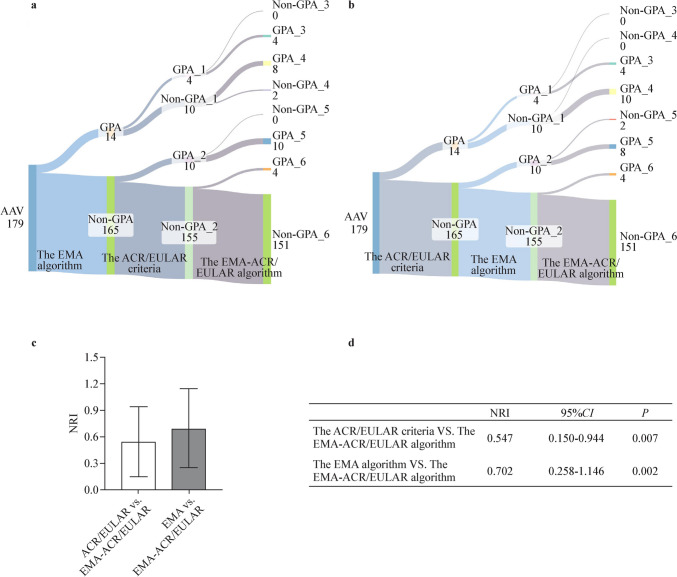 Figure 4
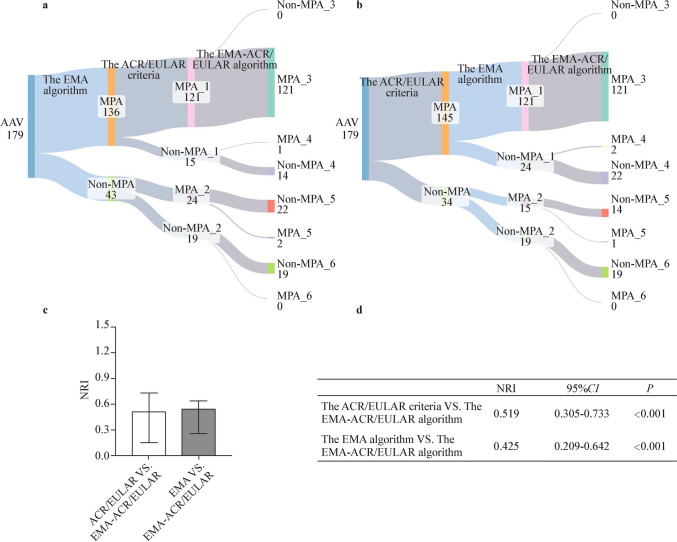 Figure 5
 Figure 6
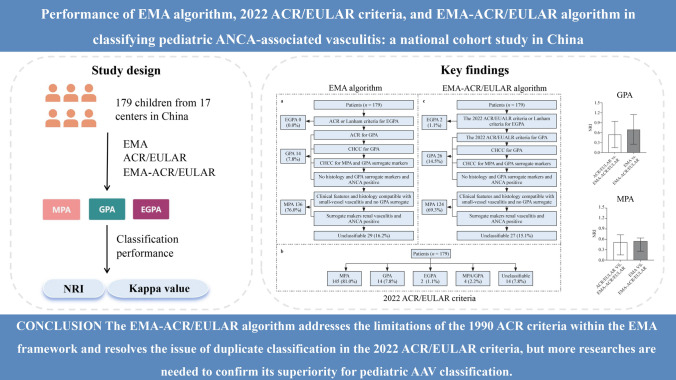 Figure 7
Peer Reviews
No public reviews on file for this paper yet. If you reviewed it on a platform where reviews are public (OpenReview, ICLR, NeurIPS, ICML), you can paste yours below so the community can read it here.
Videos
No videos yet. Explain this paper in a talk, walkthrough, or lecture? Add one.
Taxonomy
TopicsVasculitis and related conditions · Inflammasome and immune disorders · Cell Adhesion Molecules Research