Targeting carboxypeptidase A/B activity with the phosphinic inhibitor C28 reduces the asthmatic response in a mouse model of house dust mite-induced asthma
Venkata Sita Rama Raju Allam, David Montpeyó, Fabrice Beau, Sowsan Taha, Ida Waern, Srinivas Akula, Francesc Xavier Avilés, Julia Lorenzo, Laurent Devel, Gunnar Pejler, Sara Wernersson

TL;DR
A new drug reduces asthma symptoms in mice by inhibiting specific enzymes linked to allergic reactions.
Contribution
Compound 28, a phosphinic inhibitor, effectively mitigates asthma features in a mouse model by targeting carboxypeptidase A/B activity.
Findings
Compound 28 reduced airway hyperresponsiveness and inflammation in asthmatic mice.
The drug mitigated airway smooth muscle and goblet cell remodeling.
Inflammatory gene expression in the lungs was suppressed by compound 28.
Abstract
Metallo-carboxypeptidases are implicated in several pathological contexts but their role in asthma and their potential as therapeutic targets in asthmatic settings are only partly understood. This study sought to investigate whether inhibition of carboxypeptidase activity of A and B-type could mitigate asthma-like symptoms in a mouse model of allergic airway inflammation. BALB/c mice were sensitized and challenged with repeated intranasal instillations of 10 µg house dust mite extract. Prior to each instillation, groups of mice received intraperitoneally from 0.2 to 1 mg/kg of compound 28, a phosphinic inhibitor of A/B-type carboxypeptidases. Manifestations of asthma-like features were assessed, including airway hyperresponsiveness, airway inflammation, lung histopathology and inflammatory markers. Treatment with compound 28 protected against airway hyperresponsiveness and profoundly…
Genes, proteins, chemicals, diseases, species, mutations and cell lines named across the full text — each resolved to its canonical identifier and authoritative record.
Click any figure to enlarge with its caption.
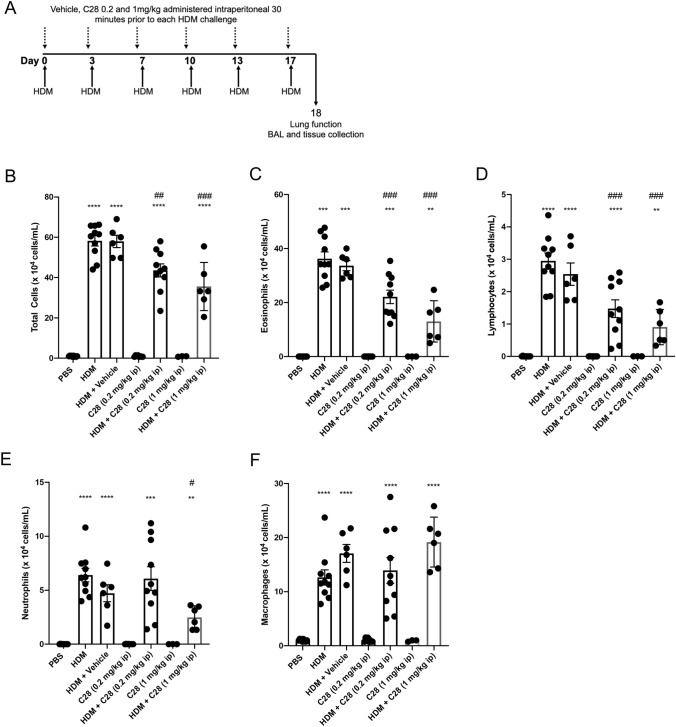 Figure 1
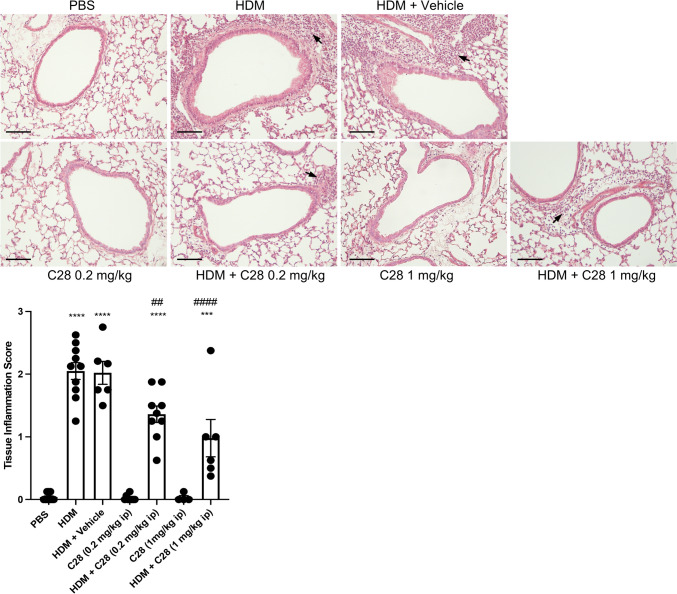 Figure 2
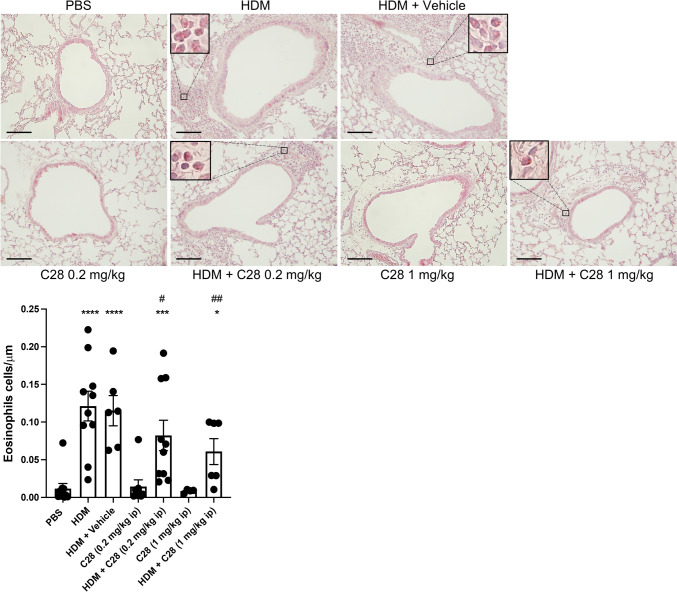 Figure 3
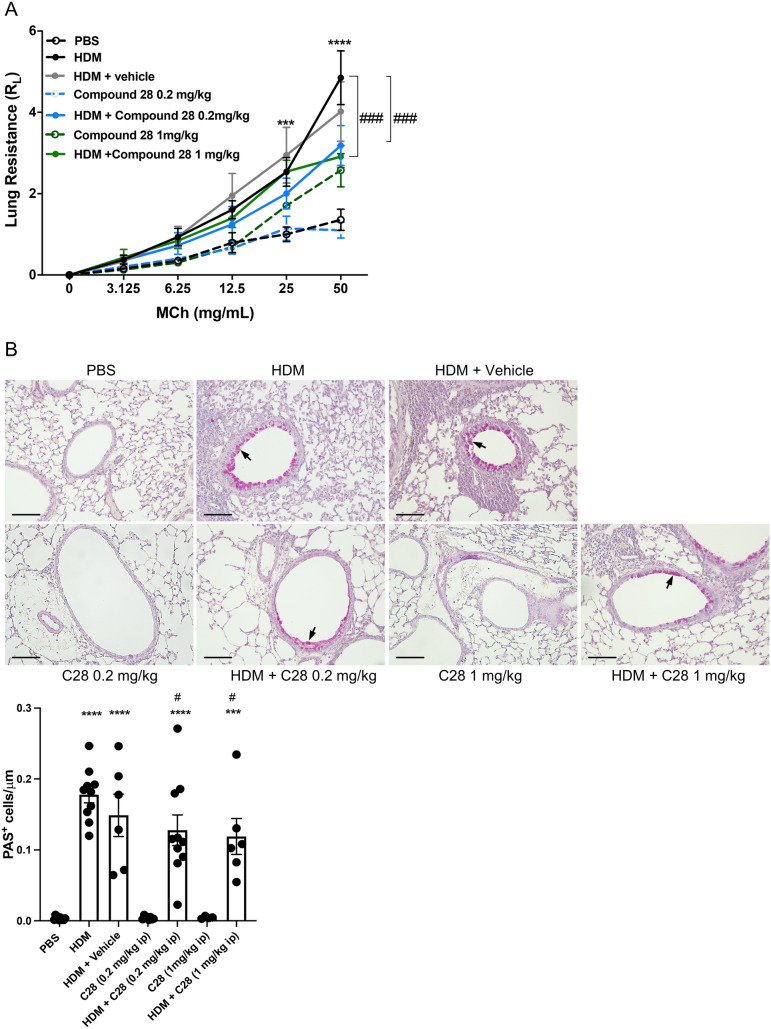 Figure 4
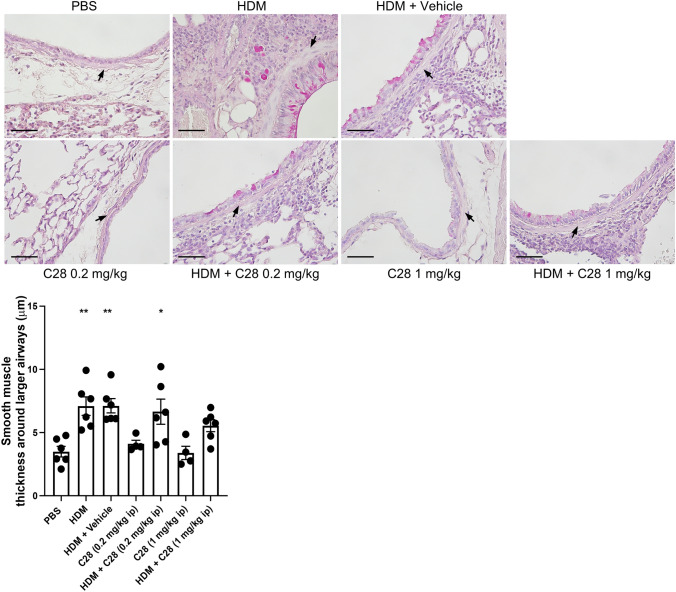 Figure 5
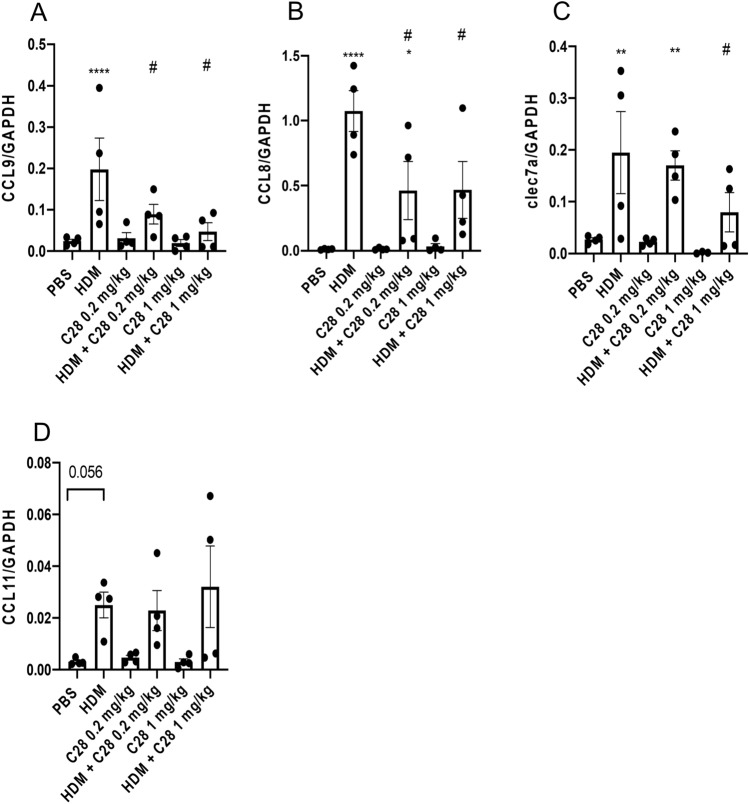 Figure 6
Peer Reviews
No public reviews on file for this paper yet. If you reviewed it on a platform where reviews are public (OpenReview, ICLR, NeurIPS, ICML), you can paste yours below so the community can read it here.
Videos
No videos yet. Explain this paper in a talk, walkthrough, or lecture? Add one.
Taxonomy
TopicsCoagulation, Bradykinin, Polyphosphates, and Angioedema · Peptidase Inhibition and Analysis · Asthma and respiratory diseases