Enhanced urethral identification for radiotherapy planning using fat-suppressed 3D T2-weighted magnetic resonance imaging
Yutaka Kato, Takayoshi Nakaya, Kuniyasu Okudaira, Yumiko Noguchi, Mariko Kawamura, Shunichi Ishihara, Shinji Naganawa

TL;DR
This study introduces a new MRI technique that improves the visibility of the prostatic urethra for better radiotherapy planning.
Contribution
A fat-suppressed 3D T2-weighted MRI sequence is proposed to enhance prostatic urethral identification.
Findings
The proposed sequence showed significantly higher Dice similarity coefficients compared to conventional 3D-T2W sequences.
The new technique achieved better visibility scores and contrast-to-noise ratios in visual assessments.
Abstract
This study proposes a fat-suppressed three-dimensional T2-weighted (3D-T2W) sequence on magnetic resonance imaging to enhance prostatic urethral identification in radiotherapy planning. Conventional 3D-T2W and the proposed sequence were obtained to evaluate prostatic urethral identification in 13 male patients. The proposed sequence demonstrated significantly higher Dice similarity coefficients compared to conventional 3D-T2W sequence (p = 0.001) and superior contrast-to-noise ratios. The proposed sequence also achieved significantly better visibility scores in visual assessment (p = 0.001). The proposed technique uses fat suppression in a standard 3D-T2W sequence, making it a simple and clinically applicable method that does not require specialized sequence designs. Our findings suggest that this approach could be a valuable noninvasive method for enhancing prostatic urethral…
Genes, proteins, chemicals, diseases, species, mutations and cell lines named across the full text — each resolved to its canonical identifier and authoritative record.
Click any figure to enlarge with its caption.
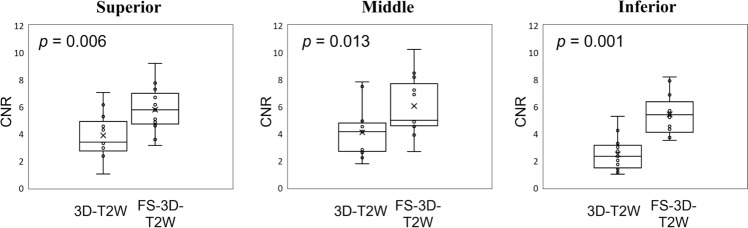 Figure 1
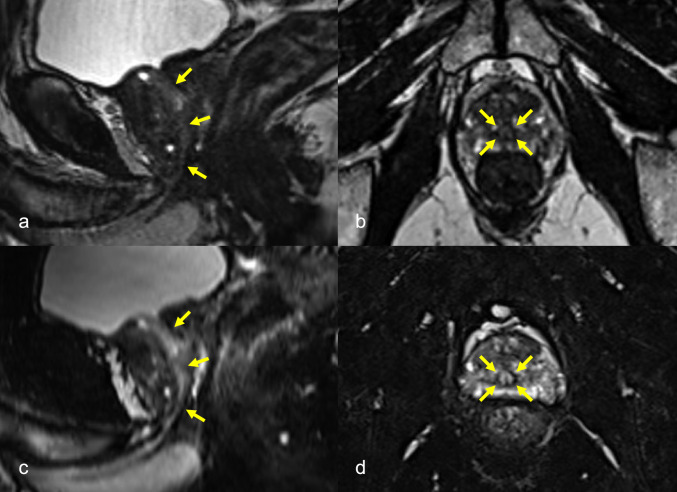 Figure 2
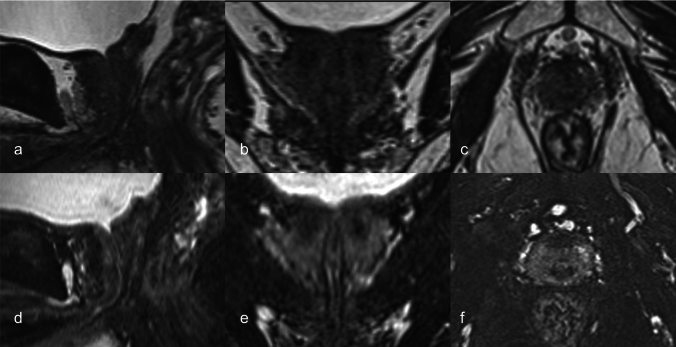 Figure 3
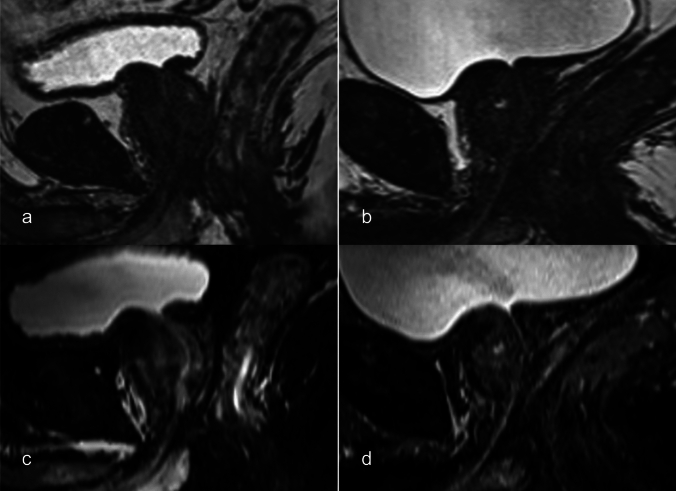 Figure 4
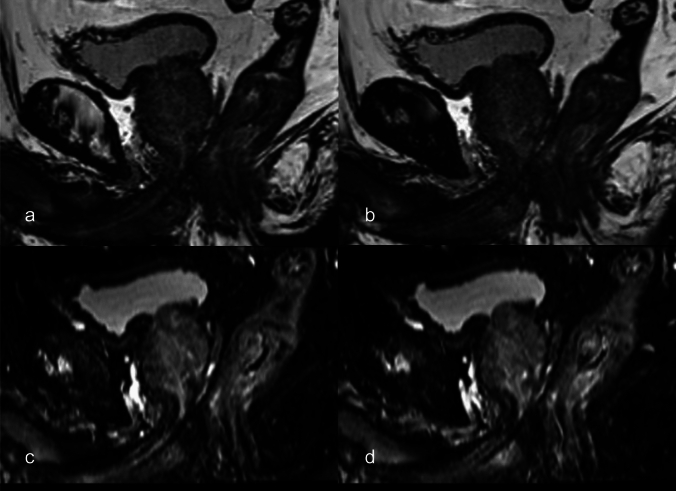 Figure 5
Peer Reviews
No public reviews on file for this paper yet. If you reviewed it on a platform where reviews are public (OpenReview, ICLR, NeurIPS, ICML), you can paste yours below so the community can read it here.
Videos
No videos yet. Explain this paper in a talk, walkthrough, or lecture? Add one.
Taxonomy
TopicsProstate Cancer Diagnosis and Treatment · Advanced MRI Techniques and Applications · Urinary Bladder and Prostate Research