Efficacy of spinal ultrasonography just before caudal epidural block for identifying tethered cord syndrome in urological cases with sacral dimples: a retrospective descriptive study
Fumio Watanabe, Taiki Kojima, Mitsunori Miyazu, Hiroshi Kitoh

TL;DR
Spinal ultrasound before epidural blocks can help identify tethered cord syndrome in young children with sacral dimples, potentially guiding timely surgical intervention.
Contribution
This study identifies specific sacral dimple features and filum terminale thickness as predictors of tethered cord syndrome in pediatric urological cases.
Findings
4.6% of patients required surgery for tethered cord syndrome based on spinal ultrasound and MRI findings.
Dimple long diameter ≥5 mm was significantly more common in TCS cases.
A filum terminale thickness ≥1.3 mm predicted TCS with 93% sensitivity and 80% specificity.
Abstract
Tethered cord syndrome (TCS) can be detected on spinal ultrasound (s-US) performed by anesthesiologists immediately prior to caudal epidural block. In such cases, neurosurgical consultation should be considered to ensure timely diagnosis and treatment. This study aimed to describe: (1) the frequency of TCS requiring surgery in pediatric urological cases with sacral dimples following neurosurgical consultation; (2) the sacral dimple morphology indicative of TCS; and (3) filum terminale thickness as a predictor of TCS. This retrospective, single-center, descriptive study included children ≤ 3 years old with sacral dimples undergoing their first urological surgery with caudal epidural block between April 2019 and June 2024. We described: (1) the proportion of cases requiring spinal surgery based on s-US and postoperative magnetic resonance imaging (MRI); (2) differences in the proportions…
Genes, proteins, chemicals, diseases, species, mutations and cell lines named across the full text — each resolved to its canonical identifier and authoritative record.
Click any figure to enlarge with its caption.
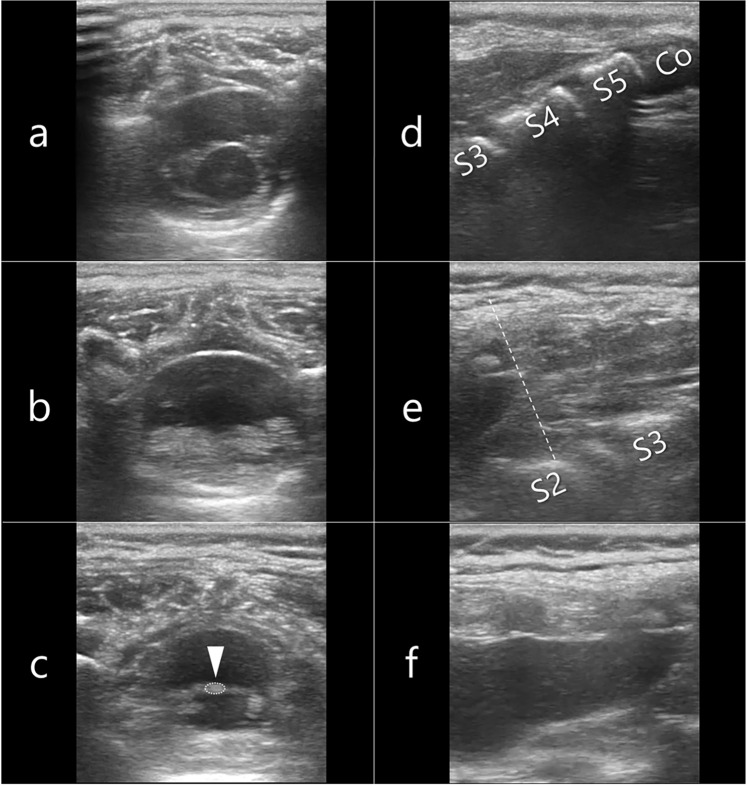 Figure 1
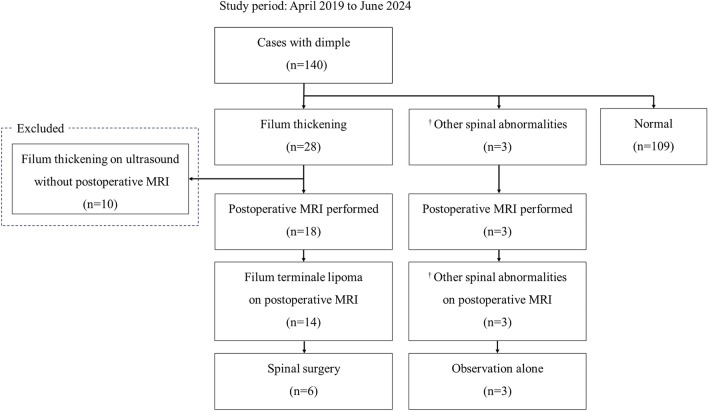 Figure 2
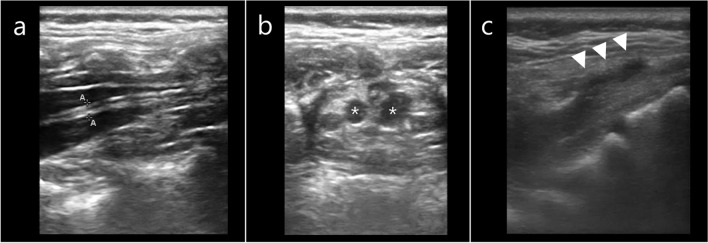 Figure 3
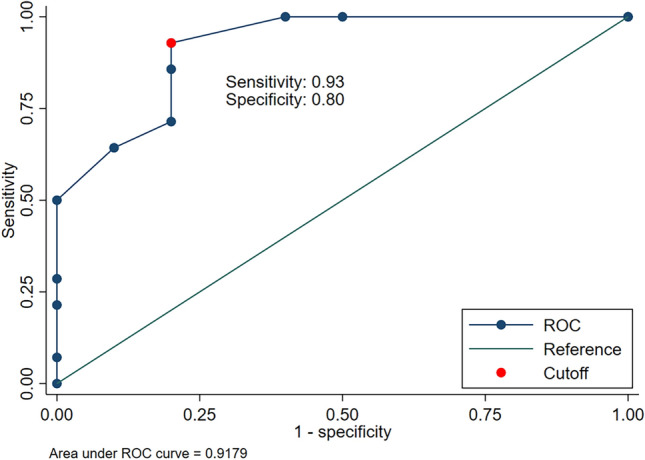 Figure 4
Peer Reviews
No public reviews on file for this paper yet. If you reviewed it on a platform where reviews are public (OpenReview, ICLR, NeurIPS, ICML), you can paste yours below so the community can read it here.
Videos
No videos yet. Explain this paper in a talk, walkthrough, or lecture? Add one.
Taxonomy
TopicsSpinal Dysraphism and Malformations · Congenital gastrointestinal and neural anomalies · Hernia repair and management