Accidental Ingestion of an Open Safety Pin by a Two-Year-Old Male Child: A Case Report
Md Wahiduzzaman Mazumder, Mohammad Rezaul Islam, Fahmida Begum, Nadira Musabbir, Ambia Khatun

TL;DR
A two-year-old boy accidentally swallowed an open safety pin, which was later removed endoscopically from his duodenum.
Contribution
This case highlights the importance of timely diagnosis and endoscopic intervention for accidental ingestion of sharp foreign bodies in children.
Findings
The safety pin was successfully removed from the duodenum using endoscopic techniques.
The child did not show immediate symptoms, leading to a delayed diagnosis.
No complications were reported following the endoscopic removal.
Abstract
Accidental foreign body (FB) ingestion is common in the pediatric age group between six months and five years. Most ingested FBs pass easily through the esophagus, into the stomach, and are expelled from the body without complications. However, some of these foreign bodies may get stuck in any part of the gastrointestinal (GI) tract, and endoscopic removal may be required to avoid complications. We present a case involving the endoscopic removal of an open safety pin from the duodenum of a two-year-old boy. The safety pin went unnoticed until the mother realized one was missing, leading to an incidental diagnosis.
Genes, proteins, chemicals, diseases, species, mutations and cell lines named across the full text — each resolved to its canonical identifier and authoritative record.
Click any figure to enlarge with its caption.
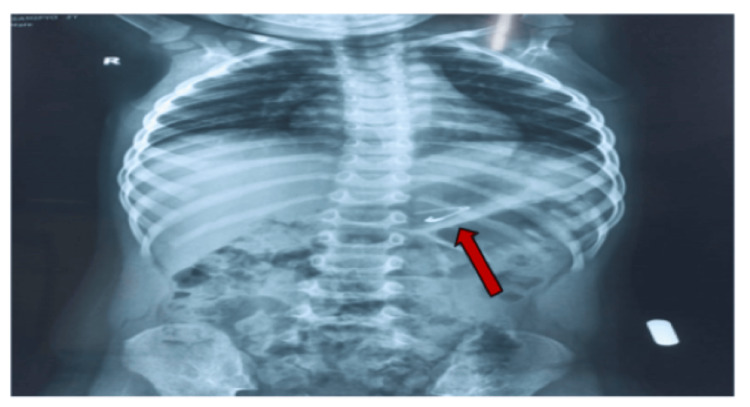 Figure 1
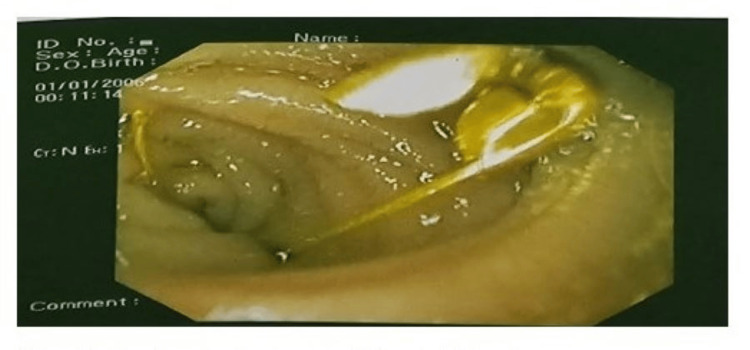 Figure 2
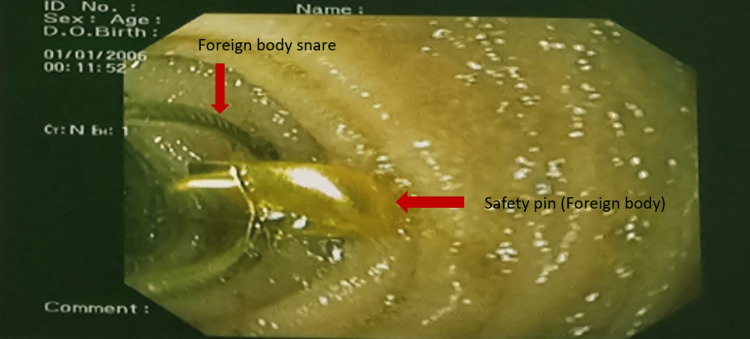 Figure 3
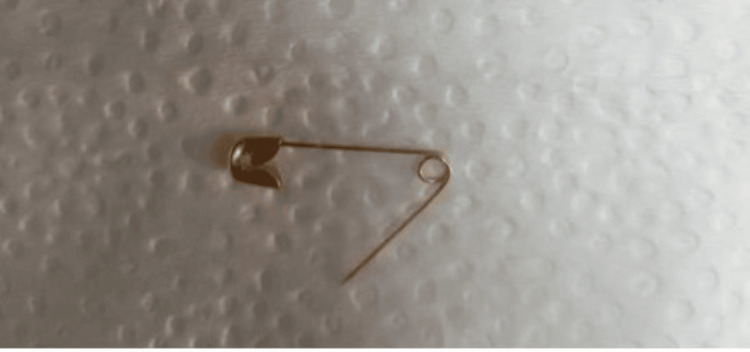 Figure 4
Peer Reviews
No public reviews on file for this paper yet. If you reviewed it on a platform where reviews are public (OpenReview, ICLR, NeurIPS, ICML), you can paste yours below so the community can read it here.
Videos
No videos yet. Explain this paper in a talk, walkthrough, or lecture? Add one.
Taxonomy
TopicsForeign Body Medical Cases · Restraint-Related Deaths · Traumatic Ocular and Foreign Body Injuries