Culex quinquefasciatus Mosquitoes Exposed to a Juvenile Hormone Analog may Take a Bloodmeal While Gravid
Grayson A. Tung, Dina M. Fonseca

TL;DR
Exposing pregnant Culex quinquefasciatus mosquitoes to a hormone-like chemical causes them to seek blood, which harms their ability to reproduce.
Contribution
This study shows that juvenile hormone analogs can induce blood feeding in gravid mosquitoes and reduce their fertility.
Findings
Gravid mosquitoes exposed to a juvenile hormone analog are more likely to take a bloodmeal.
Taking a second bloodmeal while gravid reduces egg number and hatch rate.
Abstract
Blood avidity in female mosquitoes has been shown to be regulated by cycles of hormone production that determine both egg development and distinct behaviors. Specifically, juvenile hormone (JH) drives early egg development until a bloodmeal is acquired, and JH titers are positively correlated with active host seeking and blood feeding behaviors. After a bloodmeal, JH levels fall, and female mosquitoes become refractory to host seeking and biting. While JH analogs (JHAs) are commonly used as larvicides for mosquito control, the effects of these compounds on adult mosquitoes are not well understood. If JH levels are directly implicated in blood acquisition, adult exposure to JHAs might cause nonbiting female mosquitoes to take a blood meal. To test this hypothesis, in laboratory experiments we exposed gravid Culex quinquefasciatus mosquitoes to s‐hydroprene, a JHA, both through direct…
Genes, proteins, chemicals, diseases, species, mutations and cell lines named across the full text — each resolved to its canonical identifier and authoritative record.
Click any figure to enlarge with its caption.
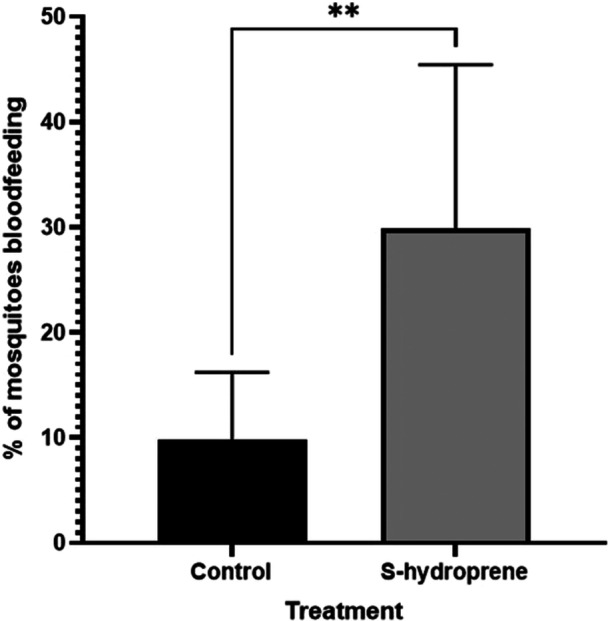 Figure 1
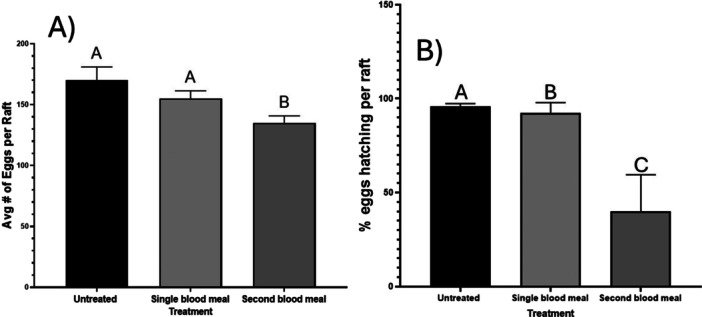 Figure 2
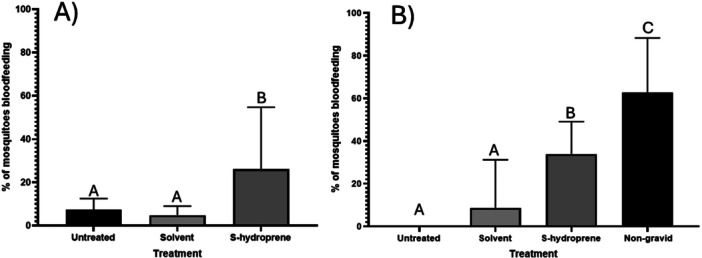 Figure 3
 Figure 4
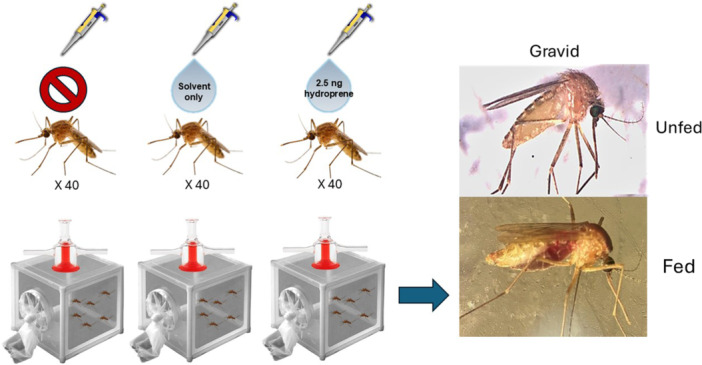 Figure 5
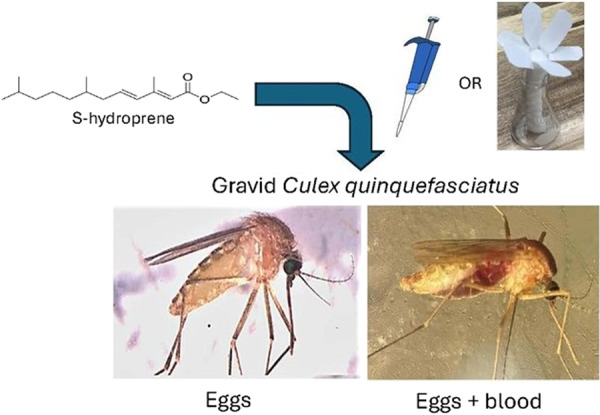 Figure 6
Peer Reviews
No public reviews on file for this paper yet. If you reviewed it on a platform where reviews are public (OpenReview, ICLR, NeurIPS, ICML), you can paste yours below so the community can read it here.
Videos
No videos yet. Explain this paper in a talk, walkthrough, or lecture? Add one.
Taxonomy
TopicsMosquito-borne diseases and control · Neurobiology and Insect Physiology Research · Insect symbiosis and bacterial influences