ZASCA-sum: A dataset of the South Africa supreme courts of appeal judgments and media summaries for legal documents summarization research
Idris Abdulmumin, Vukosi Marivate

TL;DR
ZASCA-Sum is a new dataset of South African court judgments and media summaries to help improve legal document summarization.
Contribution
The novel ZASCA-Sum dataset provides curated legal judgments and summaries for legal document summarization research in South Africa.
Findings
The dataset includes 4171 judgments with 2118 summary pairs collected from the South Africa Supreme Court of Appeal.
The dataset is split into training, validation, and test sets for use in supervised, semi-supervised, and unsupervised summarization tasks.
The dataset supports localization of English-centric models to South African dialects.
Abstract
This paper presents ZASCA-Sum, a novel dataset comprising judgments from the South Africa Supreme Court of Appeal and their manually curated media summaries. The dataset, collected from the court's official website, includes 4171 judgments, of which 2118 have summary pairs. The judgments and summaries have been extracted and prepared to support legal document summarization tasks across supervised, semi-supervised, and unsupervised settings. This paper provides a detailed description of the dataset, covering the data collection process, timeline, processing, and potential applications in the field. We provide the token-count distribution and analysis of the judgments and summaries that can be accommodated off-the-shelf by current summarization models with the largest input token size. The dataset, split into training, validation, and test sets, is made publicly available to encourage…
Genes, proteins, chemicals, diseases, species, mutations and cell lines named across the full text — each resolved to its canonical identifier and authoritative record.
Click any figure to enlarge with its caption.
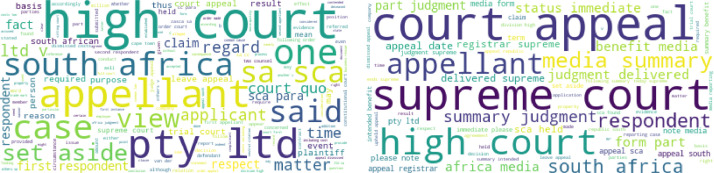 Figure 1
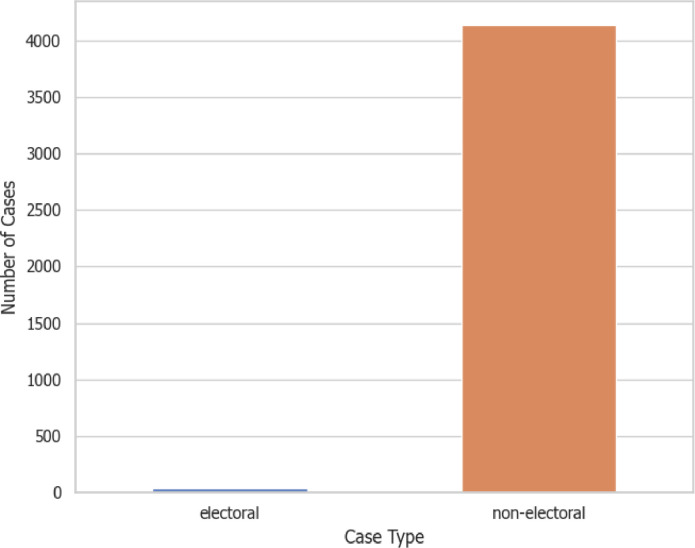 Figure 2
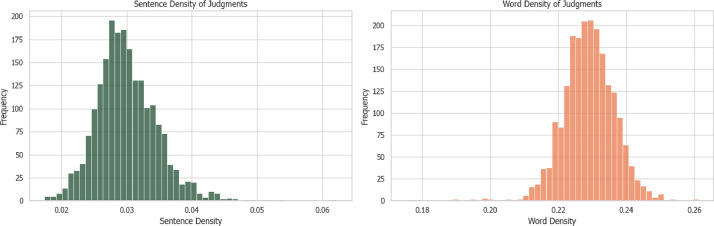 Figure 3
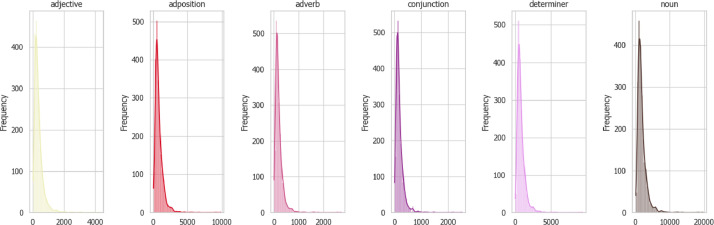 Figure 4
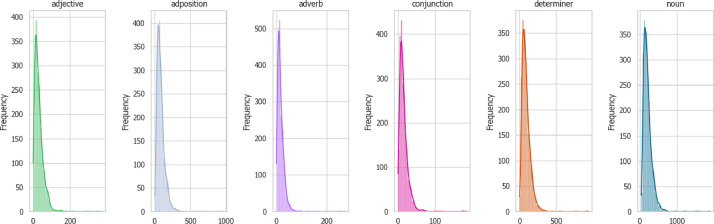 Figure 5
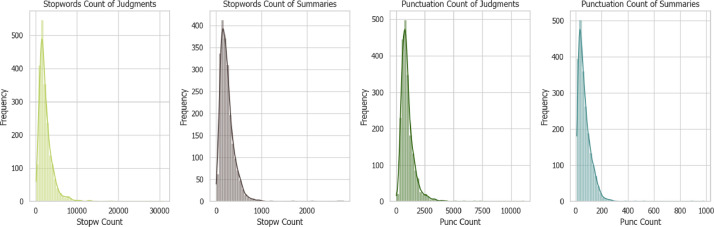 Figure 6
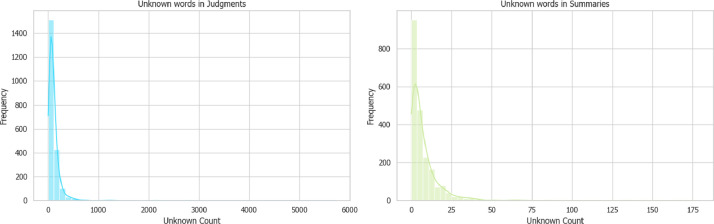 Figure 7
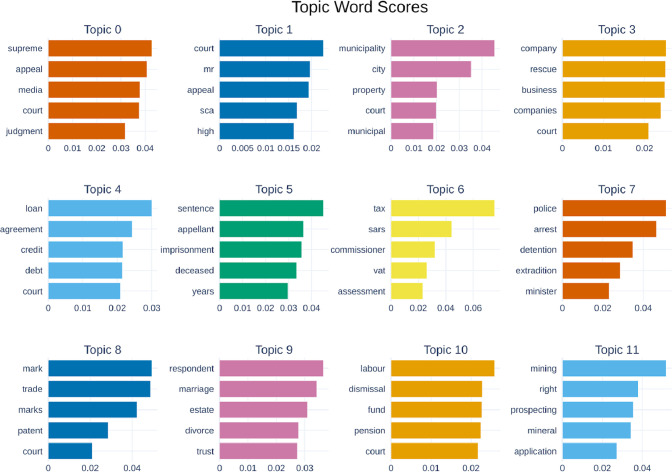 Figure 8
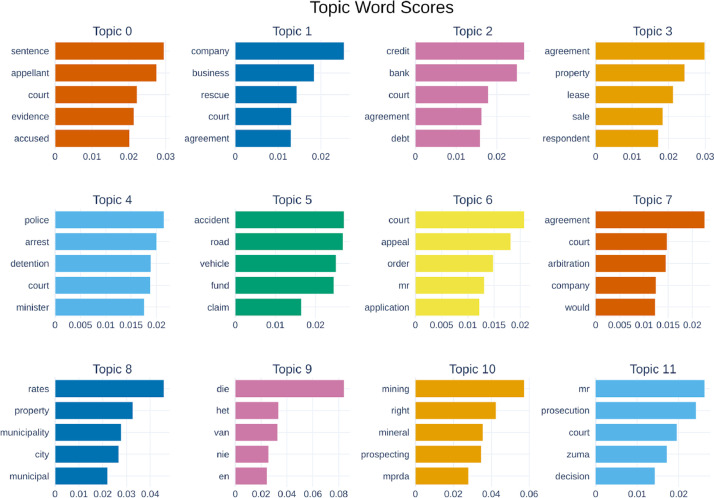 Figure 9
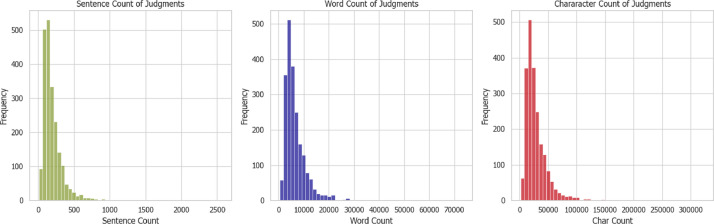 Figure 10
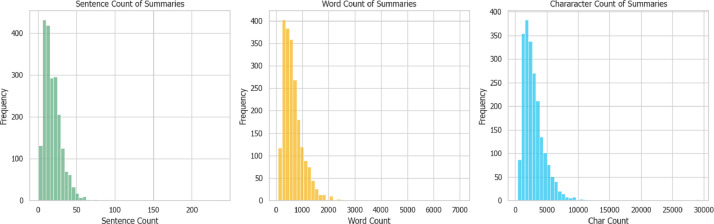 Figure 11
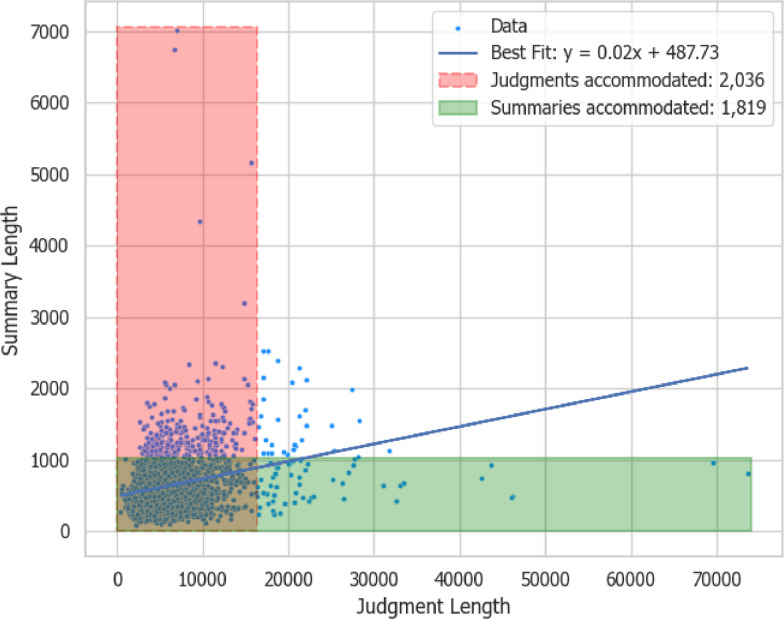 Figure 12
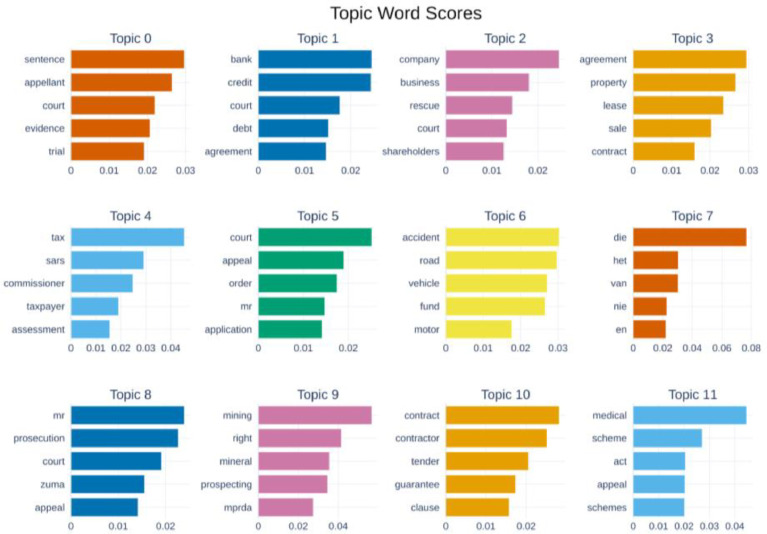 Figure 13
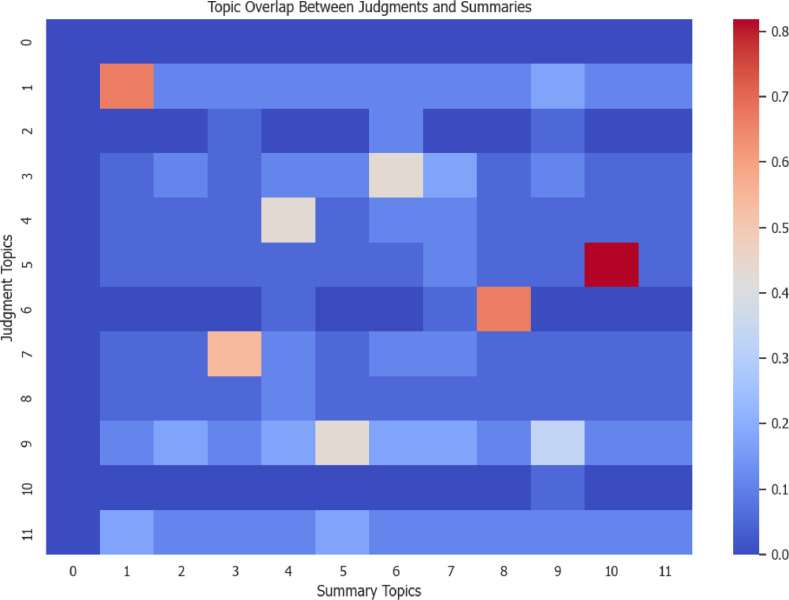 Figure 14
 Figure 15
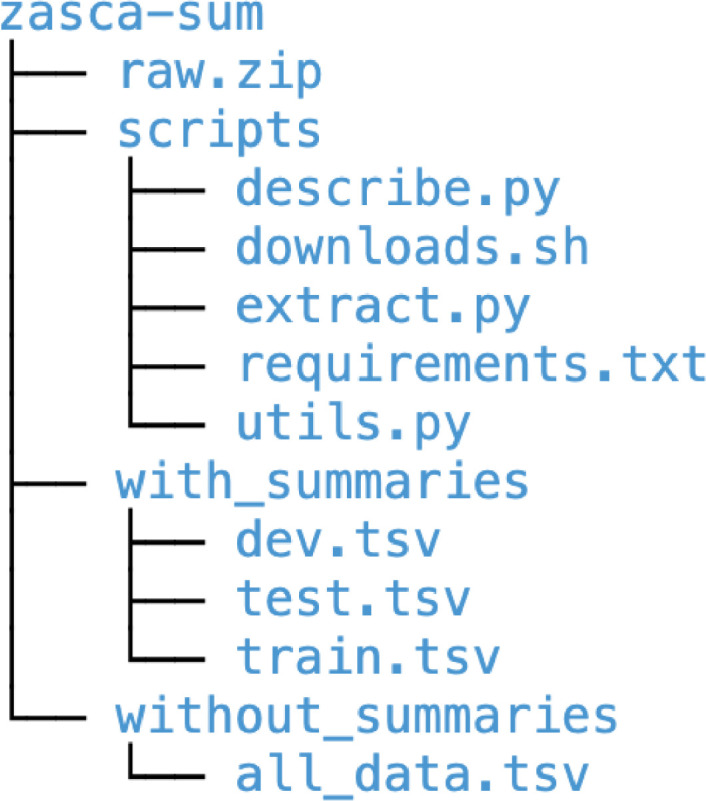 Figure 16
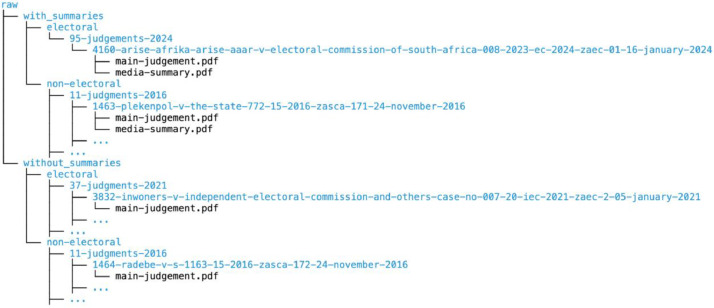 Figure 17
Peer Reviews
No public reviews on file for this paper yet. If you reviewed it on a platform where reviews are public (OpenReview, ICLR, NeurIPS, ICML), you can paste yours below so the community can read it here.
Videos
No videos yet. Explain this paper in a talk, walkthrough, or lecture? Add one.
Taxonomy
TopicsArtificial Intelligence in Law · Topic Modeling · Natural Language Processing Techniques
Specifications TableSubjectComputer ScienceSpecific subject areaDocument Summarization - subfield of natural language processing/computational linguistics/human language technologyType of dataRaw and processed aligned and unaligned text (UTF8). The dataset contains the following types of data:
- –Processed:
- –tab-separated value (.tsv) files split into
- –With summaries: train, test, and dev [column names: id, type, year, input (judgment), output (summary)]
- –Without summaries: all_data [column names: id, type, year, input (judgment)]
- –JavaScript Object Notation (.json) files:
- –Raw: zipped portable document format (.pdf) files arranged into folders: with and without summaries → type of judgment (electoral and non-electoral) → each judgment (with or without summary file) in a folder labeled with the judgment name.
- –Python files: .py files containing codes that we used to (1) extract the raw files, (2) transform the pdf files into the processed tsv files, and (3) describe the formatted data. Data collectionThe dataset was collected by scrapping the judgments webpage of the Supreme Court of Appeal of South Africa website. The collected judgments and summaries were each in a portable document format, making their automatic extraction more challenging. We extracted each judgment document automatically and reviewed a random sample to ensure accuracy and completeness. We paired the judgments with summaries and saved them with other identifying metadata. For the judgments without summaries, we extracted them to a separate file along with their metadata. We provide both the curated and raw datasets for reproducibility and other analysis.Data source locationInstitution: South Africa Supreme Court of Appeal websiteLocation:https://www.supremecourtofappeal.org.za/index.php/component/jdownloadsData accessibilityRepository: University of Pretoria Research Data (Figshare), GitHub, and Huggingface**DOI:**Huggingface: 10.57967/hf/3565UP Data: 10.25403/UPresearchdata.27371520.v2Direct URL to data:Huggingface: https://huggingface.co/datasets/dsfsi/zasca-sumGitHub: https://github.com/dsfsi/zasca-sumUP Data:https://researchdata.up.ac.za/articles/journal_contribution/ZASCA-Sum_a_dataset_of_the_South_Africa_Supreme_Court_of_Appeal_judgments_and_media_summaries_for_legal_documents_summarization_research/27371520Instructions for accessing these data: open accessRelated research articleNone
Value of the Data
1
The following are the values of the presented dataset:
- •The dataset enables localizing general and legal summarization models into the South African legal domain, improving their performance in South African legal cases. This is the first dataset on the continent, to the best of our knowledge.
- •The media summaries, crafted by legal experts, provide concise and accurate reporting, allowing models to learn how to condense complex legal language while retaining critical details.
- •The dataset's parallel component is ideal for supervised learning. It offers a benchmark for building new models and evaluating the effectiveness of and adapting current summarization models in the legal domain.
- •The unaligned component of the dataset can be used for unsupervised learning, enabling researchers to explore novel approaches to legal summarization without relying on labeled data.
- •The dataset, written in South African English, is also a valuable resource when training or localizing other Natural Language Processing (NLP) models to generate content in this dialect.
Background
2
Legal text summarization is a challenging task that involves compressing long legal documents into concise summaries while preserving key facts and legal reasoning [1]. These judgments are often detailed, sometimes spanning thousands of words, making them difficult for non-experts to understand. Without layman summaries, it becomes harder for the public to grasp court decisions. The media also faces challenges in accurately reporting these judgments without such summaries. A good legal summary must strike a balance between simplicity and accuracy, ensuring that key aspects of the judgment are conveyed clearly without oversimplifying the legal reasoning behind the decision. Several datasets and models have been developed to support automatic summarization. Examples of such datasets include the US litigation releases1, and datasets from the Indian and UK Supreme Courts [1]. Additionally, summarization models like the Longformer Encoder-Decoder (LED) [2] and Pegasus [3] have been adapted2^,^3 to aid legal document summarization. However, none of these resources cover any country in Africa.
In this work, we present a new dataset of judgment-summary pairs of the South African Supreme Court of Appeal (SCA), called ZaSCA-Sum. The SCA plays a crucial role in interpreting and applying the law in South Africa. Its judgments are often accompanied by layman summaries designed for media reporting. The dataset was collected from the Supreme Court’s website4, extracted into readable and structured format for downstream applications such as natural language processing (NLP) or text analysis. The dataset is made of electoral and non-electoral decisions and is suitable for text summarization, and other applications such as model adaptation and other text-intensive tasks. The word clouds in Fig. 1 illustrate the domain of the ZaSCA-Sum dataset. The most relevant words in the dataset are high court, South Africa, court, appeal, supreme court, appellant, claim, respondent, summary judgment, media summary, case, applicant, set aside, pty (proprietary), and ltd. To the best of our knowledge, this dataset is the first of its kind on the African continent.Fig. 1. Word clouds generated from the judgments and summaries respectively.Fig 1
Data Description
3
The dataset and accompanying scripts are arranged as subfolders in a folder labeled: “zasca.” Snapshots of the file and folder structure are presented in Fig. A.1, Fig. A.2. The structure is explained as follows: The processed data is in the first two folders as follows, then followed by the zipped raw files and the scripts folders.
- •With_summaries: This directory contains all the judgments that have been processed and the accompanying summaries. This data component is split into 3 tab-separated value (.tsv) files named – train.tsv, dev.tsv and test.tsv representing train, validation, and test files, respectively. The tsv files have the id, judgment type, judgment year, judgment text (input), and summary text (output) as column names.
- •Without_summaries: This directory contains all the processed standalone judgments without accompanying summaries. This data component is contained in one file named all_data.tsv and has the id, judgment type, judgment year, and judgment text (input) as column names.
- •Raw.zip: this is a zip folder containing all the raw files in portable document format (pdf). The folder has subdirectories as follows:
- ○With_summaries: This directory contains all judgments that have summaries. This folder contains two subfolders named electoral and non-electoral, indicating the type of judgments as such. Each subfolder contains a list of the judgment and summary folders labeled by year_id-judgments-year, e.g., 95-judgments-2024. Contained within each judgment year subfolders are folders labeled by the judgment names. A 150-character length restriction was used, and the words in the judgment name were concatenated by ‘-’ to form the name string. Each of these folders contains two pdf files labeled as main-judgement.pdf and media-summary.pdf.
- ○Without_summaries: similar directory structure as with_summaries, except that each of the last folders contains only one pdf file labeled as main-judgement.pdf.
- •Scripts: these code files are used in processing the raw data, and they are explained as follows:
- ○describe.py: python script that computes the statistical analysis of the processed dataset.
- ○downloads.sh: download the GloVe embeddings for data analysis.
- ○extract.py: python script that extracts the zipped files and folders and extracts and processes the text from the judgment and summary pdf files into the final tsv files contained within the processed folder above.
- ○requirements.txt: a text file containing all the required library dependencies to run the Python scripts.
- ○utils.py: a Python utility script containing all the classes and functions needed for data extraction and loading, file management, and text processing and analysis.
The ZaSCA-Sum dataset consists of 4171 judgments, with about 51 % (or 2118) containing a corresponding media summary. Of these, 99% of the data are generic (non-electoral) with the other 1% making up the electoral cases. Fig. B.1 shows the judgment-type distribution.
Table 1 presents a detailed statistical description of the dataset, showing the sentence-, token-, and character-level statistics, detailing the total counts across all documents, the average, standard deviation, maximum and minimum words and sentences in the documents.Table 1A detailed description of the statistical information of the collected and processed dataset.Table 1statsSentencesWords (tokens)CharactersJudgmentsSummariesJudgmentsSummariesJudgmentsSummariescount418,32740,56213,939,2141,372,00160,938,6736,193,849mean197.7919.186590.64648.7028,812.612928.53std159.0513.614,988.11439.6421,896.361,941.70min101420831,94237990 %350.0035.0011,633.801156.4051,175.405156.40max257323873,6127014323,723238
The table shows that the judgments can be as long as 73,612 tokens and the summaries as long as 7014. The major challenge of most deep learning models is their ability to accommodate long sequences [4]. Currently, the state-of-the-art sequence-to-sequence (seq-2-seq) models for automatic summarization can accommodate as long as 16,384 tokens and generate up to 1024 tokens [2,3]. Off-the-shelf, therefore, these models can fully utilize more than 90% of the judgments and just below 90% of the available summaries. With the increasing capacity of large language models (LLMs), the ZaSCA-Sum dataset can be fully utilized for fine-tuning and, in some models, few-shot prompting to generate the target summaries.
Fig. 2, Fig. 3 show the sentence, word, and character distributions of the judgment and summary texts. It can be observed that the judgments are about 10 times more than the summaries. Fig. C.1 shows the sentence and word density distribution, calculated by dividing each sentence and words by the number of words and characters respectively and averaging. The densities are similar in both the judgment and summary texts.Fig. 2. Sentence, word, and character distributions of the judgments.Fig 2. Fig. 3Sentence, word, and character distributions of the summaries.Fig 3
Fig. 4 shows the difference between the lengths of the judgments and summaries, with rectangular markings showing the judgments and summaries that can be accommodated off-the-shelf by the largest available seq-2-seq models. It also shows the line of best fit (trendline) between the lengths of the judgments and summaries.Fig. 4. Sentence, word, and character distributions of the summaries.Fig 4
Finally, Figs. D.1, D.2, D.3, and D.4 show the part of speech tag words, stopwords, and unknown words in the ZaSCA-Sum dataset. Identifying the prevalent stopwords and unknown words gives an understanding of the preprocessing needed in the dataset especially when training machine learning models. We used the NLTK [5] toolkit’s pos_tag function to extract the POS words with the universal tagset [6]. Adjectives such as few, long-standing, and best, adpositions such as in, under, and by, adverbs such as extremely, adequately, and purely, conjunctions such as and, neither, and or, determinants such as a, an, and the, and nouns such as The Supreme Court of South Africa, Roodepoort, November, and Child Care Act are some of the tagged words in the dataset. We used the list of punctuation provided in the Python string library to analyze the punctuation in the dataset, and for the stopwords, we used the English stopwords in NLTK. Stopwords such as the, because, and yourself were found in the dataset. Finally, we used the vocabulary of the GloVe [7] embeddings, containing 400,000 word vectors, to identify unknown words. Most of the identified unknown words are local names and entities such as firstrand, mhlantla, mathopo, and saripa.
Finally, we employed BERTopic, a state-of-the-art topic modeling approach, to uncover meaningful insights within the dataset. This analysis revealed the most relevant topics in both the judgment and summary texts, see Fig. 5, providing a clear understanding of the key themes present in the data. Common topics include judgment appeal, banks credit and debit agreements, company and business recuse agreements, insurance disputes, Zuma’s prosecution and appeal, etc. Additionally, we generated a heatmap in Fig. 6 comparing the top 12 topics derived from the judgment texts and their corresponding summaries, offering a visual representation of the alignment and differences between these two elements. See Fig. E.1, Fig. E.2 for the actual top 12 topics for comparison.Fig. 5. Top 12 topics extracted from combined judgment and summary texts.Fig 5. Fig. 6Heatmap showing overlap between the top 12 topics in judgment and summary texts.Fig 6
Experimental Design, Materials and Methods
4
Fig. 7 illustrates the data collection, extraction, and processing processes. The data collection, extraction, and processing scripts are provided in the data repository. The dataset was collected between February 19, 2024, and November 5, 2024.Fig. 7. Data collection, extraction, and processing methodologies.Fig 7
Data collection
4.1
The dataset was collected from the website5 of the South African Supreme Court of Appeal (ZaSCA) using a Python script written specifically for this task. The script used the “requests” and “BeautifulSoup” libraries to extract the available judgments and summaries (if present) from each judgment page.
The process began by sending an HTTP GET request to each of the electoral6 and non-electoral7 base URLs to fetch the pages’ HTML contents. The text response was then parsed using BeautifulSoup with the LXML parser to enable structured navigation of the HTML document. The find_all method was then used to locate all <div> elements with the class ``jd_categories_title_v46'', returning a list of these elements. For each div in the extracted divs, the href attribute of the anchor tag (<a>) within the div was collected and the list of the URLs was sorted by year, that was extracted within the links. These are the links of all the available judgment years.
For each extracted link, a folder was created and labeled using the extracted year and year_id. The script then fetches the main page of each year using the requests.get method and parses it with BeautifulSoup. If the page includes pagination, identified by the presence of a <li> element with the class pagination-end'', the largest index—indicating the final page of judgments for that year—was extracted. The pages were iteratively accessed using a calculated range of pages (< largest page index), incremented by n = 10 (the highest number of judgments on one page). For each judgment page, the scrapper fetches the page content, and extracts <div> elements with the class jd_download_wrapper'', which contain judgment links. From each <div>, the scrapper attempts to extract two links: the main judgment and an optional media summary. Finally, all valid links were saved for files download.
For each valid judgment (and summary) link(s), the script created a folder, named after the judgment. The judgment name was truncated to 150 characters, if longer. It then checked if the main judgment file (main-judgement.pdf) already exists, and if so, it skipped downloading. If unavailable, it downloads the main judgment and saved it as main-judgement.pdf. It also checks if a media summary file exists, and if available, it was downloaded and saved as media-summary.pdf.
The script includes error handling to skip missing URLs, handle unavailable pages, and manage cases where media summaries are not present.
Data extraction and processing
4.2
A utility class was designed to extract and clean text from the collected PDF documents. The class uses the PyMuPDF library (fitz) to extract raw text from each page of a PDF and then processes the text to remove irrelevant elements, such as numeric strings or uninformative lines, while reconstructing coherent paragraphs. First, a method in this class is called “extract_text” opens the PDF file and extracts text from all pages. Each page's text is passed through a cleaning pipeline (“_clean_line”), which splits the text into sentences, removes excess whitespace, and filters out unwanted numeric strings (e.g., page numbers or indices) based on a threshold. Once cleaned, the sentences are passed to the “_combine_paragraphs” method, which merges lines that are part of the same paragraph. This is determined by markers such as square brackets containing digits (e.g., [1]), which indicate continuity. The cleaned and reconstructed text is finally joined into a single string, ready for use. To ensure accurate filtering, two helper methods were used: “_is_numeric_string” and “_is_paragraph_marker”. The function “_is_numeric_string” identifies lines containing only numeric values, commonly used for page numbers, and discards them. Note that a line containing any other character other than a numeric value is not discarded. The function “_is_paragraph_marker” checks for specific patterns, such as bracketed numbers, that signal paragraph continuation. By integrating these methods, the utility class was designed to streamline the process of converting the PDF text of the judgments and summaries into a clean, human-readable format. The extracted texts along with their associated metadata are saved to a .tsv file.
Limitations
The dataset is limited in size. South Africa is a low-resource country in terms of NLP resources. All indigenous languages and South African dialects of foreign languages are not well represented in available NLP datasets and models. Therefore, even though the dataset is much smaller than available document summarization datasets, it is still a significant amount of data. Also, other English models can easily be adapted to cater for the South African dialect and legal domains. Furthermore, the dataset was collected from the Supreme Court of Appeal website, and more content is still being uploaded, making the data potentially high resource in the future.
Ethics Statement
The authors have read and followed the ethical requirements for publication in Data in Brief and confirmed that the current work does not involve human subjects, animal experiments, or data collected from social media platforms. The source data is a public document and is exempt from copyright protection: in accordance with Section 12(8)(a) of the South African Copyright Act (Act No. 98 of 1978), no copyright shall subsist in official texts of a legislative, administrative, or legal nature, official translations of such texts, speeches of a political nature, speeches delivered in the course of legal proceedings, or in news of the day that are mere items of press information. This provision ensures that court judgments and similar legal documents are part of the public domain and may be freely reused for academic and research purposes8
Credit Author Statement
Idris Abdulmumin: Conceptualization, Methodology, Software, Writing - Original Draft. Vukosi Marivate: Supervision, Writing - Original Draft.
The reference list from the paper itself. Each links out to its DOI / PubMed record.
- 1Shukla A.Legal case document summarization: extractive and abstractive methods and their evaluation He Y.Ji H.Li S.Liu Y.Chang C.-H.Proceedings of the 2nd Conference of the Asia-Pacific Chapter of the Association for Computational Linguistics and the 12th International Joint Conference on Natural Language Processing 12022 Association for Computational Linguistics 10481064
- 2Beltagy I.Peters M.E.Cohan A.Longformer: The Long-Document Transformer 2020
- 3Zhang J.Zhao Y.Saleh M.Liu P.J.PEGASUS: pre-training with extracted gap-sentences for abstractive summarization ICML’20: Proceedings of the 37th International Conference on Machine Learning Jul. 2020 ACM 113281133910.5555/3524938.3525989 · doi ↗
- 4W. Kryściński, N. Rajani, D. Agarwal, C. Xiong, and D. Radev, Book Sum: a collection of datasets for long-form narrative summarization, in Y. Goldberg, Z. Kozareva, Y. Zhang (Eds.), Findings of the Association of Computational Linguistics: EMNLP 2022, Abu Dhabi, United Arab Emirates, 2022, pp. 6536-6558 [Online]. Available. https://aclanthology.org/2022.findings-emnlp.488/.
- 5Bird S.Loper E.NLTK: the natural language toolkit Proceedings of the ACL Interactive Poster and Demonstration Sessions 2004 Association for Computational Linguistics Barcelona, Spain 214217[Online]. Available
- 6Petrov S.Das D.Mc Donald R.A universal part-of-speech tagset Calzolari N.Choukri K.Declerck T.Doğan M.U.Maegaard B.Mariani J.Moreno A.Odijk J.Piperidis S.Proceedings of the Eighth International Conference on Language Resources and Evaluation (LREC’12)2012 European Language Resources Association (ELRA)Istanbul, Turkey 20892096[Online]. Available
- 7Pennington J.Socher R.Manning C.Glo Ve: global vectors for word representation Moschitti A.Pang B.Daelemans W.Proceedings of the 2014 Conference on Empirical Methods in Natural Language Processing (EMNLP)Oct. 2014 Association for Computational Linguistics Doha, Qatar 1532154310.3115/v 1/D 14-1162 · doi ↗