Impact of rotation direction on treating common bile duct stones with an asymmetrical 8-wire helical basket
Mamoru Takenaka, Tomohiro Fukunaga, Atsushi Nakai, Shunsuke Omoto, Chang-Il Kwon, Masatoshi Kudo

Abstract
Genes, proteins, chemicals, diseases, species, mutations and cell lines named across the full text — each resolved to its canonical identifier and authoritative record.
Click any figure to enlarge with its caption.
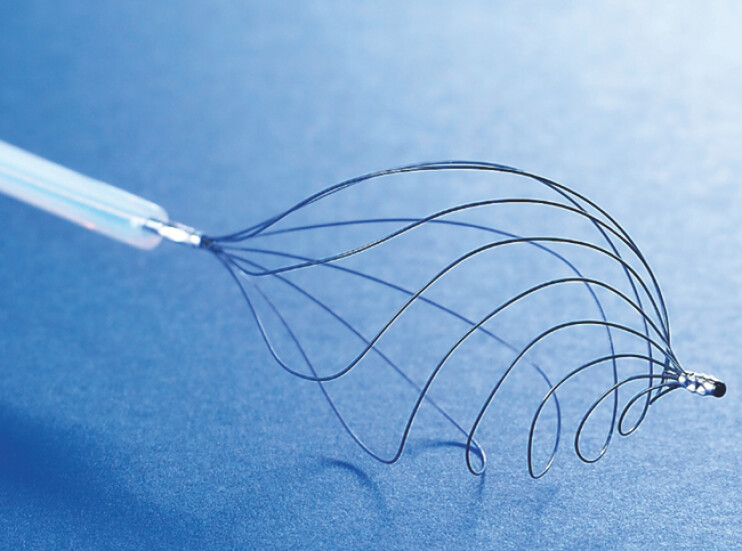 Fig. 1
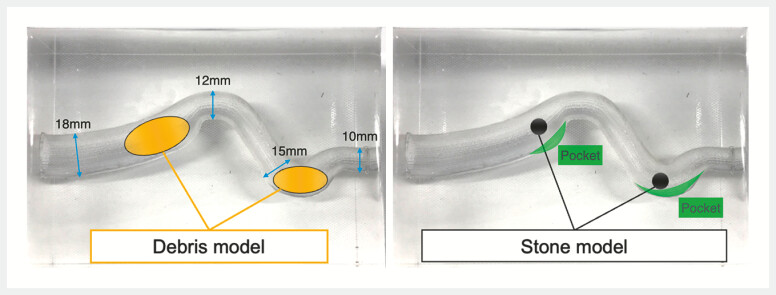 Fig. 2
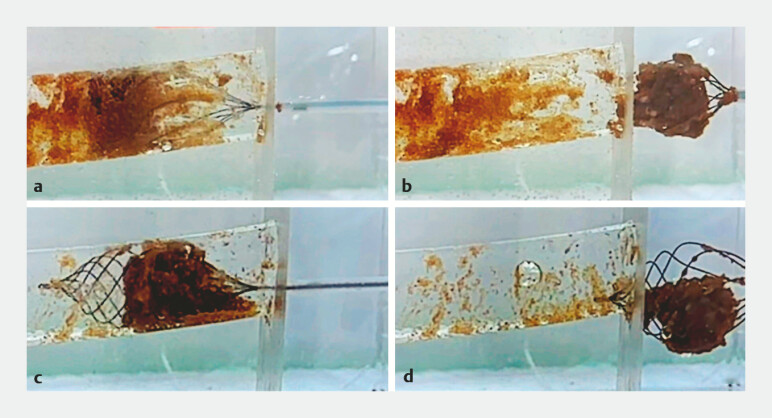 Fig. 3
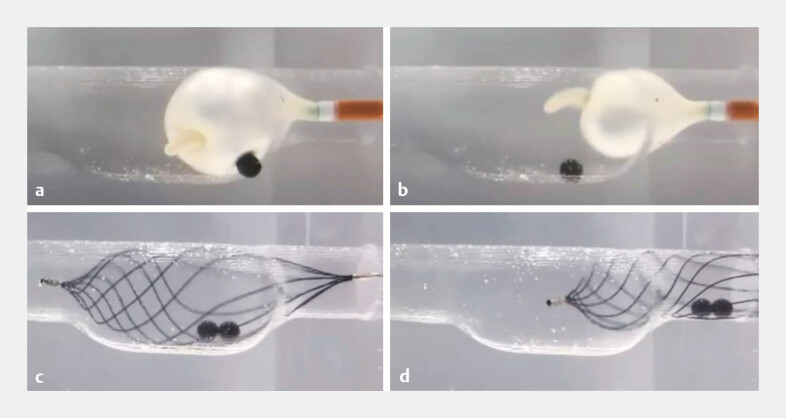 Fig. 4
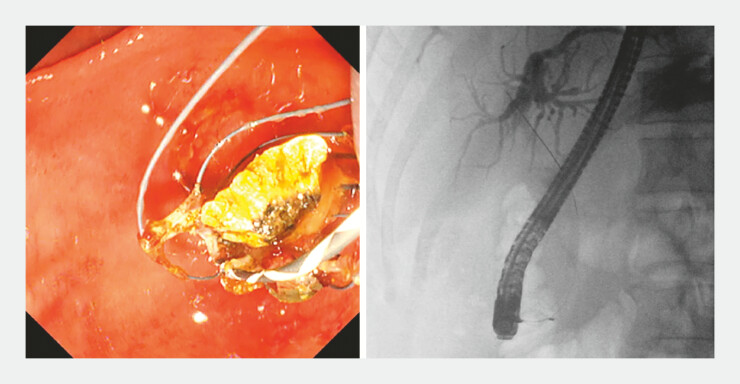 Fig. 5
Peer Reviews
No public reviews on file for this paper yet. If you reviewed it on a platform where reviews are public (OpenReview, ICLR, NeurIPS, ICML), you can paste yours below so the community can read it here.
Videos
No videos yet. Explain this paper in a talk, walkthrough, or lecture? Add one.
Taxonomy
TopicsGallbladder and Bile Duct Disorders · Pediatric Hepatobiliary Diseases and Treatments · Pancreatic and Hepatic Oncology Research
In recent years, 8-wire helical basket catheters have emerged as effective tools for retrieving small common bile duct stones (CBDSs) measuring ≤10 mm 1 2 3 . Notably, the novel nitinol 8-wire helical basket catheter with a rotation function, the RASEN2 (Kaneka Corporation), has shown promising results 4 5 . A key feature of this basket is its asymmetrical shape, enabling clockwise or counterclockwise rotation ( Fig. 1 ). However, the impact of rotation direction on the treatment of small CBDSs and debris has not been investigated.
A novel nitinol 8-wire helical basket catheter with a rotation function (RASEN2; Kaneka Corporation). Its key feature is its asymmetrical shape, which can be rotated in the clockwise or counterclockwise direction.
In vitro experiments using the bending bile duct with corner pockets model ( Fig. 2 ) revealed that counterclockwise rotation exhibited superior efficacy in removing debris and stones. While sweeping with clockwise rotation, debris was scraped out by the basket; however, residual debris was significant. On the other hand, during counterclockwise sweeps, debris scraped by the basket wires was observed to collect and accumulate within the basket lumen, facilitating en masse removal ( Fig. 3 ). Although a balloon catheter could release stones lodged in the bile duct flexure and corner pockets, the 8-wire helical basket with a counterclockwise rotation demonstrated the ability to retrieve lodged stones even from the corner pocket of the CBD terminus ( Fig. 4 ).
The bending bile duct with corner pockets model.
a, b While sweeping with clockwise rotation, debris was scraped out by the basket; however, residual debris was significant. c, d While sweeping with counterclockwise rotation, debris scraped out by the basket wire accumulated within the basket lumen, showing en masse removal.
a, b The balloon catheter released the stones in the bile duct flexure and the corner pocket of the CBD terminus. c, d An 8-wire helical basket sweep with counterclockwise rotation could remove the stones, even those lodged within the corner pocket of the CBD terminus. Abbreviation: CBD, common bile duct stone.
A 58-year-old patient with small CBDSs underwent endoscopic treatment using RASEN2.
After repeated attempts to remove the stones using clockwise rotation, it was judged that no further stones could be captured. In contrast, subsequent sweeps with counterclockwise rotation yielded residual stones that were not retrieved with initial sweeps using clockwise rotation ( Fig. 5 , Video 1 ). The patient has not experienced recurrent CBDSs since the procedure.
Subsequent sweeps with anticlockwise rotation to check for residual stones yielded stones that were missed during the initial clockwise rotation sweeps.
This video shows the impact of rotation direction on the treatment of common bile duct stones using an asymmetrical 8-wire helical basket.Video 1
These findings underscore the significant impact of rotation direction on the treatment of CBDSs using the asymmetrical-shaped 8-wire helical basket with a rotation function.
Endoscopy_UCTN_Code_TTT_1AR_2AH
The reference list from the paper itself. Each links out to its DOI / PubMed record.
- 1Kaneko T Ishii T Hamanaka J Novel 8-wire basket catheter is useful for endoscopic removal of common bile duct stones up to 10 mm: A multicenter prospective study J Hepato-Bil Pancreat Sci 20243121322110.1002/jhbp.140038174419 · doi ↗ · pubmed ↗
- 2Inatomi O Katayama M Soga K Application and usefulness of a new eight-wire basket catheter for endoscopic extraction of small common bile duct stones: A retrospective multicenter study DEN Open 20233 e 13810.1002/deo 2.13835898821 PMC 9307736 · doi ↗ · pubmed ↗
- 3Inoue T Ibusuki M Kitano R Comparison of the mechanical properties of retrieval basket catheters for bile duct stones: An experimental study Indian J Gastroenterol 20234265165710.1007/s 12664-023-01396-y 37410310 · doi ↗ · pubmed ↗
- 4Inoue T Ibusuki M Kitano R Comparison of the removal ability of basket catheters for small bile duct stones impacted in the corner pocket of the lower bile duct Endoscopy 20225498799210.1055/a-1769-051435144287 · doi ↗ · pubmed ↗
- 5Inoue T Ibusuki M Kitano R Novel helical eight-wire basket for retrieving small bile duct stones in the corner pocket of the lower bile duct Endosc Int Open 202210 E 222E 22310.1055/a-1675-252435178341 PMC 8847046 · doi ↗ · pubmed ↗