A Case Report of Rattlesnake Musk Exposure Causing Chemical Conjunctivitis
Raj Patel, Melanie M. Randall

TL;DR
A man developed eye inflammation after being sprayed with rattlesnake musk, not venom, and recovered after treatment.
Contribution
This case report highlights a rare non-bite rattlesnake exposure causing chemical conjunctivitis and challenges current treatment guidelines.
Findings
Non-penetrating rattlesnake musk exposure can cause ocular symptoms like conjunctivitis and corneal defects.
Initial irrigation and ophthalmologic evaluation are critical for managing musk-related eye injuries.
IV antivenom may not be necessary for non-venom ocular exposure, according to current recommendations.
Abstract
Rattlesnakes are pit vipers belonging to the Viperidae family and Crotalinae subfamily. They inject venom into their victims via bites from two long, hollow fangs. When disturbed, they can release a liquid musk from cloacal scent glands into the air. This report describes a rare case of non-penetrating rattlesnake ocular exposure with symptoms. We also discuss pathophysiology, evaluation, and treatment recommendations. A 56-year-old male picked up a rattlesnake and was sprayed in both eyes with liquid emanating from the snake. He was not bitten by the snake. He had immediate pain and blurred vision. Despite copious initial irrigation, he continued to have worsening symptoms with subconjunctival hemorrhage and scleral injection. After discussion with poison control, he was given six vials of intravenous (IV) antivenom. After additional irrigation and evaluation by ophthalmology, the…
Genes, proteins, chemicals, diseases, species, mutations and cell lines named across the full text — each resolved to its canonical identifier and authoritative record.
Click any figure to enlarge with its caption.
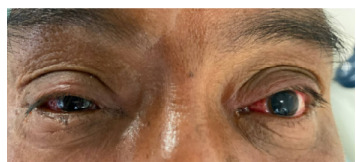 Figure 1
Peer Reviews
No public reviews on file for this paper yet. If you reviewed it on a platform where reviews are public (OpenReview, ICLR, NeurIPS, ICML), you can paste yours below so the community can read it here.
Videos
No videos yet. Explain this paper in a talk, walkthrough, or lecture? Add one.
Taxonomy
TopicsVenomous Animal Envenomation and Studies · Insect and Pesticide Research · Bird parasitology and diseases
INTRODUCTION
Venomous snakes use their venom for a variety of purposes including hunting, digestion, and defense.1 The venom can be released either by biting or spitting. Rattlesnakes are pit vipers belonging to the Viperidae family and Crotalinae subfamily. This subfamily also includes cottonmouths and copperheads.2 They evolved to inject venom into their victims via bites from two long, hollow fangs. According to a recent study by Maciulewicz et al, rattlesnake envenomation requires a specific angle and compression of fangs, leading to their conclusion that the likelihood of a rattlesnake spitting venom is close to zero.3 In contrast, there are numerous reports of a separate family of snakes, the Elapidae family, causing non-penetrating ocular envenomation.4 These snakes are mostly found outside the United States and include mambas, cobras, taipan, kraits, and coral snakes. The Elapidae use specialized glands that do not require compression to spit venom onto their prey. 5
Snakes that are disturbed can forcefully expel an airborne “musk” from their cloacal area via scent glands.6 This has been observed by herpetologists in many types of snakes including rattlesnakes.7 Snake musk includes multiple volatile and nonvolatile substances that are not well described.8 Maciulewicz et al proposes this as the likely mechanism for ocular irritation when a rattlesnake has been handled and releases liquid but no biting-down force of the mouth or fangs has occurred.3 Snake musk exposure is an extremely rare topic in the medical literature. This topic is primarily described in animal and zoological texts.
In this report we describe a rare, rattlesnake ocular exposure, likely from snake musk, resulting in a chemical conjunctivitis. We highlight pathophysiology, evaluation, and treatment recommendations.
CASE REPORT
A 56-year-old male with a history of diabetes mellitus and hypertension picked up a rattlesnake with the intent to decapitate it. Instead, he was sprayed in both eyes with liquid from the snake, resulting in immediate pain and blurry vision. The patient was able to confirm that it was a rattlesnake, but no further identifying characteristics were available. At the initial hospital, poison control recommended irrigation, analgesia, ophthalmology evaluation, and topical antibiotics. Labs included complete blood count, complete metabolic panel, and coagulation studies, which were normal. Despite two liters of normal saline irrigation to each eye, his clinical examination worsened with subconjunctival hemorrhages and scleral sloughing. After a secondary discussion with poison control, he was given six vials of the intravenous (IV) antivenom CroFab (BTG International Inc, West Conshohocken, PA). As the initial hospital did not have emergency ophthalmology consultation, he was transferred to our facility.
At our emergency department he reported bilateral ophthalmalgia, subconjunctival injection, watery discharge, and blurry vision. Initial examination was significant for a visual acuity of 20/50 in the left eye, 20/70 in the right eye, mild scleral inflammation, bilateral subconjunctival hemorrhages, and bilateral watery/tan discharge (Image).
Each eye was irrigated with an additional two liters of normal saline prior to formal ophthalmology evaluation. Examination by the ophthalmologist was significant for visual acuity of 20/25 in both eyes, bilateral ocular pH of seven (normal range 7.0–7.4), blepharitis, subconjunctival hemorrhages, and bilateral small corneal epithelial defects. The anterior and posterior segments were normal except for the conjunctival hemorrhages and scleral injection.
CPC-EM CapsuleWhat do we already know about this clinical entity?Recent literature shows that rattlesnakes are unable to spray venom unless under very particular circumstances. Rattlesnakes can, however, release musk from cloacal glands into the air.What makes this presentation of disease reportable?Snake musk exposure is extremely rare in medical literature. We present this case of non-penetrating rattlesnake exposure causing chemical conjunctivitis.What is the major learning point?Non-penetrating rattlesnake exposure with conjunctival symptoms may be from cloacal snake musk. It should be treated with copious irrigation and examination.How might this improve emergency medicine practice?If any providers have similar patients in the future, they will be able to confidently treat as a chemical exposure and not as a rattlesnake envenomation.
He was discharged with seven days of the following medications: ciprofloxacin eye drops four times per day, erythromycin ointment nightly, and preservative-free artificial tears every hour. The medications were chosen by the ophthalmology consultant. One week later, the follow-up examination in the ophthalmology clinic showed complete resolution of his corneal abnormalities.
DISCUSSION
This is a rare case of non-penetrating, ocular, rattlesnake exposure, presenting with corneal defects and subconjunctival hemorrhage. Previously, Troutman et al and Cantrell et al both described cases with mild symptoms treated to resolution with irrigation only.9,10 Johnson described a case treated with irrigation, IV antivenom, and topical antibiotics.11 In these case reports it was assumed the symptoms were from rattlesnake envenomation. In our case, the treating clinicians initially considered this to represent another rare case of rattlesnake non-penetrating envenomation. However, given the recent study by Maciulewicz et al demonstrating rattlesnake spitting venom as extremely unlikely in these conditions, we feel this more likely represented a chemical conjunctivitis from exposure to snake musk
Most documented snake ocular exposures are from African and Asian Elapidae spitting snakes. All published data demonstrates anterior ocular segment damage including subconjunctival injection, blepharitis, corneal erosions, and uveitis.4,5 Delayed time to treatment has been shown to result in complications such as corneal opacities and blindness. Elapidae venom has effects similar to chemical burns in the eye. Inflammatory cytotoxic compounds such as metalloproteinase and phospholipase are the culprit venom components. There are no reports of systemic toxicity from ocular snake-venom exposure.4,5
The treatment of any ocular substance exposure is immediate and prolonged irrigation. Additional options include topical analgesics, topical antibiotics, cycloplegics, and antihistamines.4,5 Evaluation should include pH testing, visual acuity evaluation, slit lamp examination, and fluorescein staining. Emergency ophthalmology evaluation may be necessary if symptoms worsen or do not resolve. Topical corticosteroids, topical antivenom, and IV antivenom are contraindicated due to potential adverse effects and lack of evidence showing systemic toxicity.4,5,12
In our case, IV antivenom was empirically recommended by our local poison center when the patient’s symptoms did not initially improve. After reviewing the most recent literature, it is likely that continued supportive care of the patient’s chemical conjunctivitis, rather than antivenom treatment, resulted in symptom resolution.
CONCLUSION
Non-penetrating, ocular rattlesnake envenomation is a rare occurrence. Under the right conditions, exposure may be due to musk released from snake scent glands, causing a chemical conjunctivitis. It should be evaluated and treated as any other ocular exposure beginning with copious irrigation and then a detailed examination. Current recommendations advise against intravenous antivenom administration.
The reference list from the paper itself. Each links out to its DOI / PubMed record.
- 1Klauber L Rattlesnakes: Their Habits, Life Histories, and Influence on Mankind 2nd ed Oakland, CA University of California Press 1972
- 2Peterson ME Snake bite: pit vipers Clin Tech Small Anim Pract 2006214174821726590110.1053/j.ctsap.2006.10.008 · doi ↗ · pubmed ↗
- 3Maciulewicz TS Cardwell MD Brandecker K Snake eyes: characterization of topical ocular exposures from rattlesnakes in Arizona Toxicon 20242441077753878218810.1016/j.toxicon.2024.107775 · doi ↗ · pubmed ↗
- 4Chang KC Huang YK Chen YW Venom ophthalmia and ocular complications caused by snake venom Toxins (Basel)20201295763291177710.3390/toxins 12090576 PMC 7551025 · doi ↗ · pubmed ↗
- 5Chu ER Weinstein SA White J Venom ophthalmia caused by venoms of spitting elapid and other snakes: report of ten cases with review of epidemiology, clinical features, pathophysiology and management Toxicon 2010563259722033199310.1016/j.toxicon.2010.02.023 · doi ↗ · pubmed ↗
- 6Stahl SJ De Nardo DF Mader’s Reptile and Amphibian Medicine and Surgery 3rd ed Philadelphia, PAWB Saunders 2019
- 7Weldon PJ Fagre DB Responses by canids to scent gland secretions of the western diamondback rattlesnake (Crotalus atrox)J Chem Ecol 198915515896042427210110.1007/BF 01012386 · doi ↗ · pubmed ↗
- 8Wood WF Parker JM Weldon PJ Volatile components in scent gland secretions of garter snakes (Thamnophis spp.)J Chem Ecol 199521221392423402010.1007/BF 02036652 · doi ↗ · pubmed ↗