Dissemination of Information to Foreigners in Preparation for Natural Disasters
Hatsune Kido, Soichiro Saeki

Abstract
Genes, proteins, chemicals, diseases, species, mutations and cell lines named across the full text — each resolved to its canonical identifier and authoritative record.
Click any figure to enlarge with its caption.
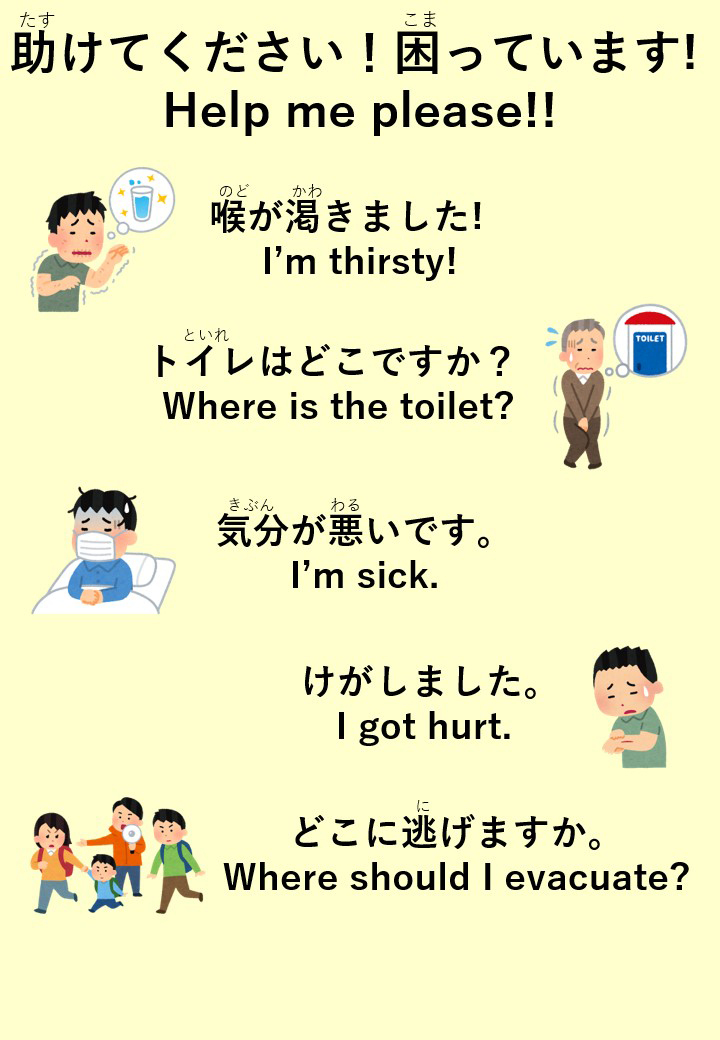 Figure 1
Peer Reviews
No public reviews on file for this paper yet. If you reviewed it on a platform where reviews are public (OpenReview, ICLR, NeurIPS, ICML), you can paste yours below so the community can read it here.
Videos
No videos yet. Explain this paper in a talk, walkthrough, or lecture? Add one.
Taxonomy
TopicsDisaster Management and Resilience · Disaster Response and Management
Earthquakes are frequent in Japan, underscoring the critical importance of earthquake preparedness for all, including foreign residents. Significant seismic events, such as the January 1, 2024 earthquake in the Noto Peninsula, highlight the destructive potential of such disasters. Therefore, the findings of Koike et al. ^(1)^ on foreign residents’ preparedness for major earthquakes deserves serious attention. Additional considerations are proposed to further enhance safety during such events.
First, promoting “plain Japanese” in disaster communications should be prioritized. Designed to be easily understood by non-native speakers, plain Japanese can assist foreign residents in emergencies ^(2)^. Even those with intermediate to advanced Japanese proficiency (N1 to N3) may experience difficulty processing critical information during a crisis caused by panic. Ensuring that essential disaster information is disseminated in plain Japanese would facilitate more effective communication and response during emergencies.
Second, disaster-related information must be made accessible to all foreign residents, particularly those from Southeast Asia, where technical interns are increasingly prevalent. Many websites offer information in major languages, such as English, Chinese, and Korean; however, the coverage of other languages remains limited. One possible solution is machine translation, as implemented by the Tokyo Metropolitan Government ^(3)^. Multilingual disaster communication will help ensure that all residents, regardless of language barriers, can respond appropriately during emergencies.
Third, in disaster situations, individuals may struggle to communicate in Japanese because of confusion. To address this need, preparing printouts or pointing boards with critical phrases such as “I need water” or “I feel unwell” in Japanese and the individual’s native language could help convey basic needs (Figure 1). Additionally, medical professionals must prepare to assist non-Japanese speakers ^(4)^, making the role of medical interpreters crucial in such situations. Establishing systems for interpreters during routine times would ensure smoother medical care during disasters. Although plain Japanese is used in disaster response, it has yet to be fully adopted in medical settings ^(2), (5)^, presenting potential challenges that must be addressed.
Japan has made considerable advancements in adapting to natural disasters; however, additional efforts are necessary to develop a more holistic and comprehensive disaster preparedness approach. Simulating real disaster scenarios during prevention planning is imperative to ensure that preparedness strategies are practical and effective. As Japanese society becomes increasingly diverse, future disaster management must consider the safety and well-being of foreign residents.
Article Information
Conflicts of Interest
None
Acknowledgement
The authors thank our colleagues for helpful discussions on this topic. The authors acknowledge the use of Grammarly (Grammarly Inc, San Fransico, USA) for primary language editing. The views expressed in this manuscript are those of the authors and do not necessarily represent the authors’ institutions.
Author Contributions
Both authors contributed to creating the synopsis of the manuscript. HK prepared the first draft of the manuscript. SS critically reviewed the manuscript. Both authors read and approved the final version of the manuscript. Artificial intelligence technology was used for the language editing process, and such content was reviewed by the author. The author’s institution played no role in the conceptualization of this manuscript.
Approval by Institutional Review Board (IRB)
Not applicable.
The reference list from the paper itself. Each links out to its DOI / PubMed record.
- 1Koike R, Sonoda N, Furuki H, et al. Individual preparedness for large-scale earthquakes among international students in Japan: a cross-sectional questionnaire survey. JMA J. 2024;7(4):496-505.39525693 10.31662/jmaj.2024-0049 PMC 11543362 · doi ↗ · pubmed ↗
- 2Kido H, Saeki S, Hiraiwa M, et al. Plain language in the healthcare of Japan: a systematic review of “plain Japanese”. Glob Health J. 2024;8(3):113-8.
- 3Tokyo Metropolitan Government. Disaster prevention information [Internet]. 2024. [cited 2024 Oct 15]. Available from: https://www.bousai.metro.tokyo.lg.jp/.
- 4Saeki S, Iwata M, Tomizawa R, et al. Challenges and the potential of promoting remote medical interpreting during COVID-19. Glob Health Med. 2022;4(6):341-6.36589222 10.35772/ghm.2022.01056 PMC 9773224 · doi ↗ · pubmed ↗
- 5Saeki S. Yasashii Nihongo: easy Japanese/plain Japanese. J Int Health. 2023;38(2):65-7.