Escherichia coli Pyogenic Ventriculitis in an Infant Following Abdominal Surgery: A Rare Case Report
Mohammed Maarad, Marwane Alaraibi, Mohamed Dahamou, Houssam Bkiyar, Brahim Housni

TL;DR
A rare case of Escherichia coli pyogenic ventriculitis in an infant following abdominal surgery is reported, emphasizing the importance of early diagnosis and multidisciplinary treatment.
Contribution
This case report highlights an unusual post-surgical complication in infants and underscores the diagnostic value of MRI in central nervous system infections.
Findings
An eight-month-old infant developed pyogenic ventriculitis caused by multidrug-resistant Escherichia coli following abdominal surgery.
MRI confirmed the diagnosis, and the patient showed clinical improvement after multidisciplinary treatment.
The case emphasizes the need for prompt diagnosis and management of CNS infections in infants with atypical postoperative courses.
Abstract
Pyogenic ventriculitis is a severe and uncommon bacterial infection of the brain's ventricular system, most often associated with neurosurgical procedures or trauma, but it can rarely occur in other clinical settings. This case report describes an unusual presentation in an eight-month-old infant with no prior medical history, who developed this condition following abdominal surgery for acute intussusception. After an initially uneventful postoperative course, the patient presented with persistent high fever, seizures, and neurological deterioration. Diagnostic imaging revealed triventricular hydrocephalus on computed tomography (CT), and magnetic resonance imaging (MRI) confirmed the presence of pyogenic ventriculitis. Laboratory analysis of cerebrospinal fluid and blood cultures identified multidrug-resistant Escherichia coli as the pathogen. The infant was treated with mechanical…
Genes, proteins, chemicals, diseases, species, mutations and cell lines named across the full text — each resolved to its canonical identifier and authoritative record.
Click any figure to enlarge with its caption.
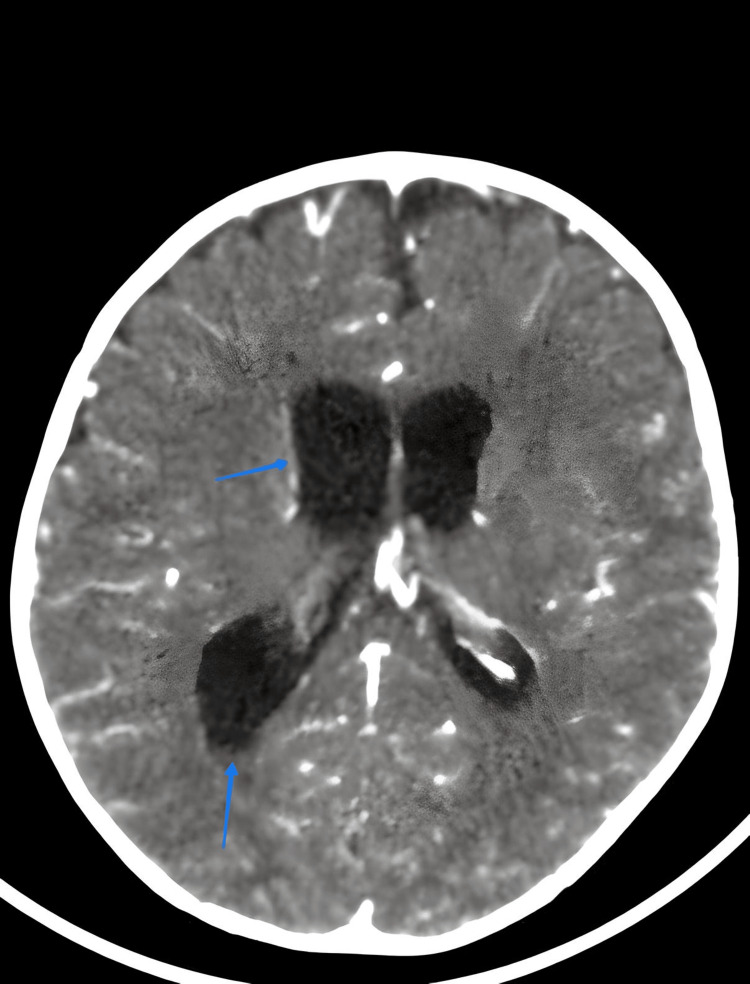 Figure 1
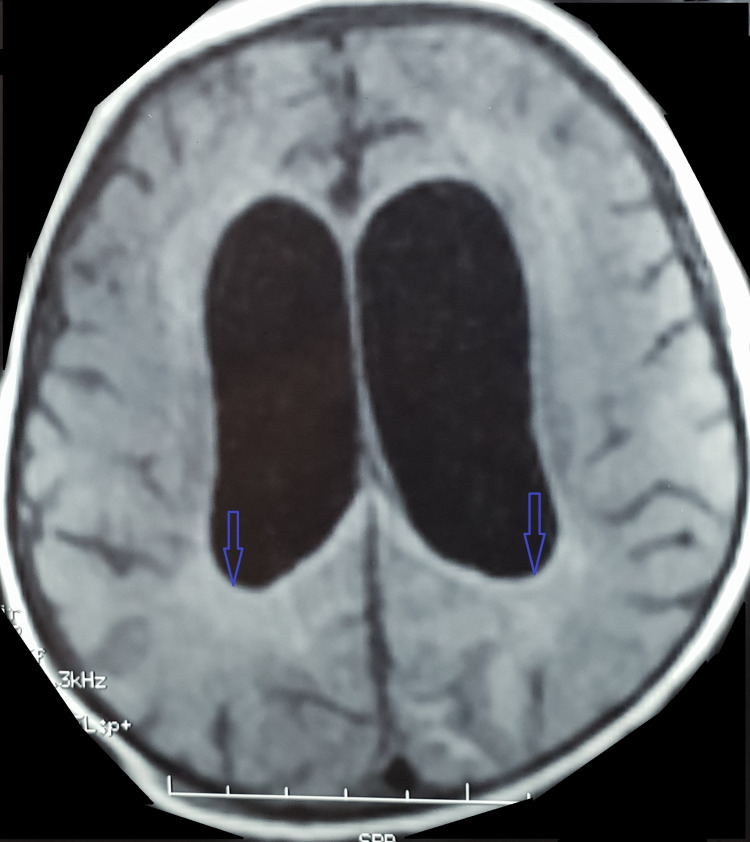 Figure 2
Peer Reviews
No public reviews on file for this paper yet. If you reviewed it on a platform where reviews are public (OpenReview, ICLR, NeurIPS, ICML), you can paste yours below so the community can read it here.
Videos
No videos yet. Explain this paper in a talk, walkthrough, or lecture? Add one.
Taxonomy
TopicsCerebrospinal fluid and hydrocephalus · Pediatric Urology and Nephrology Studies · Spinal Dysraphism and Malformations