Clustering Based on Innate Immunity Reveals Differential Dysregulation Based on Disease Severity in Myelodysplastic Neoplasms
Pedro Robson Costa Passos, Andréa Alcântara Vieira, Renata Pinheiro Martins de Melo, Ronald Feitosa Pinheiro Filho, Leonardo Guimarães Sampaio, Hermano Vinnicius Gomes dos Santos, Letícia Rodrigues Sampaio, João Victor Caetano Goes, Sílvia Maria Meira Magalhães

TL;DR
This study shows that immune system patterns in blood cancers called MDS differ based on disease severity, offering new insights for treatment.
Contribution
A novel clustering method based on innate immunity genes reveals distinct immune profiles linked to MDS severity.
Findings
Two immune clusters (HIC and MIC) were identified using six innate immunity genes.
HIC showed higher infiltration of activated immune cells, while MIC had more naïve B cells and mast cells.
Reduced expression of 35 key genes correlated with advanced disease markers in an independent cohort.
Abstract
Myelodysplastic neoplasms (MDS) are clonal hematologic disorders characterized by ineffective hematopoiesis and a variable risk of progression to acute myeloid leukemia (AML). Despite growing recognition of the role of innate immunity in MDS pathogenesis, the precise mechanisms remain unclear. In this study, we analyzed bone marrow CD34+ expression data from 183 MDS patients to investigate the impact of the Toll‐like receptor (TLR) pathway on disease progression. Six key innate immunity genes (IRAK1, IRAK2, IRAK4, MYD88, TRAF6, and NFKB1) were used to define two distinct immune clusters: a hyperactive immune cluster (HIC) and a moderate immune cluster (MIC). The HIC was enriched in 155 immune‐related pathways and showed higher infiltration of activated natural killer cells and M1 macrophages, while the MIC exhibited increased infiltration of naïve B cells and mast cells. Differential…
Genes, proteins, chemicals, diseases, species, mutations and cell lines named across the full text — each resolved to its canonical identifier and authoritative record.
Click any figure to enlarge with its caption.
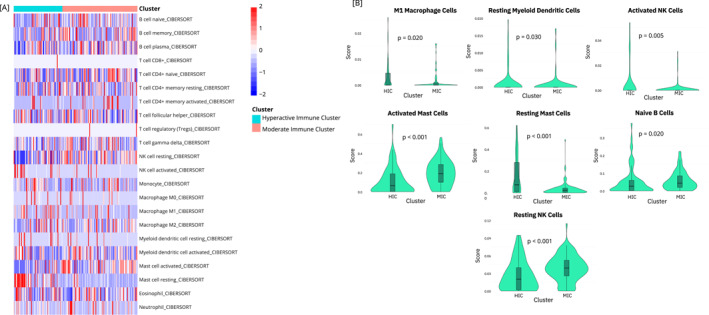 Figure 1
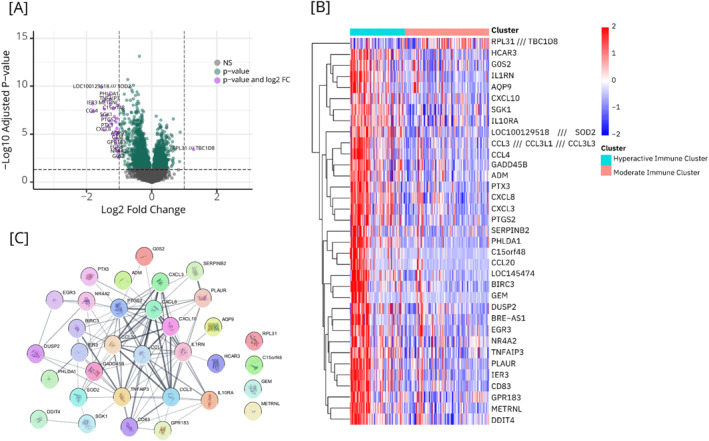 Figure 2
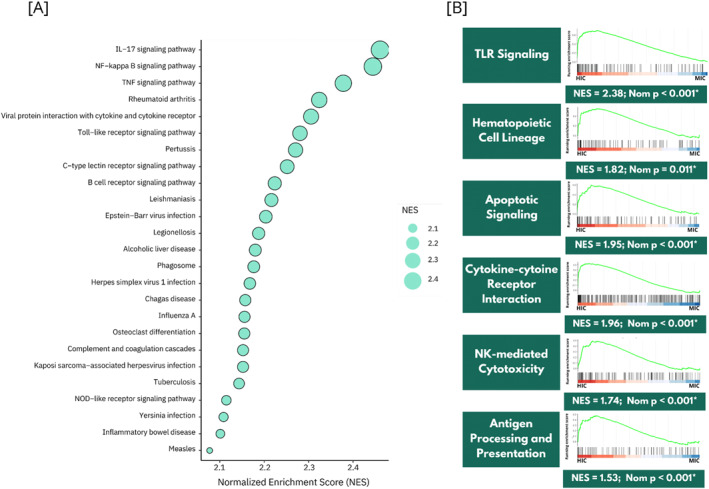 Figure 3
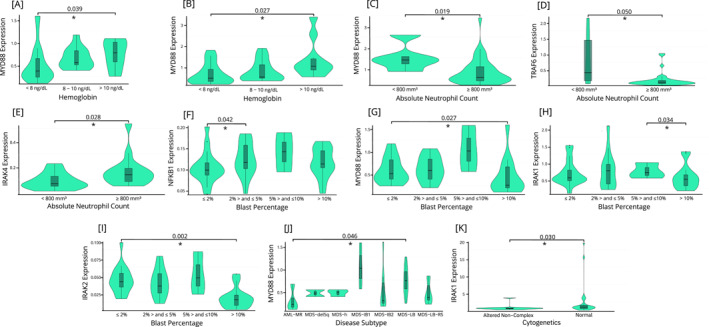 Figure 4
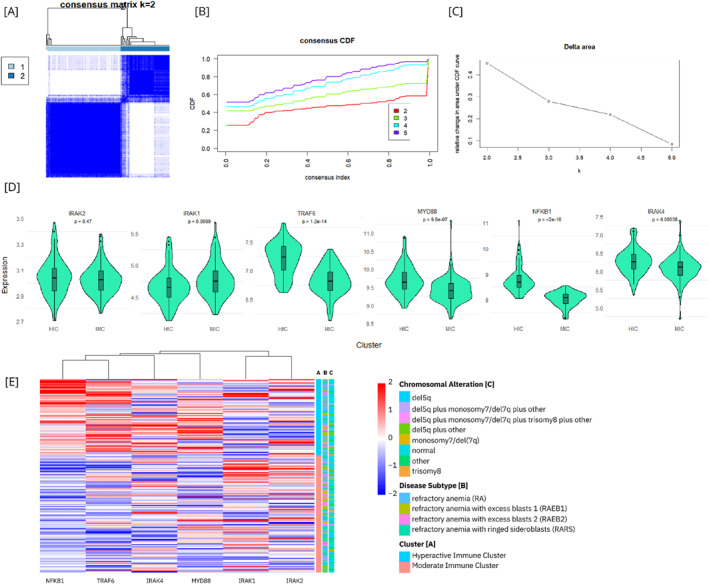 Figure 5
Peer Reviews
No public reviews on file for this paper yet. If you reviewed it on a platform where reviews are public (OpenReview, ICLR, NeurIPS, ICML), you can paste yours below so the community can read it here.
Videos
No videos yet. Explain this paper in a talk, walkthrough, or lecture? Add one.
Taxonomy
TopicsAcute Myeloid Leukemia Research · Immune Cell Function and Interaction · Immune cells in cancer