20 years of the socioeconomic impact of atopic dermatitis and alopecia areata from around the globe
Katarina Stevanovic, Manuel Pereira, Ophélie Nguyen, Ingrid van Hofman, Cathrin Meesch, Torsten Zuberbier

TL;DR
This paper reviews the global socioeconomic impact of atopic dermatitis and alopecia areata over 20 years, highlighting high costs and quality of life issues.
Contribution
The study identifies gaps in global data and emphasizes the need for standardized research on the socioeconomic effects of these diseases.
Findings
AD and AA significantly reduce quality of life and increase healthcare and out-of-pocket costs globally.
Data on socioeconomic impact is lacking in regions like Africa, Scandinavia, and East Europe.
Standardized global studies are needed to better assess and address the impact of these diseases.
Abstract
Atopic dermatitis (AD) and alopecia areata (AA) represent chronic inflammatory diseases characterized by heterogeneous immune‐mediated mechanisms, including subtypes that may interconnect the two diseases, as well as other comorbidities. AD is globally recognized as the most common inflammatory skin disease and AA is an autoimmune disease, causing non‐scarring hair loss. In both diseases the quality of life (QoL) is decreased, out‐of‐pocket expenses on alternative therapies and camouflage endeavours is high, increased productivity loss/absenteeism at work or school, and high healthcare costs are significant. These diseases are not life threatening but result in a substantial socioeconomic impact, which so far has been difficult to quantify on the global scale. This qualitative review that includes literature published between 2004 and 2024 evaluates the current alignment between…
Genes, proteins, chemicals, diseases, species, mutations and cell lines named across the full text — each resolved to its canonical identifier and authoritative record.
Click any figure to enlarge with its caption.
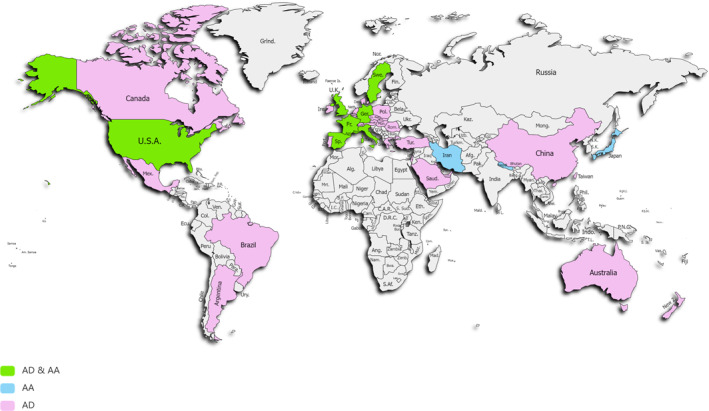 Figure 1
 Figure 2
 Figure 3
Peer Reviews
No public reviews on file for this paper yet. If you reviewed it on a platform where reviews are public (OpenReview, ICLR, NeurIPS, ICML), you can paste yours below so the community can read it here.
Videos
No videos yet. Explain this paper in a talk, walkthrough, or lecture? Add one.
Taxonomy
TopicsDermatology and Skin Diseases · Contact Dermatitis and Allergies · IL-33, ST2, and ILC Pathways