Boramidine: a boron-based photoacidic fluorophore
Estefanía Sucre-Rosales, Nidal Saleh, Jerôme Lacour, Eric Vauthey

TL;DR
Boramidine, a water-soluble fluorophore, behaves as a photoacid in protic solvents due to proton transfer after excitation.
Contribution
The paper reveals that boramidine's photoacidity arises from excited-state proton transfer in protic environments.
Findings
Boramidine is protonated in highly protic solvents like water.
Excited-state proton transfer explains the fluorophore's environment-independent fluorescence spectrum.
Photoacidity adds to boramidine's versatility as a fluorophore.
Abstract
Boramidine is a small water-soluble organic fluorophore that was recently introduced as a versatile building block of fluorescent probes. Herein, we show that boramidine is protonated in highly protic solvents. This behaviour explains the surprisingly large difference in the absorption spectrum reported previously when going from an organic to an aqueous environment. Transient absorption measurements reveal that the invariance of the fluorescence spectrum to the environment arises from an excited-state proton transfer to the solvent occurring a few ps after photoexcitation of the protonated boramidine. This photoacidity of boramidine is a further add-on to the polyvalence of this fluorophore. Boramidine, a small organic fluorophore, is protonated in water and highly protic media and behaves as a photoacid upon optical excitation.
Genes, proteins, chemicals, diseases, species, mutations and cell lines named across the full text — each resolved to its canonical identifier and authoritative record.
Click any figure to enlarge with its caption.
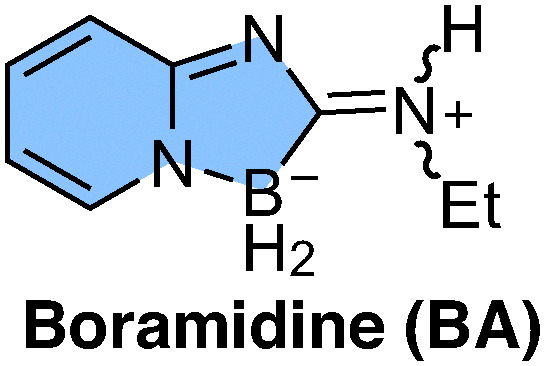 Figure 1
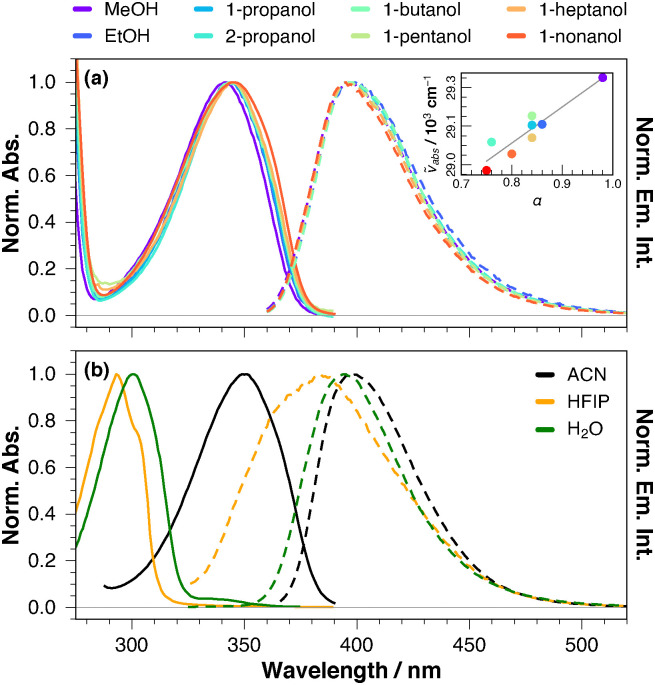 Figure 2
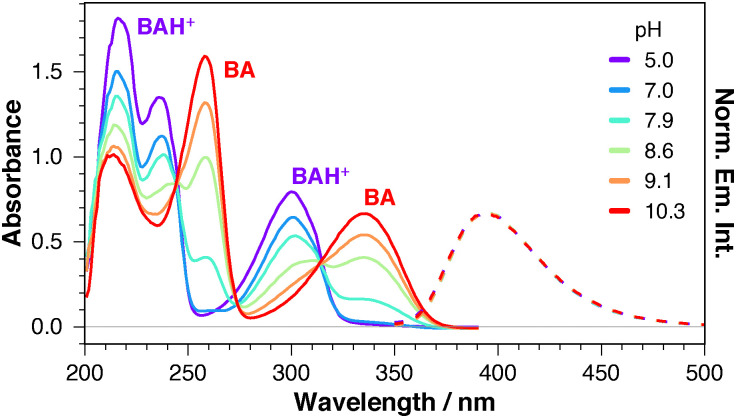 Figure 3
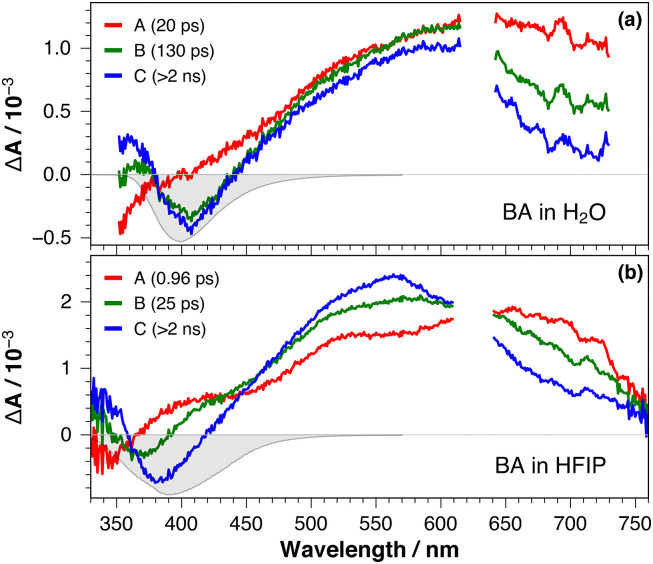 Figure 4
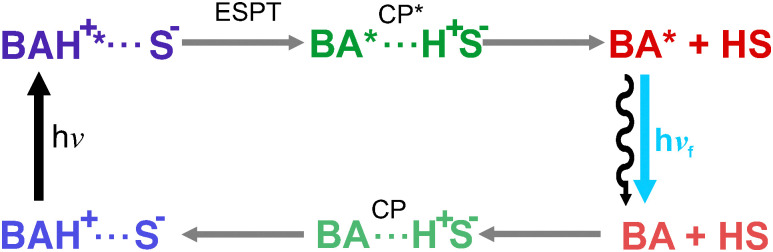 Figure 5
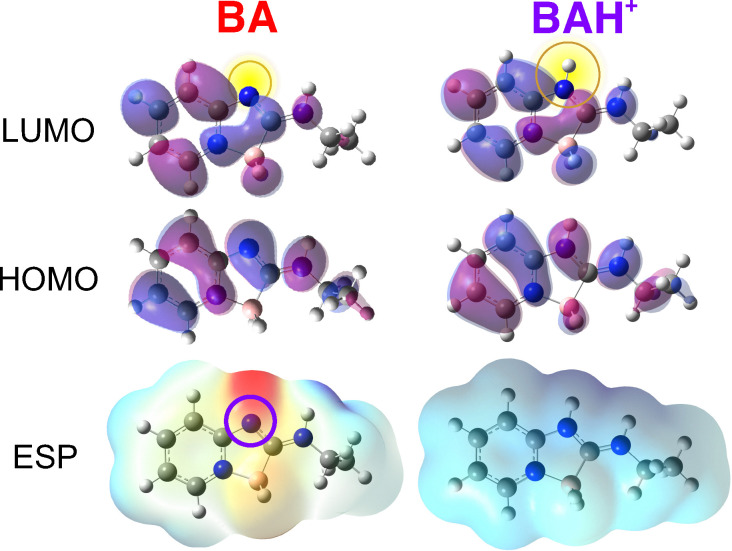 Figure 6
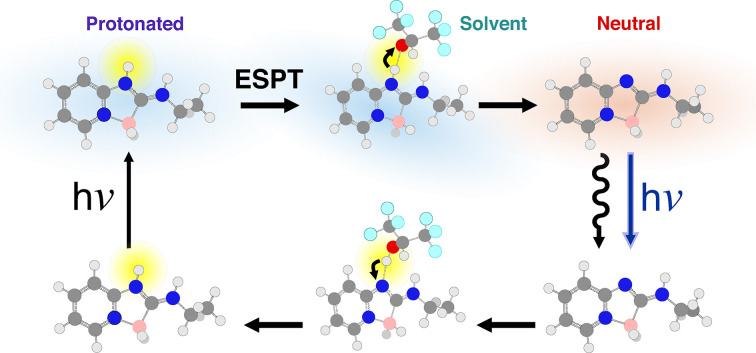 Figure 7
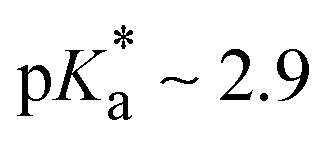 Figure 8
Peer Reviews
No public reviews on file for this paper yet. If you reviewed it on a platform where reviews are public (OpenReview, ICLR, NeurIPS, ICML), you can paste yours below so the community can read it here.
Videos
No videos yet. Explain this paper in a talk, walkthrough, or lecture? Add one.
Taxonomy
TopicsSynthesis and Properties of Aromatic Compounds