Bacillus haimaensis sp. nov.: a novel cold seep-adapted bacterium with unique biosynthetic potential
Yuanyuan Wang, Luyi Yang, Wenbo Wu, Zhengqi Feng, Jian He, Changjun Guo, Jianguo He

TL;DR
A new cold seep-adapted bacterium, Bacillus haimaensis, was discovered in the South China Sea, offering insights into deep-sea microbial adaptations and potential biotech uses.
Contribution
The discovery of a novel Bacillus species with unique genomic features and biosynthetic potential in a deep-sea cold seep environment.
Findings
Bacillus haimaensis has a 4.54 Mb genome with adaptations for cold seep environments, including enhanced nutrient acquisition and stress response mechanisms.
The genome contains 27 unique gene clusters related to spore germination and sulfate assimilation, indicating specialized metabolic strategies.
Six biosynthetic gene clusters, including a novel lassopeptide cluster, suggest potential for natural product discovery and bioremediation.
Abstract
Deep-sea cold seeps harbor unique microbial communities that play crucial roles in biogeochemical cycles and possess potential biotechnological applications. Herein, we report the isolation, characterization, and genomic analysis of a novel Bacillus species, Bacillus haimaensis sp. nov. (type strain CSS-39T, CCTCC M20241382), obtained from sediments collected at a depth of 1,350 m in the Haima cold seep, South China Sea. Phylogenomic analysis, revealing an average nucleotide identity of 87.78% and a digital DNA-DNA hybridization value of 34.0% with its closest relative B. tianshenii DSM 25879T, confirms the taxonomic novelty of the genus Bacillus. The complete 4.54 Mb genome of B. haimaensis reveals adaptations to the cold seep environment, including enhanced nutrient acquisition capabilities and stress response mechanisms. Comparative genomic analysis identifies 27 unique gene clusters…
Genes, proteins, chemicals, diseases, species, mutations and cell lines named across the full text — each resolved to its canonical identifier and authoritative record.
Click any figure to enlarge with its caption.
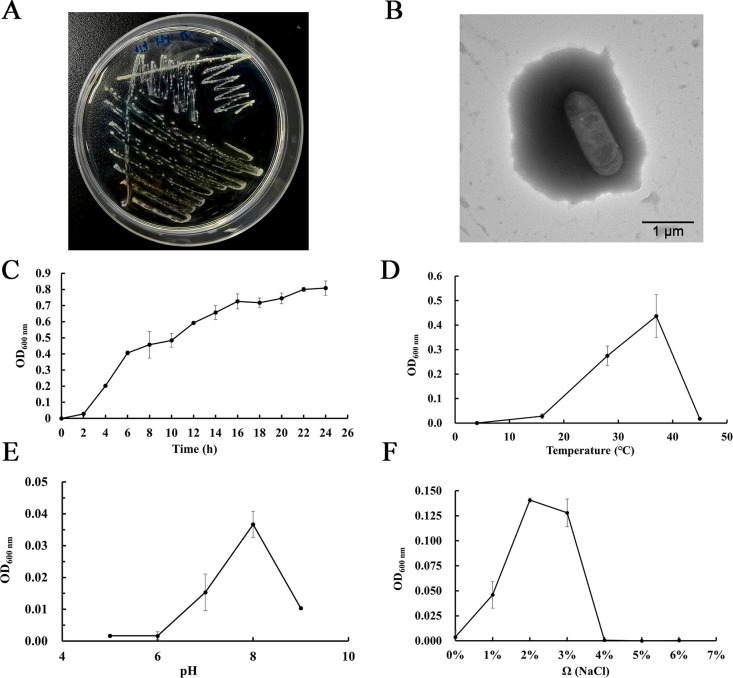 Figure 1
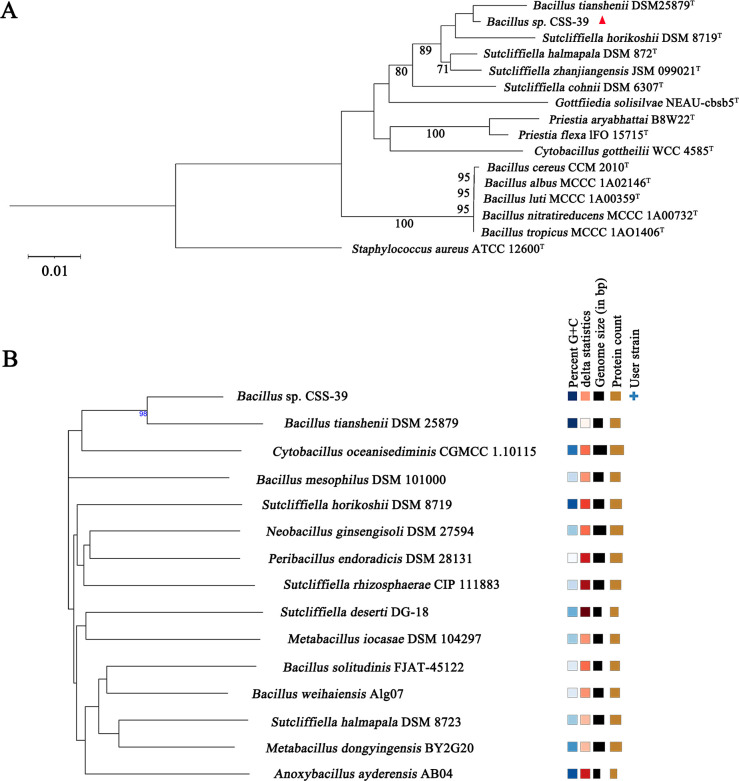 Figure 2
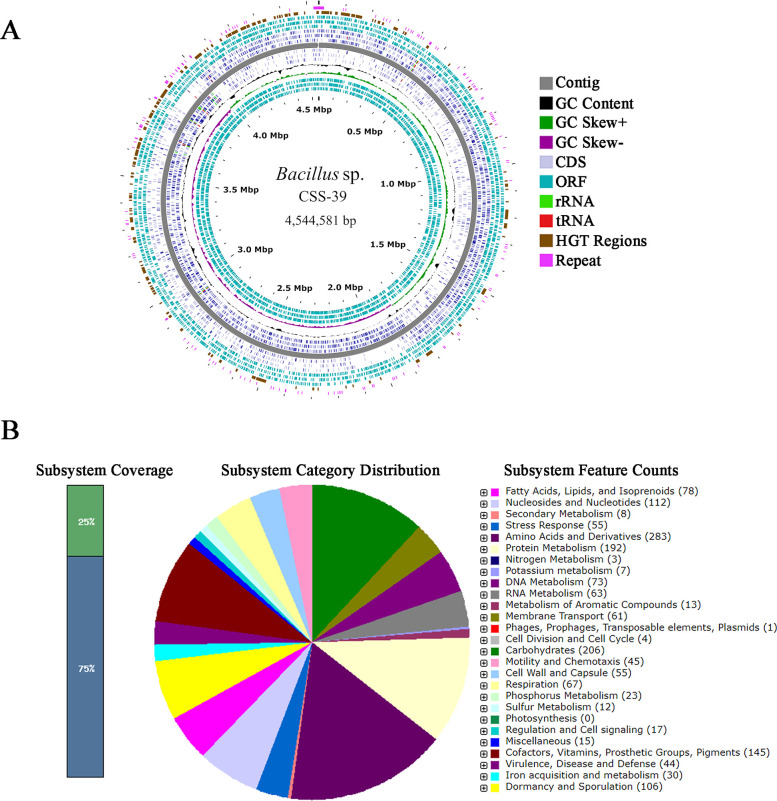 Figure 3
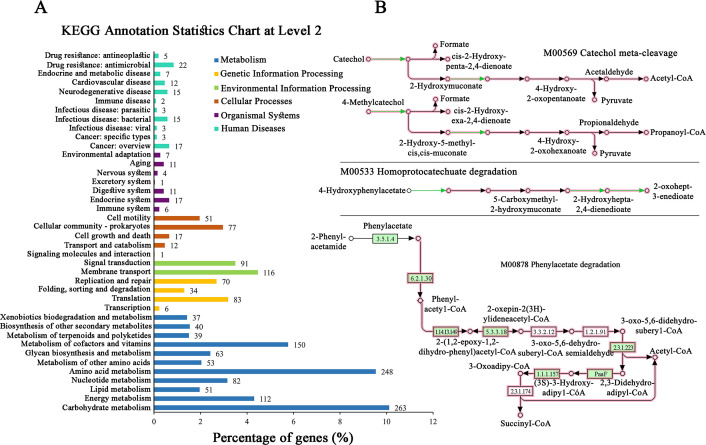 Figure 4
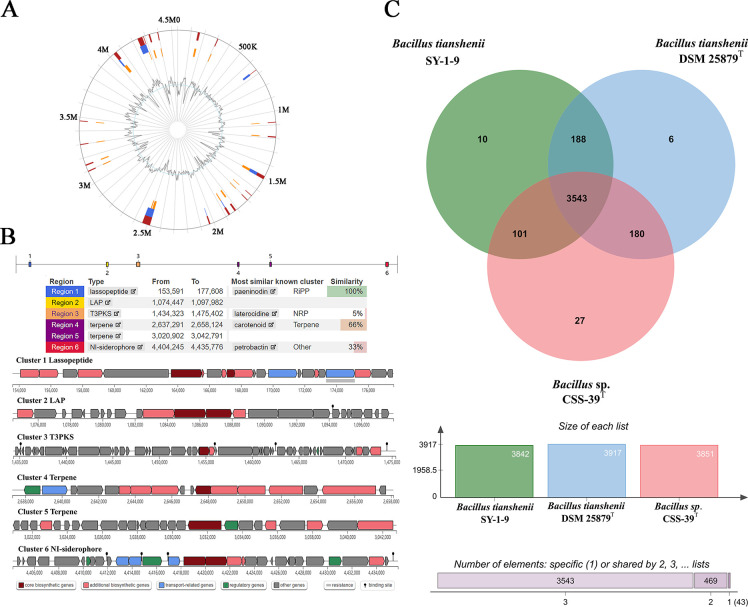 Figure 5
Peer Reviews
No public reviews on file for this paper yet. If you reviewed it on a platform where reviews are public (OpenReview, ICLR, NeurIPS, ICML), you can paste yours below so the community can read it here.
Videos
No videos yet. Explain this paper in a talk, walkthrough, or lecture? Add one.
Taxonomy
TopicsGenomics and Phylogenetic Studies · Microbial Community Ecology and Physiology · Identification and Quantification in Food