The TetR-like regulator Sco4385 and Crp-like regulator Sco3571 modulate heterologous production of antibiotics in Streptomyces coelicolor M512
Sarah Wilcken, Panagiota-Hanna Koutsandrea, Tomke Bakker, Andreas Kulik, Tim Orthwein, Mirita Franz-Wachtel, Theresa Harbig, Kay Katja Nieselt, Karl Forchhammer, Heike Brötz-Oesterhelt, Boris Macek, Silja Mordhorst, Leonard Kaysser, Bertolt Gust

TL;DR
The study identifies two regulatory proteins in Streptomyces coelicolor that influence antibiotic production from heterologously expressed gene clusters.
Contribution
A novel comparative approach using DNA-affinity capturing and mass spectrometry reveals specific regulatory interactions with biosynthetic gene clusters.
Findings
Sco4385, a TetR-family regulator, increases caprazamycin production but not liposidomycin.
Sco3571, a Crp regulator, enhances production of both antibiotics by possibly boosting precursor supply.
Regulatory interactions are specific to each gene cluster despite structural similarities in the antibiotics.
Abstract
Heterologous expression in well-studied model strains is a routinely applied method to investigate biosynthetic pathways. Here, we pursue a comparative approach of large-scale DNA-affinity-capturing assays (DACAs) coupled with semi-quantitative mass spectrometry (MS) to identify putative regulatory proteins from Streptomyces coelicolor M512, which bind to the heterologously expressed biosynthetic gene clusters (BGCs) of the liponucleoside antibiotics caprazamycin and liposidomycin. Both gene clusters share an almost identical genetic arrangement, including the location of promoter regions, as detected by RNA sequencing. A total of 2,214 proteins were trapped at the predicted promoter regions, with only three binding to corresponding promoters in both gene clusters. Among these, the overexpression of a yet uncharacterized TetR-family regulator (TFR), Sco4385, increased caprazamycin but…
Genes, proteins, chemicals, diseases, species, mutations and cell lines named across the full text — each resolved to its canonical identifier and authoritative record.
Click any figure to enlarge with its caption.
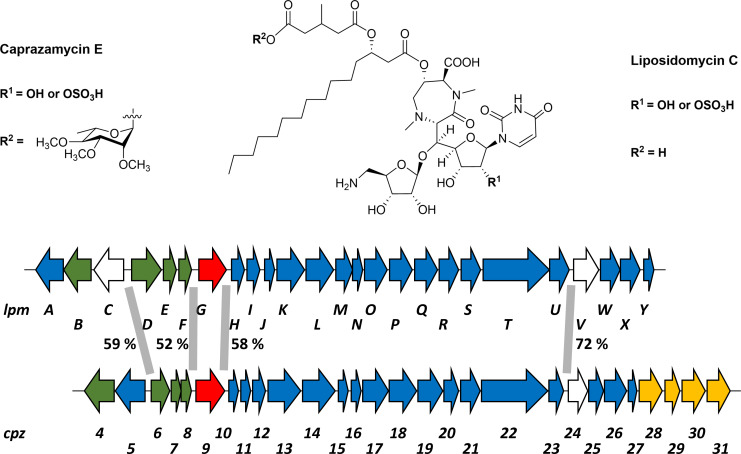 Figure 1
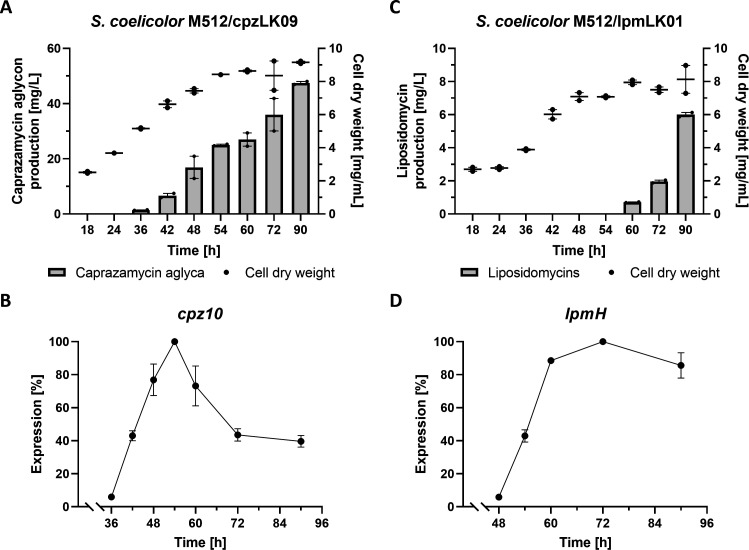 Figure 2
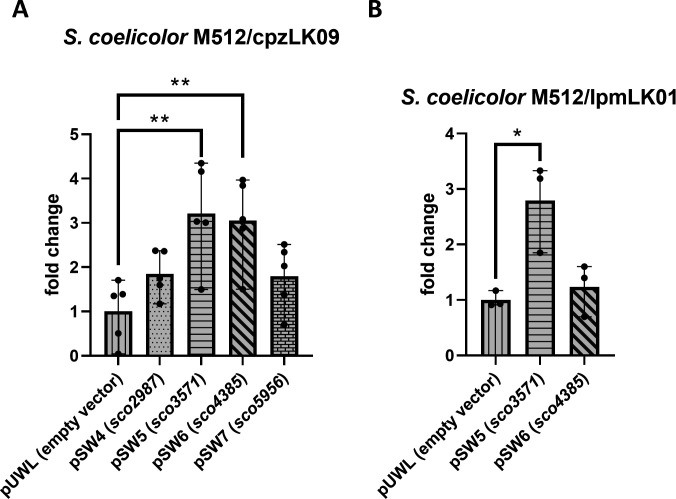 Figure 3
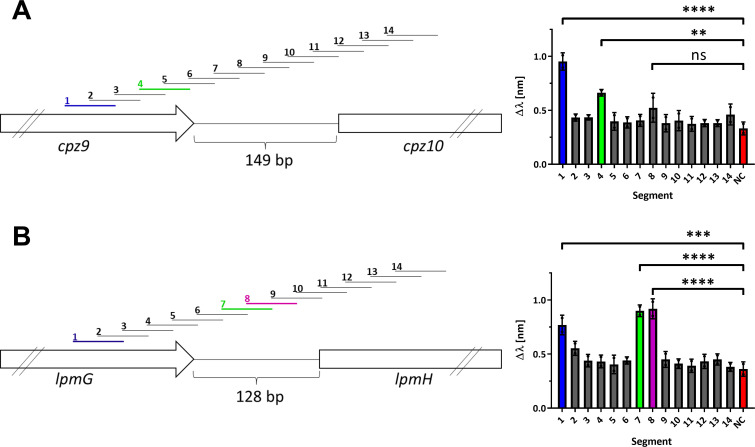 Figure 4
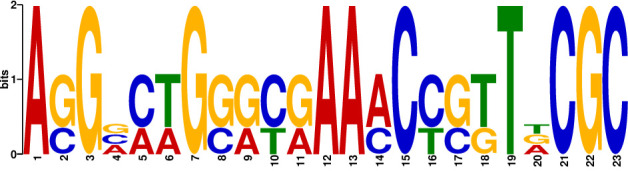 Figure 5
Peer Reviews
No public reviews on file for this paper yet. If you reviewed it on a platform where reviews are public (OpenReview, ICLR, NeurIPS, ICML), you can paste yours below so the community can read it here.
Videos
No videos yet. Explain this paper in a talk, walkthrough, or lecture? Add one.
Taxonomy
TopicsMicrobial Natural Products and Biosynthesis · Genomics and Phylogenetic Studies · RNA and protein synthesis mechanisms