Association of myeloid cell reactivity patterns with safe food predictions in FPIES patients
Georgiana M. Sanders, Alexandra Hua, Elizabeth Hudson, Jonathan P. Troost, Nobuhiko Kamada, John Y. Kao, Charles F. Schuler, Mohamad El-Zaatari

TL;DR
This study introduces a new method to predict safe foods for FPIES patients by analyzing immune cell reactions, reducing food reactions and improving dietary diversity.
Contribution
The study introduces individual-specific myeloid cell reactivity patterns (iMCRPs) as a novel diagnostic tool for predicting safe food ingestion in FPIES patients.
Findings
Foods that do not trigger immune cell responses in FPIES patients are safe to ingest with 98.5% accuracy.
Using iMCRPs reduced new food reaction rates from 19.5% to 0% and increased dietary diversity.
A 9-gene panel was identified to represent FPIES ex vivo immune responses.
Abstract
Food protein-induced enterocolitis syndrome (FPIES) is an understudied non-IgE-mediated food allergy, which is distinct from and lacks diagnostic testing akin to IgE testing. FPIES affects infants and toddlers but can persist into adulthood. As there are no extant methods to identify safe foods for FPIES patients, food ingestion trials are performed at home and often lead to reactions and development of food aversions, which may lead to failure-to-thrive and gastric feeding tube requirements. We hypothesized that foods that fail to elicit responses in immune cells of FPIES patients would be safe to ingest, which could support development of a diagnostic method to headstart safe food identification in patients. We developed an ex vivo model of FPIES using food-stimulated white blood cells (WBCs) from pediatric FPIES patients and controls by defining a 9-gene panel representative of…
Genes, proteins, chemicals, diseases, species, mutations and cell lines named across the full text — each resolved to its canonical identifier and authoritative record.
Click any figure to enlarge with its caption.
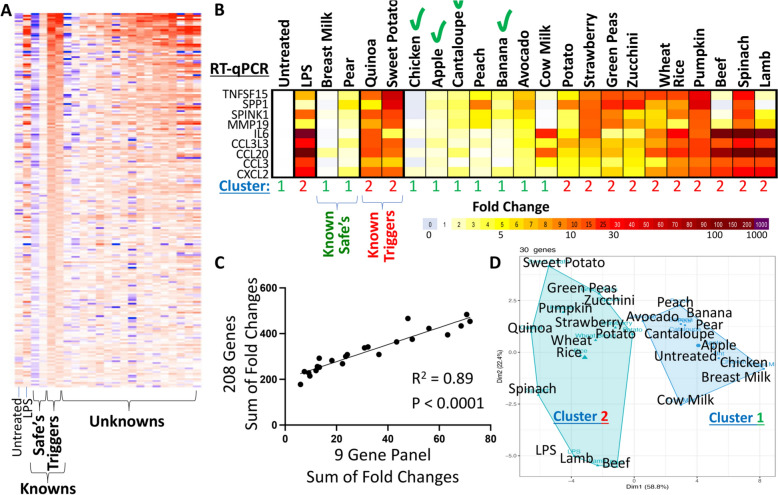 Figure 1
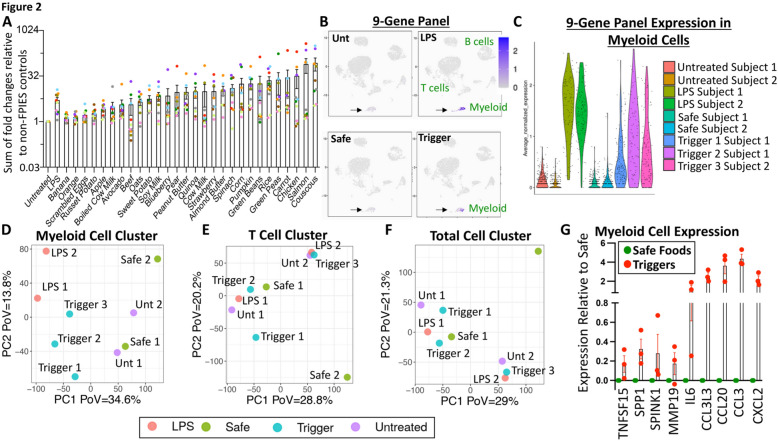 Figure 2
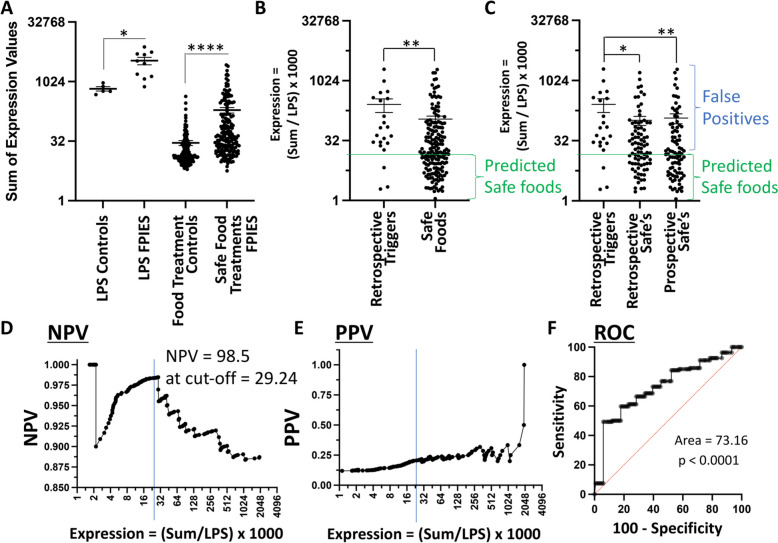 Figure 3
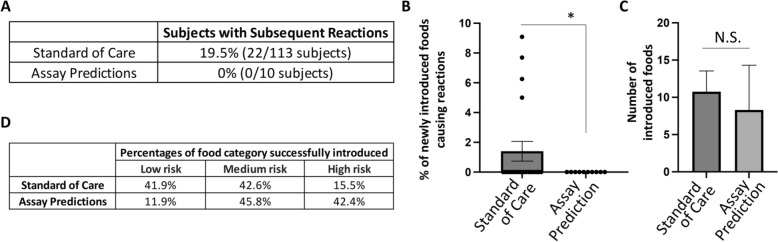 Figure 4
Peer Reviews
No public reviews on file for this paper yet. If you reviewed it on a platform where reviews are public (OpenReview, ICLR, NeurIPS, ICML), you can paste yours below so the community can read it here.
Videos
No videos yet. Explain this paper in a talk, walkthrough, or lecture? Add one.
Taxonomy
TopicsFood Allergy and Anaphylaxis Research · Child Nutrition and Feeding Issues · Eosinophilic Esophagitis