A Comparative Study of 0.0625% Bupivacaine-Fentanyl With 0.1% Ropivacaine-Fentanyl for Labor Epidural Analgesia
Chinthalapudi Mounika, Gabu Sujitha, Mrunalini P

TL;DR
This study compares two epidural analgesia solutions for labor pain, finding that 0.1% ropivacaine-fentanyl provides better pain relief and satisfaction than 0.0625% bupivacaine-fentanyl.
Contribution
The study introduces a direct comparison of two low-concentration epidural analgesia mixtures for labor pain management.
Findings
Ropivacaine-fentanyl (RF) provided significantly better analgesia with lower VAS scores at 20 and 30 minutes.
RF resulted in higher maternal satisfaction and less motor block compared to bupivacaine-fentanyl (BF).
Neonatal outcomes and labor duration were comparable between the two groups.
Abstract
Introduction: Labor pain triggers significant maternal stress, impacting both maternal and fetal well-being. Epidural analgesia is the gold standard for labor pain relief, offering effective analgesia with minimal side effects. This study compares the efficacy and safety of 0.0625% bupivacaine-fentanyl (BF) versus 0.1% ropivacaine-fentanyl (RF) in labor epidural analgesia. Materials and methods: An observational study was conducted on 60 primiparous women in active labor, divided into two groups (n=30 each). Group BF received 0.0625% BF (2 mcg/ml), and Group RF received 0.1% RF (2 mcg/ml) via epidural infusion. Pain relief (Visual Analog Scale (VAS) score), motor block (modified Bromage score), need for top-ups, maternal satisfaction, mode of delivery, neonatal outcomes (Apgar scores), and adverse events were recorded. Data were analyzed using Epi Info (Centers for Disease Control and…
Genes, proteins, chemicals, diseases, species, mutations and cell lines named across the full text — each resolved to its canonical identifier and authoritative record.
Click any figure to enlarge with its caption.
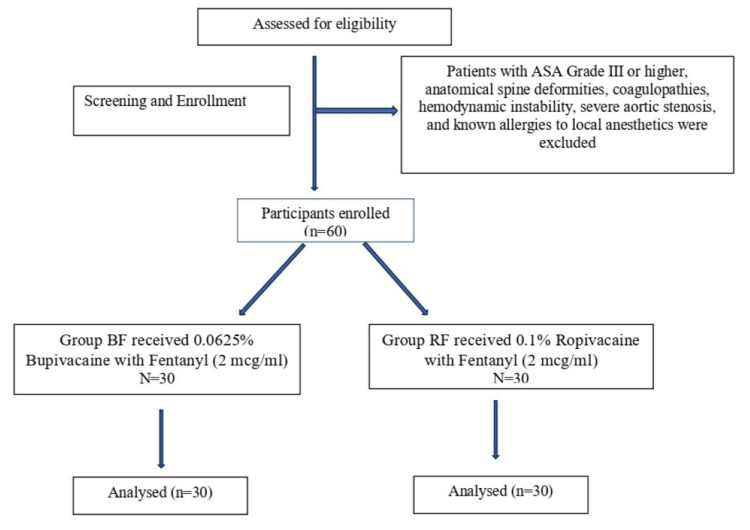 Figure 1
Peer Reviews
No public reviews on file for this paper yet. If you reviewed it on a platform where reviews are public (OpenReview, ICLR, NeurIPS, ICML), you can paste yours below so the community can read it here.
Videos
No videos yet. Explain this paper in a talk, walkthrough, or lecture? Add one.
Taxonomy
TopicsAnesthesia and Pain Management · Nausea and vomiting management · Pediatric Pain Management Techniques