Use of quantitative CT chest imaging to derive and assess a radiographic phenotype of deployment-related constrictive bronchiolitis
Alexander J. Bell, Maria Masotti, Sundaresh Ram, Gregory Pappas, Robert F. Miller, Ella A. Kazerooni, Charles R. Hatt, MeiLan K. Han, Bradley W. Richmond, Michael J. Falvo, Craig J. Galban, John J. Osterholzer

TL;DR
This study uses quantitative CT scans to identify a lung condition in veterans linked to military deployment, helping to diagnose those with chronic lung injury non-invasively.
Contribution
The paper introduces a QCT-based radiographic phenotype and probability index to identify deployment-related constrictive bronchiolitis in veterans.
Findings
QCT metrics showed elevated functional small airways disease and high attenuation area in DRCB and FDSV cohorts compared to controls.
Veterans with DRCB-PI > 0.5 had more severe small airways disease and reported worse health effects from deployment exposures.
Principal component analysis distinguished DRCB and FDSV cohorts from controls, suggesting potential for non-invasive DRCB detection.
Abstract
Efforts to phenotype veterans that developed respiratory symptoms following deployments to the Southwest Asia Theater of Military Operation have been limited by the insensitivity of current non-invasive testing to objectively identify deployment-related constrictive bronchiolitis and other features of chronic lung injury. In this study, we derived a quantitative CT (QCT)-based radiographic phenotype of biopsy-proven deployment-related constrictive bronchiolitis (DRCB) and assessed its ability to assist in the phenotyping of non-biopsied formerly deployed symptomatic veterans. QCT analysis combined with demographic, physiologic, symptom, and exposure data was obtained from three cohorts: military personnel with biopsy-proven deployment-related constrictive bronchiolitis (DRCB, n = 37), formerly deployed symptomatic veterans (FDSV, n = 71), and asymptomatic civilians (Control, n = 98).…
Genes, proteins, chemicals, diseases, species, mutations and cell lines named across the full text — each resolved to its canonical identifier and authoritative record.
Click any figure to enlarge with its caption.
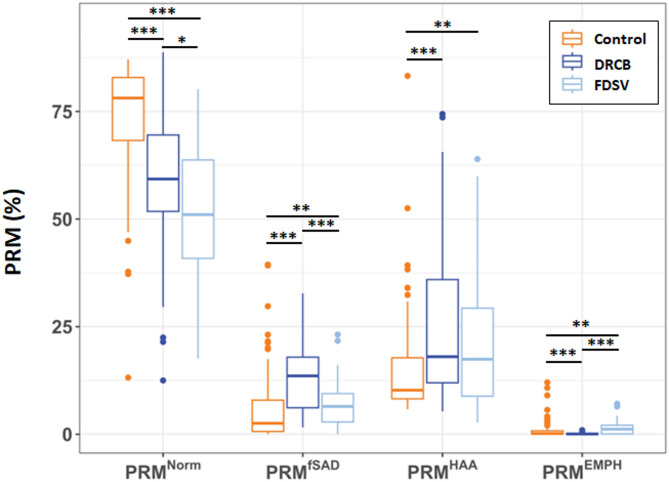 Figure 1
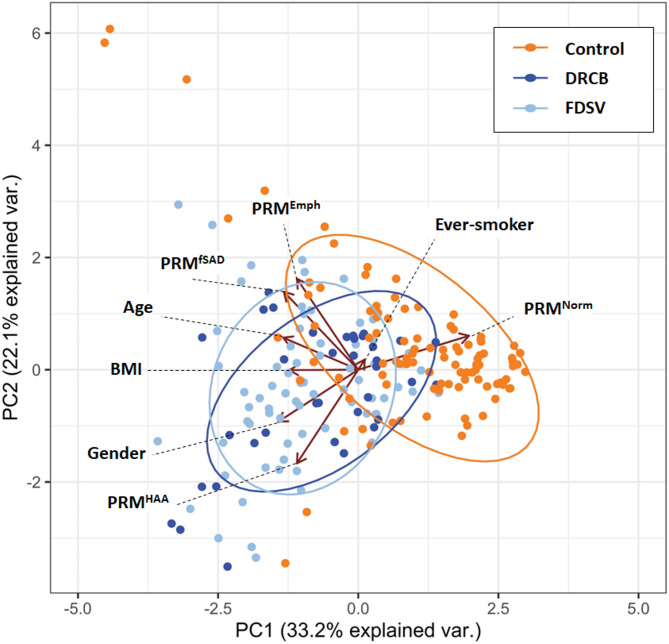 Figure 2
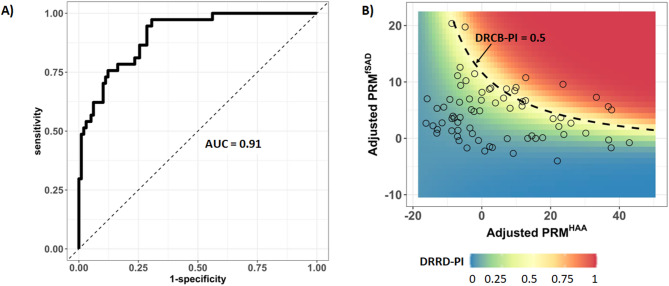 Figure 3
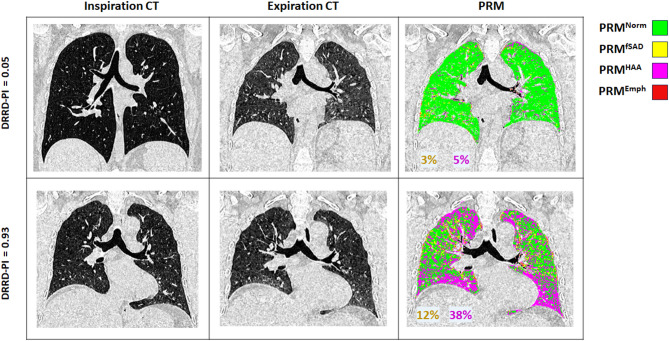 Figure 4
Peer Reviews
No public reviews on file for this paper yet. If you reviewed it on a platform where reviews are public (OpenReview, ICLR, NeurIPS, ICML), you can paste yours below so the community can read it here.
Videos
No videos yet. Explain this paper in a talk, walkthrough, or lecture? Add one.
Taxonomy
TopicsChronic Obstructive Pulmonary Disease (COPD) Research · Interstitial Lung Diseases and Idiopathic Pulmonary Fibrosis · Pleural and Pulmonary Diseases