Analysis of clinical audiological characteristics in children with Williams syndrome in China
Fangfang Li, Bin Xu, Jiyang Shen, Weijun Chen, Junxia Guo, Dan Yao, Jie Shao, Chai Ji

TL;DR
This study examines hearing issues in children with Williams syndrome in China, finding frequent middle and inner ear problems that can lead to hearing loss.
Contribution
The study provides new empirical data on audiological characteristics in Chinese children with Williams syndrome, revealing patterns of hearing loss and subclinical cochlear impairment.
Findings
Children with Williams syndrome show significantly lower passing rates in tympanogram and DPOAE tests compared to controls.
ABR tests in children with Williams syndrome show prolonged latency in auditory nerve responses and shortened interpeak latency III-V.
Half of the children with Williams syndrome had hearing loss, primarily mild conductive or mixed types.
Abstract
Williams Syndrome (WS) is a neurodevelopmental disorder caused by microdeletion on chromosome 7. Hearing loss (HL) is common in this population but is rarely taken seriously. Previous studies had small sample sizes and mixed conclusions, and few studies have investigated HL in children with WS. To investigate audiological characteristics of children with WS, analyze the influence factors, and to provide scientific basis for further improvement of ear and hearing care in children with WS. Children with WS aged 0-18yrs, followed up in the Department of Pediatric Healthcare of the Children’s Hospital of Zhejiang University School of Medicine from June 2020 to June 2024 were enrolled in this study. Children aged 0-18yrs who came in the same period for health examination were matched as the control group. Both groups underwent a series of audiological examinations such as tympanogram,…
Genes, proteins, chemicals, diseases, species, mutations and cell lines named across the full text — each resolved to its canonical identifier and authoritative record.
Click any figure to enlarge with its caption.
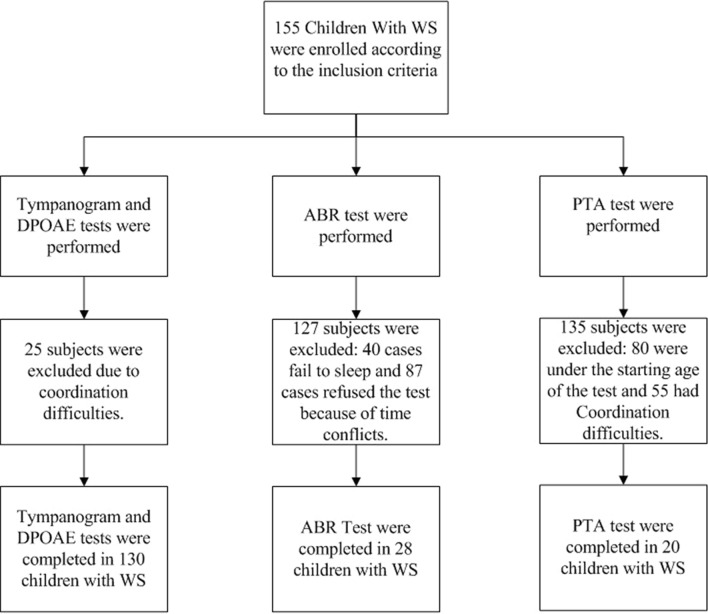 Figure 1
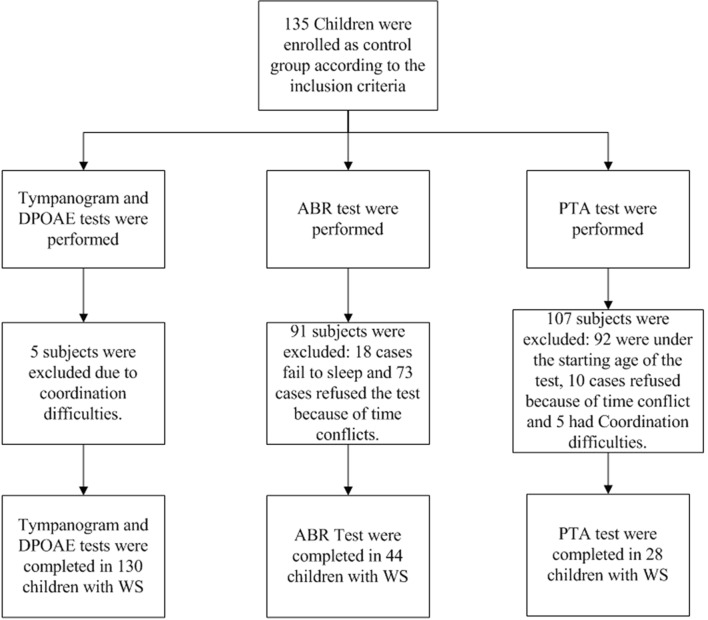 Figure 2
Peer Reviews
No public reviews on file for this paper yet. If you reviewed it on a platform where reviews are public (OpenReview, ICLR, NeurIPS, ICML), you can paste yours below so the community can read it here.
Videos
No videos yet. Explain this paper in a talk, walkthrough, or lecture? Add one.
Taxonomy
TopicsWilliams Syndrome Research