Non-variable RNA deletion using the CRISPR-Cas9 technique demonstrated improved outcomes in human intestine single-cell RNA sequencing data, even at half sequencing depths
Dong Jun Kim, Christine Suh Yun Joh, So Young Jeong, Yong Jun Kim, Seong Joon Koh, Hyun Je Kim

TL;DR
A CRISPR-Cas9 method to remove non-variable RNAs in human intestinal scRNA-seq data improves quality and reduces costs without harming biological integrity.
Contribution
A novel CRISPR-Cas9-based approach for RNA deletion that outperforms computational methods in scRNA-seq data quality.
Findings
CRISPR-Cas9 treatment effectively reduced non-variable RNA expression, including ribosomal and mitochondrial RNAs.
Treated samples at half sequencing depth maintained comparable quality and saturation to untreated samples.
Cell type composition and gene expression patterns remained consistent after treatment with no unintended deletions.
Abstract
In single-cell RNA sequencing (scRNA-seq) data, issues related to the high expression of non-variable RNAs often arise due to organ traits or sample quality. Computational methods, such as SoupX (Young (Gigascience 9:giaa151, 2020)), have been used to solve this problem but it may remove biologically relevant data. This study presents a clustered regularly interspaced short palindromic repeats (CRISPR)-Cas9-based method that selectively removes non-variable RNAs. We applied this approach to scRNA-seq data from human intestinal tissues of 17 patients. By targeting non-variable genes, including ribosomal and mitochondrial RNAs, CRISPR-Cas9 treatment effectively reduced their expression, outperforming computational methods in both the number and extent of gene removal. The CRISPR-Cas9 treated samples, sequenced at half the depth compared to untreated samples, maintained comparable…
Genes, proteins, chemicals, diseases, species, mutations and cell lines named across the full text — each resolved to its canonical identifier and authoritative record.
Click any figure to enlarge with its caption.
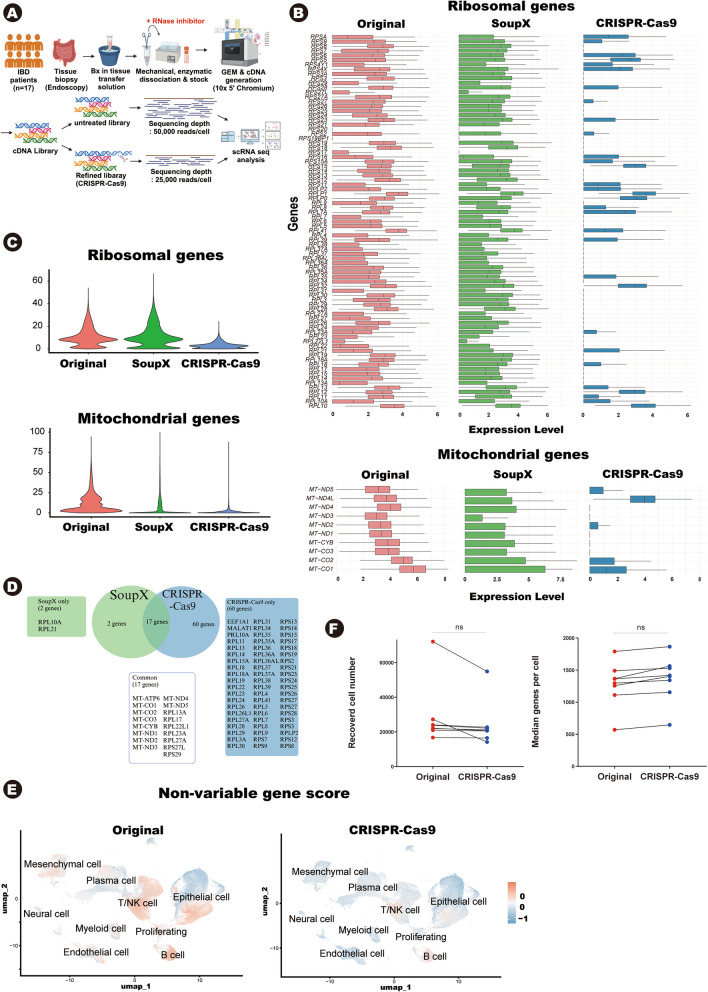 Figure 1
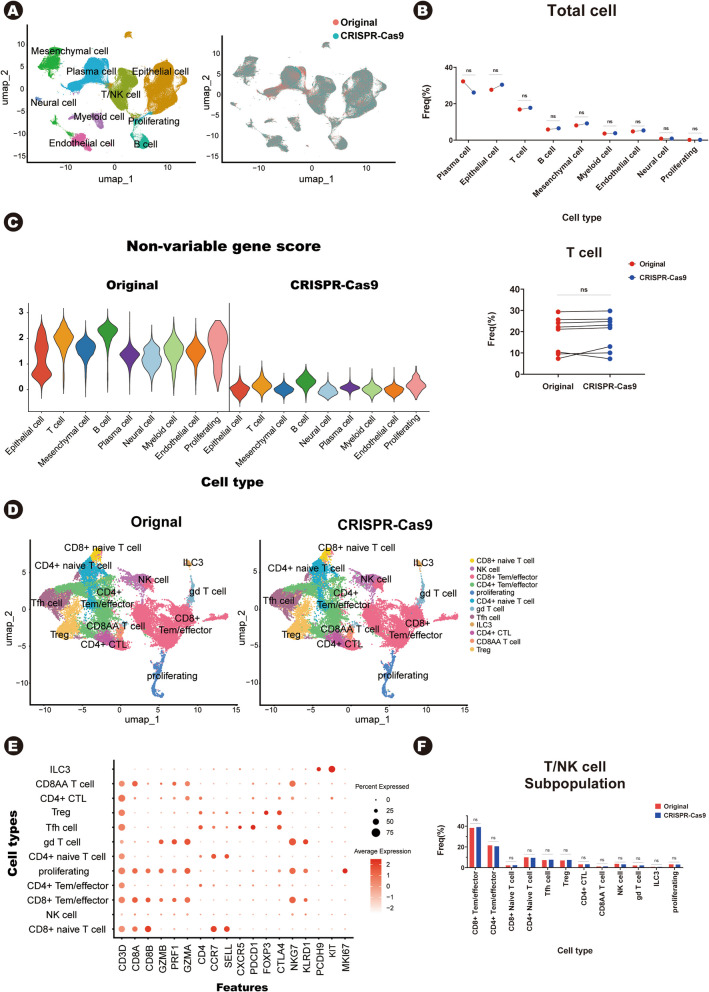 Figure 2
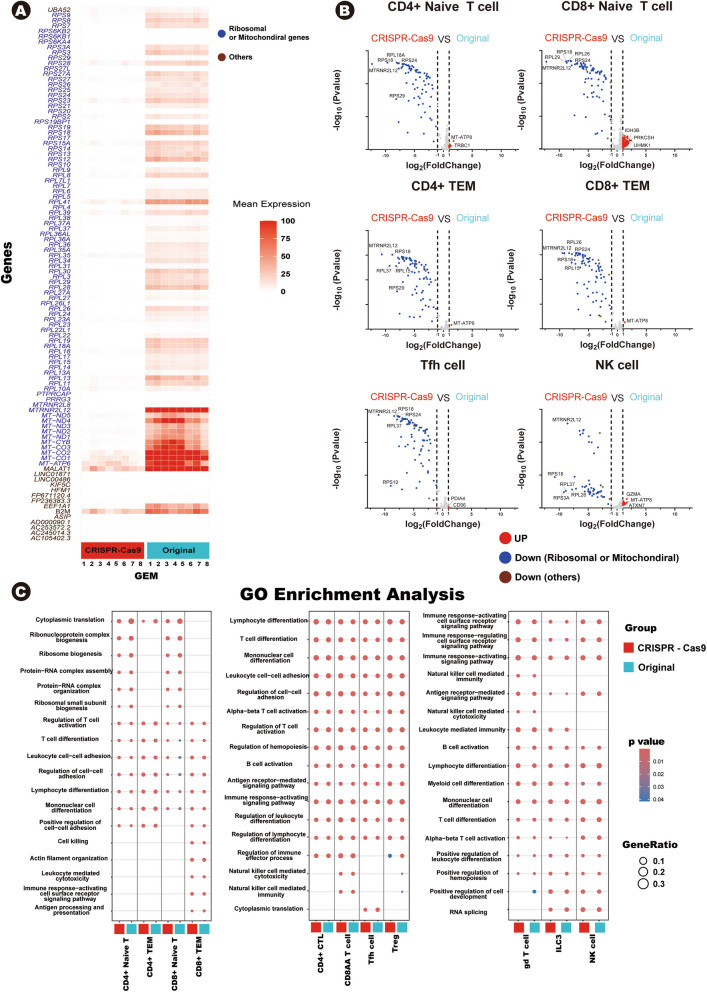 Figure 3
Peer Reviews
No public reviews on file for this paper yet. If you reviewed it on a platform where reviews are public (OpenReview, ICLR, NeurIPS, ICML), you can paste yours below so the community can read it here.
Videos
No videos yet. Explain this paper in a talk, walkthrough, or lecture? Add one.
Taxonomy
TopicsSingle-cell and spatial transcriptomics · Cancer-related molecular mechanisms research · CRISPR and Genetic Engineering