Unravelling the role of key amino acid residues of the parainfluenza fusion peptide in membrane fusion
Mariana Valério, Carolina C. Buga, Diogo A. Mendonça, Miguel A. R. B. Castanho, Manuel N. Melo, Cláudio M. Soares, Diana Lousa, Ana Salomé Veiga

TL;DR
This study explores how two amino acids in a parainfluenza virus fusion peptide affect its ability to fuse with cell membranes.
Contribution
The study identifies the specific roles of F103 and Q120 in the parainfluenza fusion peptide's membrane interaction and fusion activity.
Findings
F103A substitution significantly reduces PIFP's membrane interaction and fusion ability.
Q120A substitution has minimal impact on membrane interaction but alters peptide oligomerization.
MD simulations show decreased lipid perturbation and water flux with F103A substitution.
Abstract
Parainfluenza viruses enter host cells by fusing their envelope with the cell membrane. In this process mediated by the fusion glycoprotein, the fusion peptide plays an essential role in membrane binding and triggering fusion. Previously, we demonstrated that the parainfluenza fusion peptide (PIFP) oligomerizes into porelike structures within the membrane, leading to membrane perturbations, fusion, and leakage. Additionally, we identified two key amino acid residues in the PIFP, F103 and Q120, which are important in inducing lipid tail protrusion and maintaining peptide–peptide interactions, respectively. Here, we seek to elucidate the role of these two residues in the PIFP function by studying the impact of F103A and Q120A substitutions on peptide activity. We compared the substituted peptides with the native peptide using biophysical experiments and molecular dynamics (MD)…
Genes, proteins, chemicals, diseases, species, mutations and cell lines named across the full text — each resolved to its canonical identifier and authoritative record.
Click any figure to enlarge with its caption.
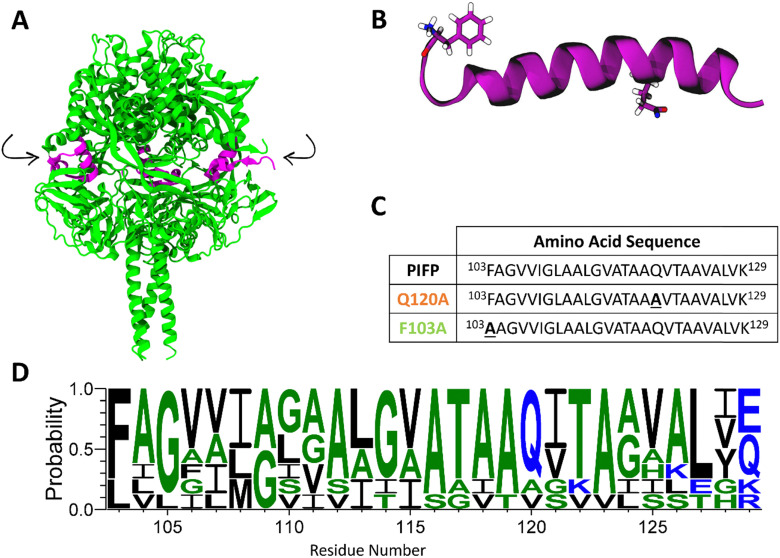 Figure 1
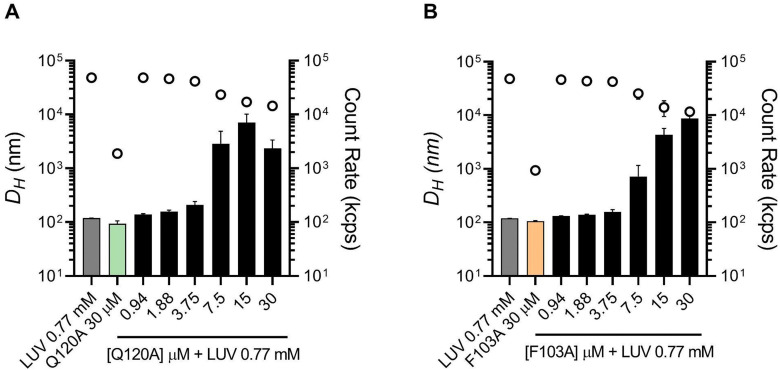 Figure 2
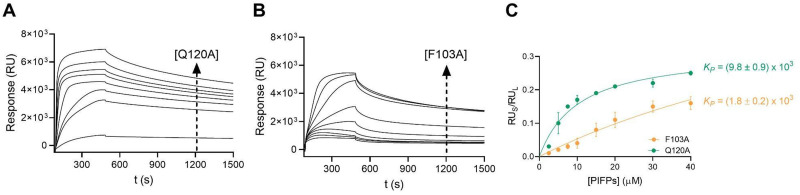 Figure 3
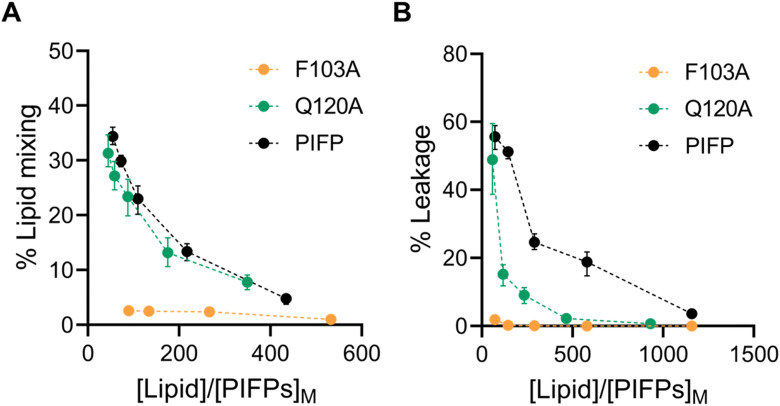 Figure 4
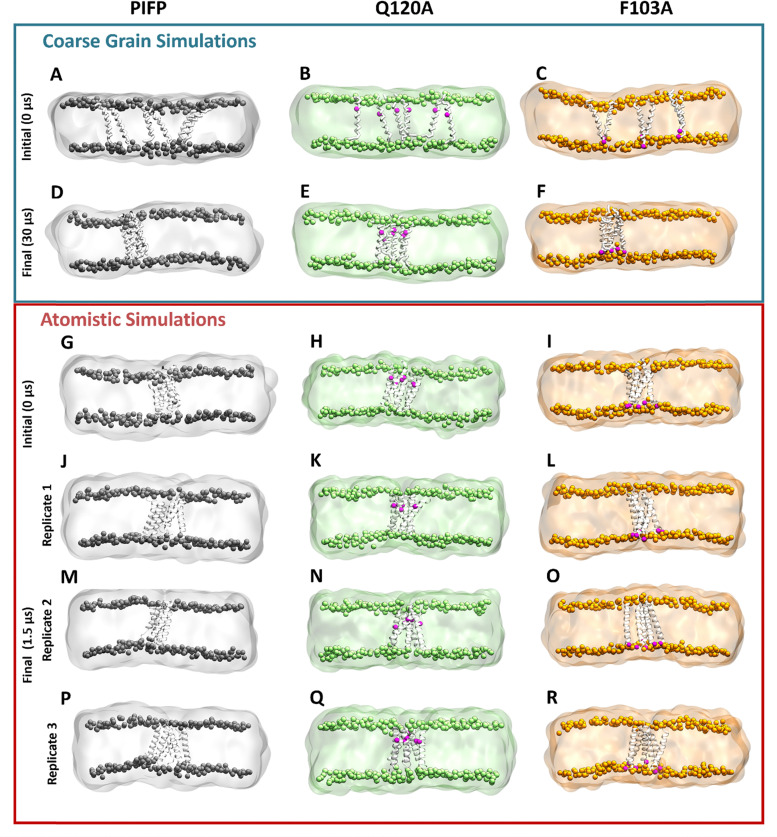 Figure 5
 Figure 6
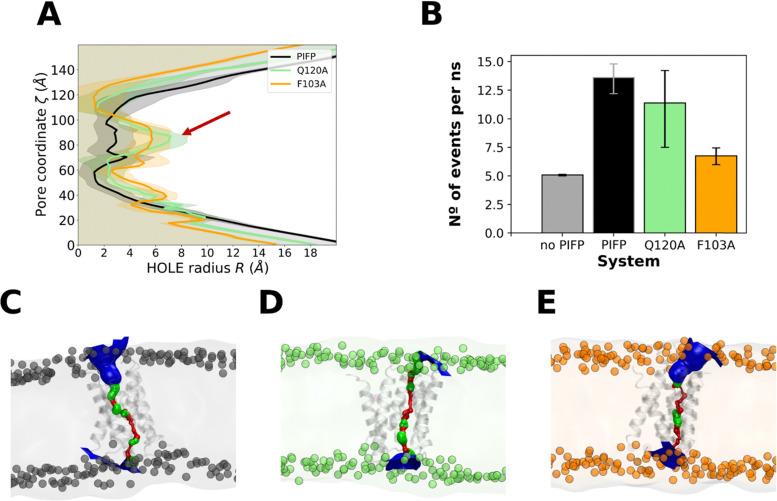 Figure 7
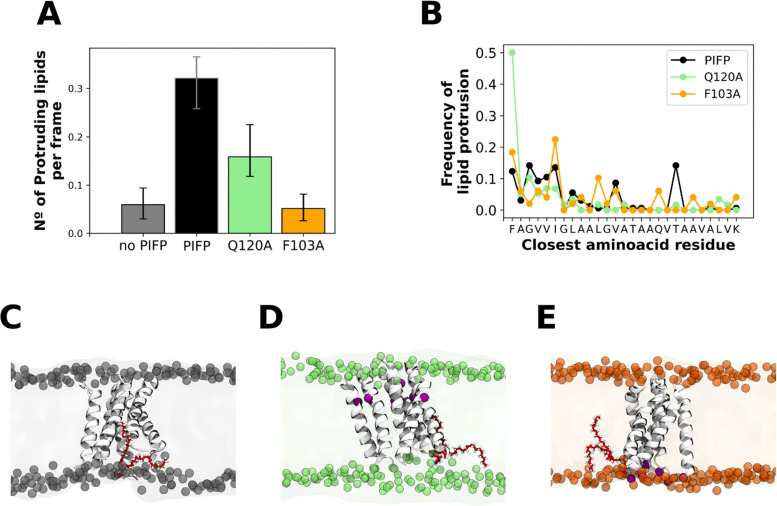 Figure 8
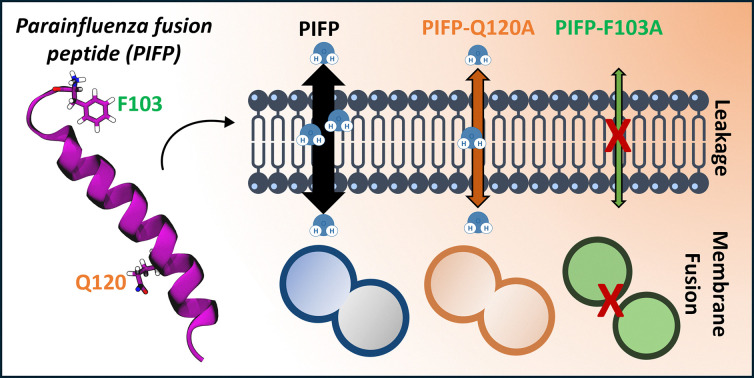 Figure 9
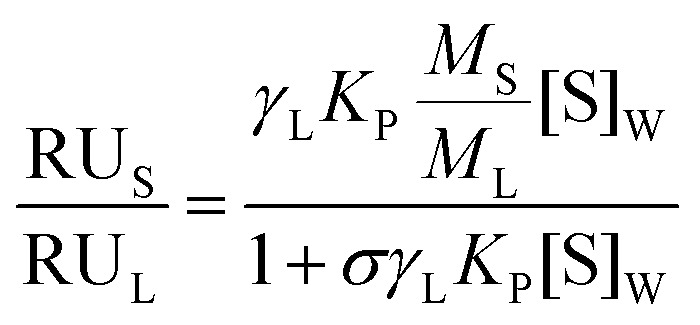 Figure 10
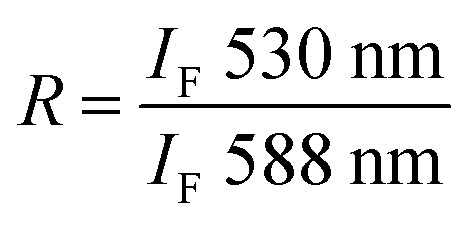 Figure 11
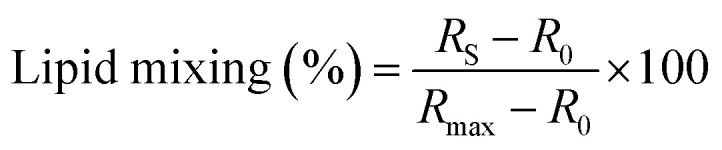 Figure 12
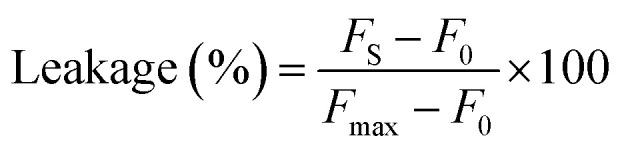 Figure 13
Peer Reviews
No public reviews on file for this paper yet. If you reviewed it on a platform where reviews are public (OpenReview, ICLR, NeurIPS, ICML), you can paste yours below so the community can read it here.
Videos
No videos yet. Explain this paper in a talk, walkthrough, or lecture? Add one.
Taxonomy
TopicsVirology and Viral Diseases · Respiratory viral infections research · Viral Infections and Vectors