TREM2 supports neuronal protection and microglial reactivity without an effect on misfolded protein deposition in chronic neurodegenerative prion disease
Sarah M. Carpanini, Barry M. Bradford, Alessio Alfieri, Pedro Piccardo, Jimena Monzón-Sandoval, Deborah Brown, Aileen Boyle, Aleksandra Pokrovskaya, Neil A. Mabbott, Jean Manson, Barry W. McColl

TL;DR
This study shows that TREM2 helps protect neurons and activate microglia during prion disease, but does not affect the buildup of misfolded proteins.
Contribution
The study reveals TREM2's role in neuronal resilience and microglial reactivity in prion disease, independent of proteinopathy.
Findings
TREM2 deficiency increases neuropathology severity in prion-infected mice.
Microglial reactivity is reduced in TREM2-deficient mice during prion infection.
TREM2 supports myelination gene expression in prion-infected mice.
Abstract
Triggering receptor expressed on myeloid cells-2 (TREM2) variants have been identified as risk factors for neurodegenerative disease, including Alzheimer’s disease. TREM2 is a cell surface receptor on microglia that regulates homeostatic and immunomodulatory functions, including phagocytosis of apoptotic debris and the resolution of damage-associated inflammation. It remains unclear how TREM2 may mediate an influence on neurodegenerative disease, particularly in relation to key neuropathological hallmarks such as neuronal loss and proteinopathy. We used the ME7 prion disease model to assess the role of TREM2 in the progression and pathology of neurodegenerative disease. Prion diseases are characterised by the accumulation of misfolded prion proteins and provide a highly tractable platform to determine if TREM2 has disease-modifying effects. Trem2−/− and wild-type (WT) mice were…
Genes, proteins, chemicals, diseases, species, mutations and cell lines named across the full text — each resolved to its canonical identifier and authoritative record.
Click any figure to enlarge with its caption.
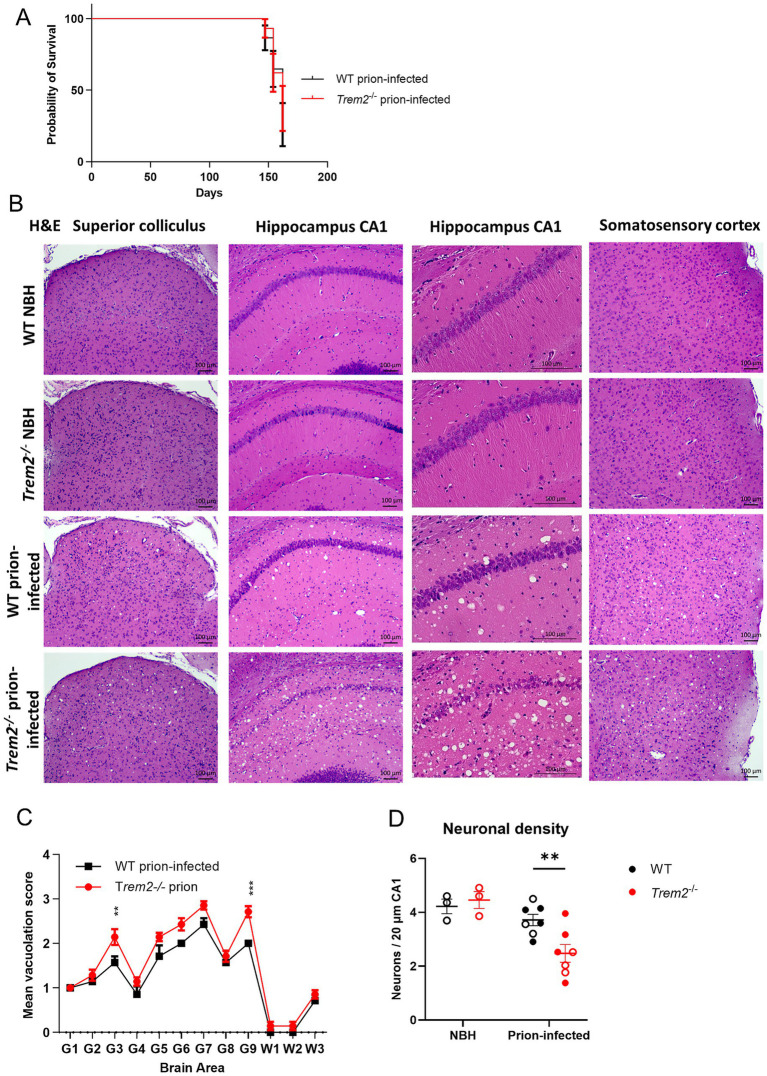 Figure 1
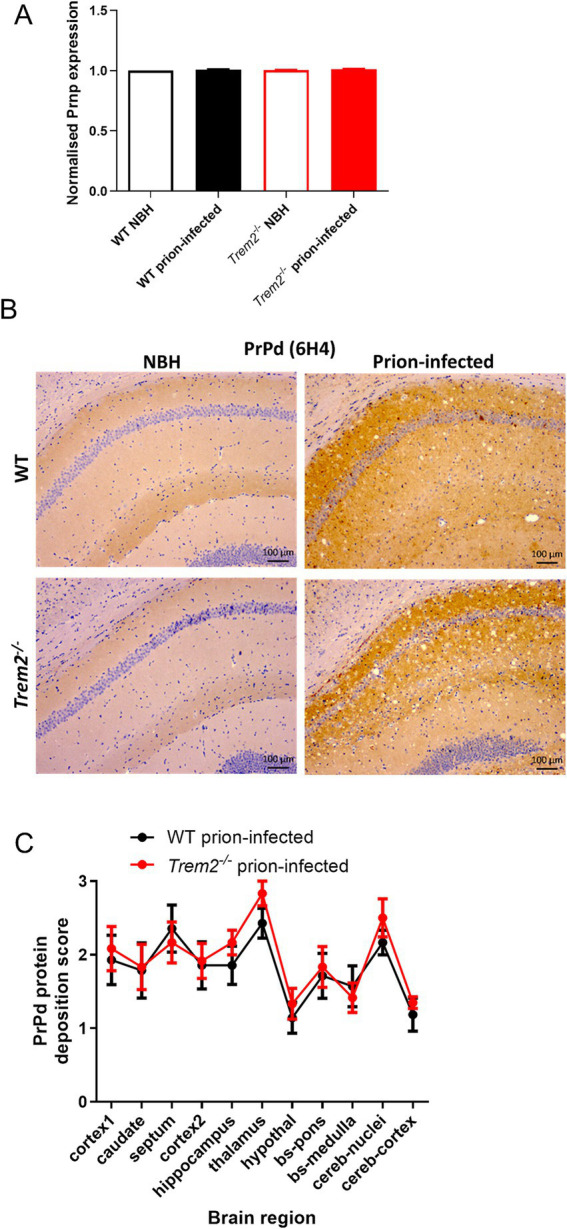 Figure 2
 Figure 3
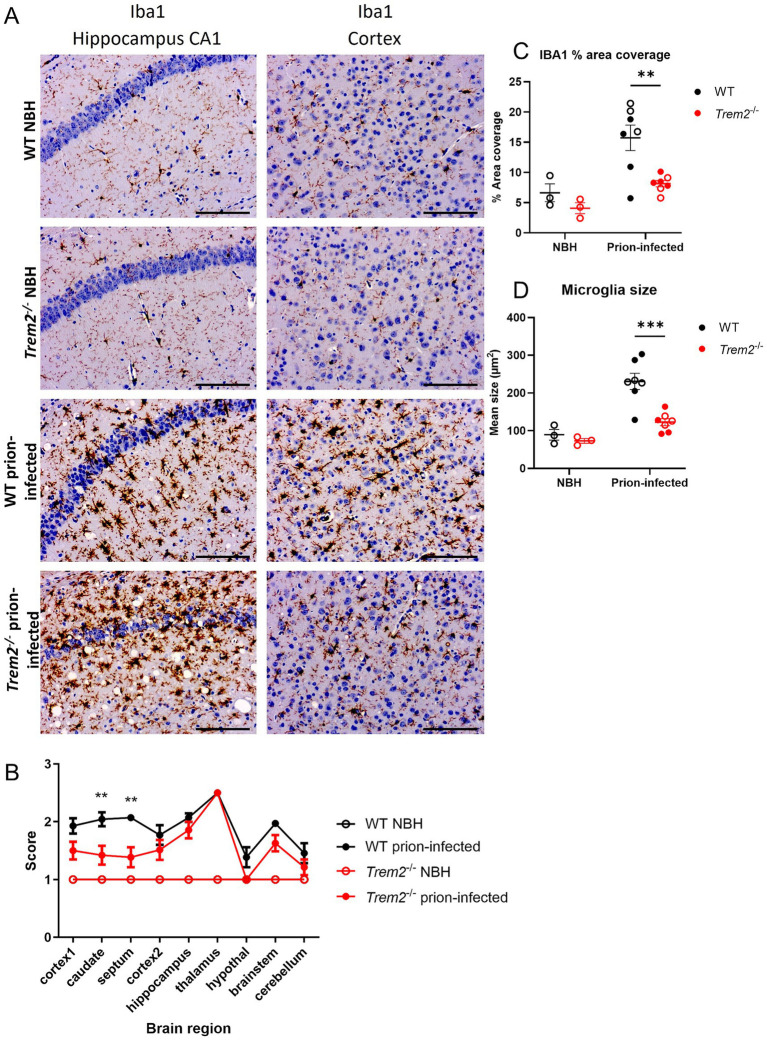 Figure 4
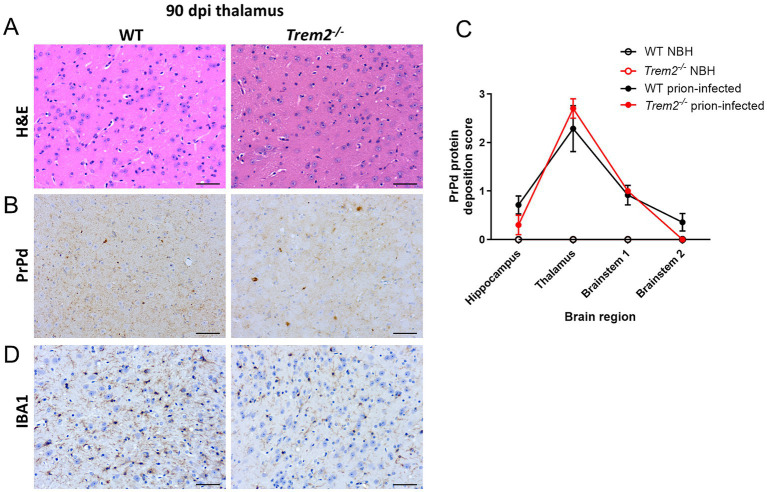 Figure 5
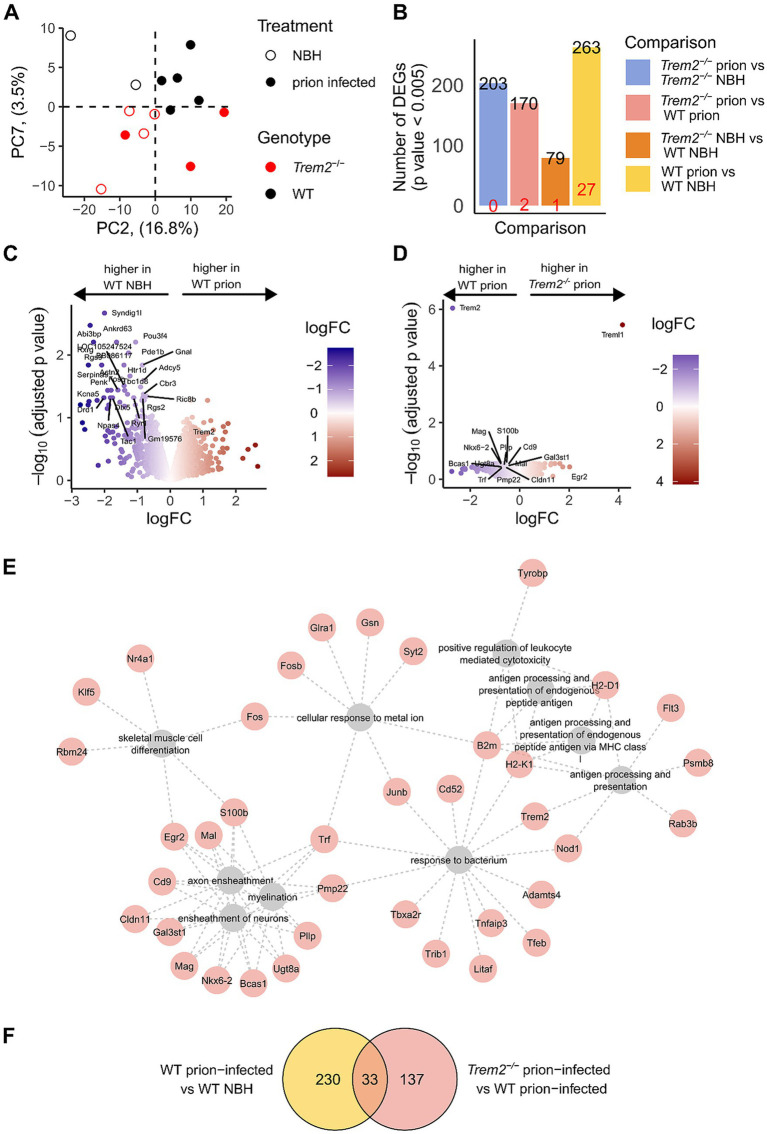 Figure 6
Peer Reviews
No public reviews on file for this paper yet. If you reviewed it on a platform where reviews are public (OpenReview, ICLR, NeurIPS, ICML), you can paste yours below so the community can read it here.
Videos
No videos yet. Explain this paper in a talk, walkthrough, or lecture? Add one.
Taxonomy
TopicsNeuroinflammation and Neurodegeneration Mechanisms · Alzheimer's disease research and treatments · Apelin-related biomedical research