Development of uMUC-1 Targeted NEMO Particles with pH-Activatable MRI Signals for Enhanced Detection of Malignant Breast Cancer Cells
Dhruvi M. Panchal, Alexia R. Gorman, Celia Martinez de la Torre, Barrick M. Silverman, Anthony J. Scalzo, Hunter T. Snoderly, Benoit Driesschaert, Margaret F. Bennewitz

TL;DR
A new MRI contrast agent called EPPT-NEMO was developed to better detect malignant breast cancer cells by targeting them specifically and producing brighter signals than benign cells.
Contribution
The novel contribution is the development of pH-sensitive, receptor-targeted NEMO particles that enhance MRI contrast specifically in malignant breast cancer cells.
Findings
EPPT-NEMO particles produced ∼276% signal enhancement in T47D breast cancer cells compared to ∼57% in benign MCF10A cells.
The particles localized to endosomes and lysosomes, confirming pH-activatable signal generation.
The contrast agent showed potential to improve breast cancer diagnosis accuracy within clinically relevant timeframes.
Abstract
Magnetic resonance imaging (MRI) detects more breast cancers than mammography due to its superior soft tissue contrast; however, it still misdiagnoses 40% of benign tumors as malignant due to clinically used nonspecific contrast agents (e.g., gadolinium chelates). To overcome this limitation, we developed receptor-targeted, pH-sensitive Nano-Encapsulated Manganese Oxide (NEMO) particles as an alternative T1-weighted MRI contrast agent. A breast cancer targeting peptide, EPPT, against underglycosylated mucin-1, promotes preferential endocytosis of NEMO particles by malignant cells and specific activation of the MRI signal inside low pH endosomes/lysosomes. In just 30 min, EPPT-NEMO particles produced rapid and robust T1-weighted MRI contrast inside T47D breast cancer cells that reached ∼276% signal enhancement, which was significantly brighter than MCF10A benign control cells (∼57%…
Genes, proteins, chemicals, diseases, species, mutations and cell lines named across the full text — each resolved to its canonical identifier and authoritative record.
Click any figure to enlarge with its caption.
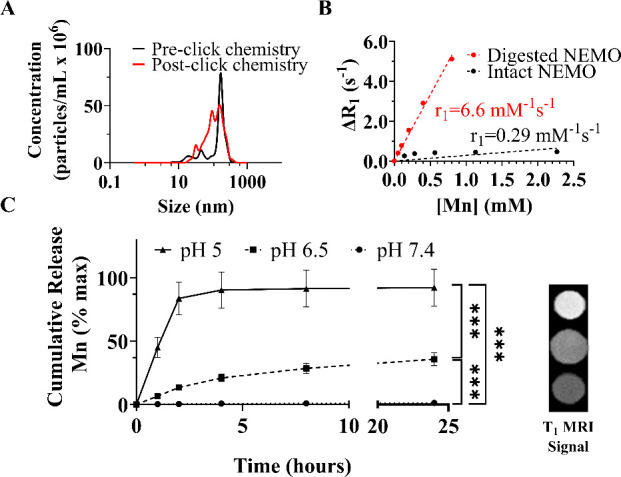 Figure 1
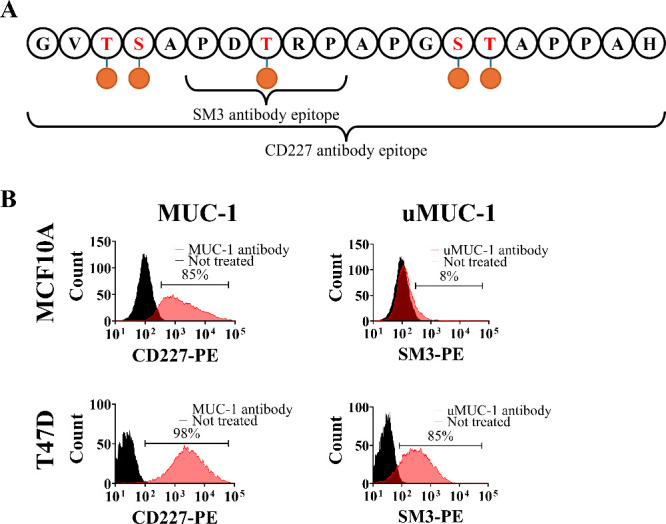 Figure 2
 Figure 3
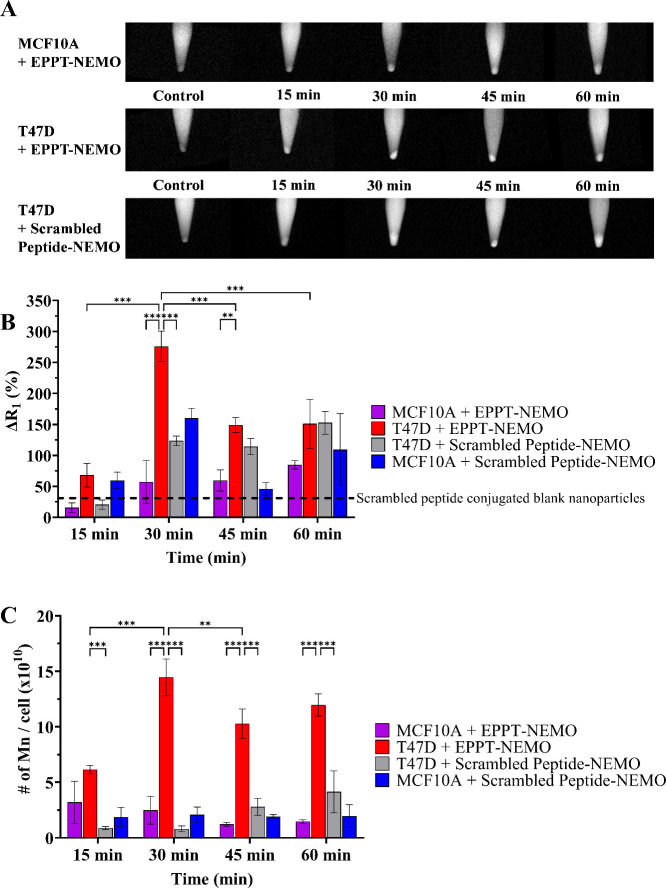 Figure 4
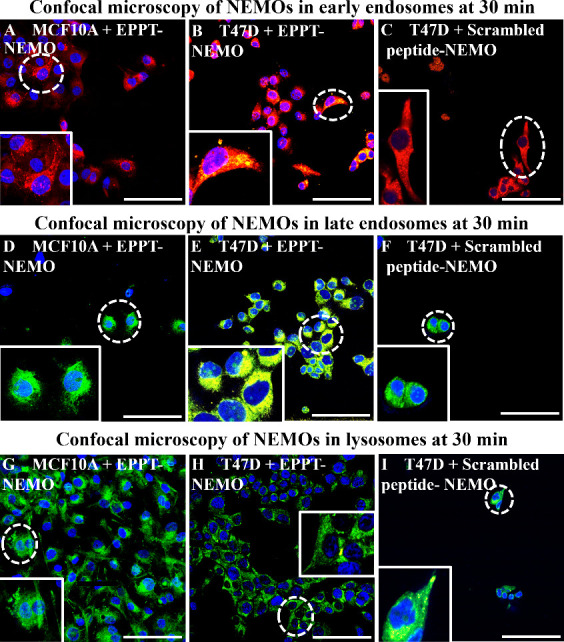 Figure 5
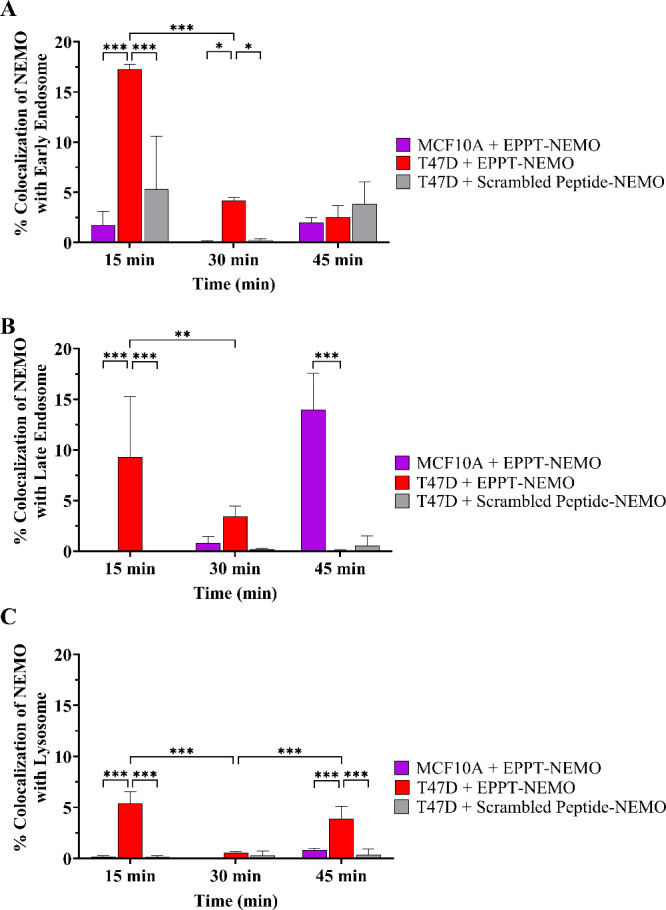 Figure 6
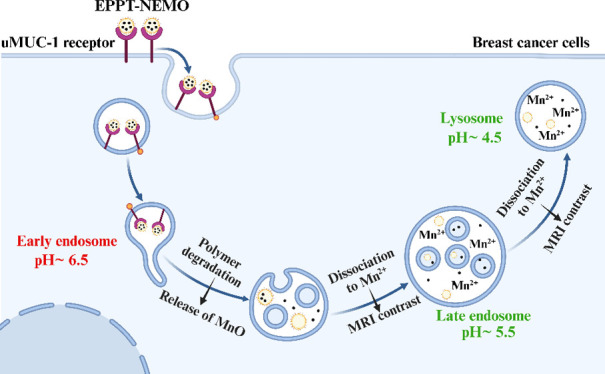 Figure 7
 Figure 8
 Figure 9
 Figure 10
 Figure 11
 Figure 12
Peer Reviews
No public reviews on file for this paper yet. If you reviewed it on a platform where reviews are public (OpenReview, ICLR, NeurIPS, ICML), you can paste yours below so the community can read it here.
Videos
No videos yet. Explain this paper in a talk, walkthrough, or lecture? Add one.
Taxonomy
TopicsNanoparticle-Based Drug Delivery · Advanced biosensing and bioanalysis techniques · Nanoplatforms for cancer theranostics