Fully Oxidized State of the Oxygen-Tolerant [NiFe] Hydrogenase from Hydrogenophilus thermoluteolus SH: A Quantum Mechanics Cluster and Quantum Mechanics/Molecular Mechanics Study
Ravi Kumar, Andrés M. Escorcia, Matthias Stein

TL;DR
This paper uses quantum mechanics to study the oxygen-tolerant [NiFe] hydrogenase enzyme, revealing structural and electronic properties that could help design better hydrogen production catalysts.
Contribution
The study identifies a spin-coupled open-shell singlet ground state and a three-center two-electron bond in the oxidized [NiFe] hydrogenase active site.
Findings
The fully oxidized [NiFe] hydrogenase ground state is a spin-coupled open-shell singlet (BS) Ni(III)Fe(III) oxidation state.
A three-center two-electron bond at the active site enhances the enzyme's stability under oxidative conditions.
QM/MM methods provide insights into suitable models for studying metalloproteins.
Abstract
The oxygen tolerance of some [NiFe] hydrogenase enzymes is crucial for designing efficient bioinspired catalysts for sustainable hydrogen production and advancing renewable energy technologies. To investigate this, we employed a quantum mechanical (QM) cluster model and quantum mechanics/molecular mechanics (QM/MM) calculations to study the fully oxidized state of the [NiFe]-hydrogenase from Hydrogenophilus thermoluteolus SH. Our analysis focused on the structural and electronic properties of the enzyme’s active site across different spin states, including closed-shell singlet (CS, S = 0), high-spin triplet (HS, S = 1), and open-shell singlet broken symmetry (BS, S = 0). Using a comprehensive structural model (>300 atoms), we identified the ground state of the fully oxidized enzyme state to be a spin-coupled BS Ni(III)Fe(III) oxidation state, where residues beyond the first coordination…
Genes, proteins, chemicals, diseases, species, mutations and cell lines named across the full text — each resolved to its canonical identifier and authoritative record.
Click any figure to enlarge with its caption.
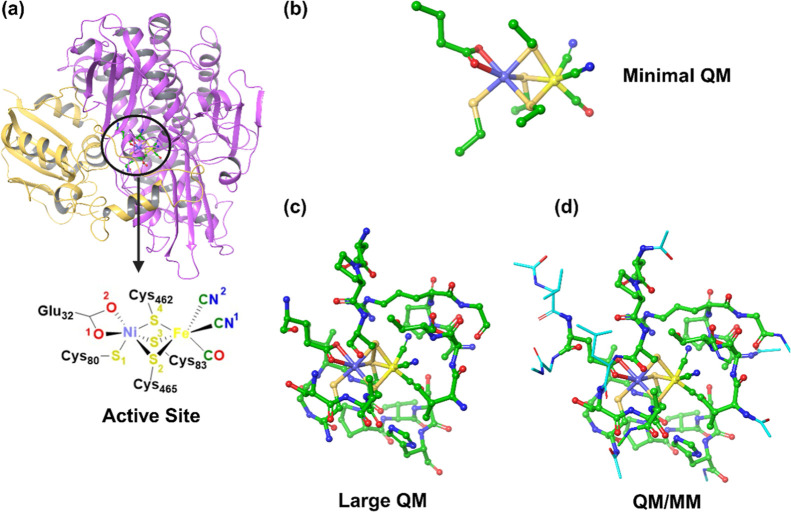 Figure 1
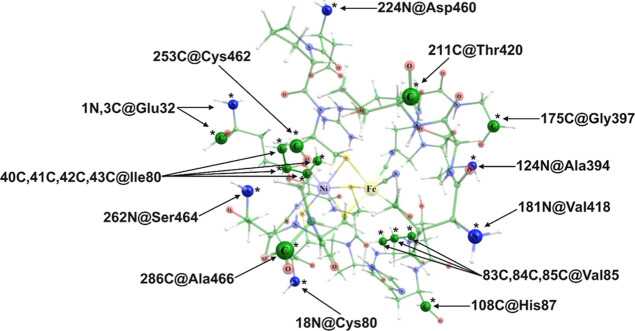 Figure 2
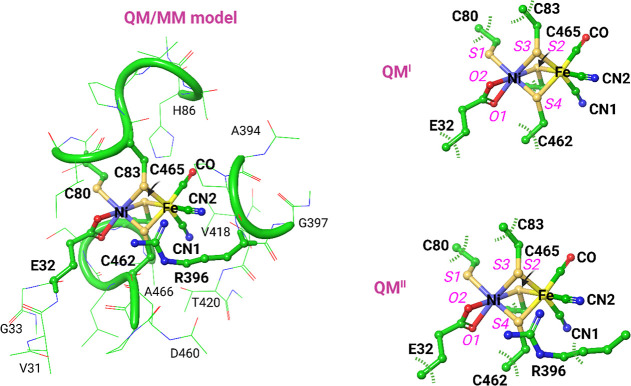 Figure 3
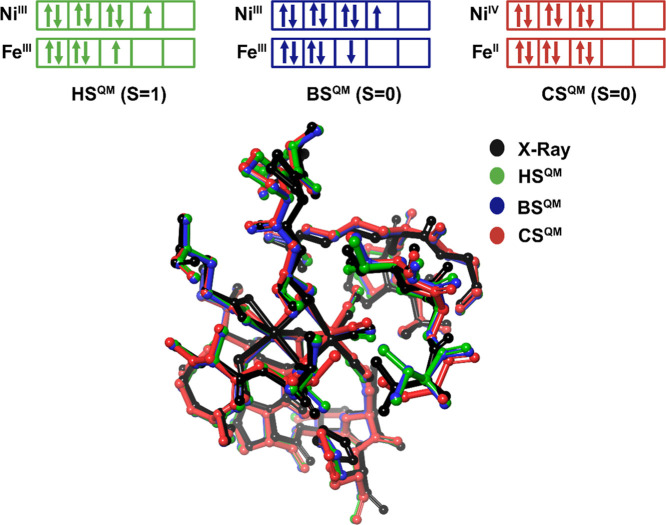 Figure 4
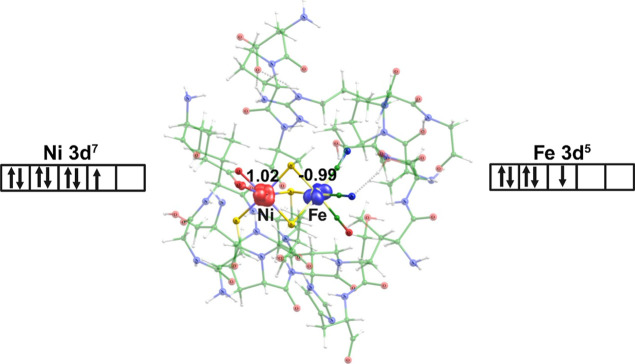 Figure 5
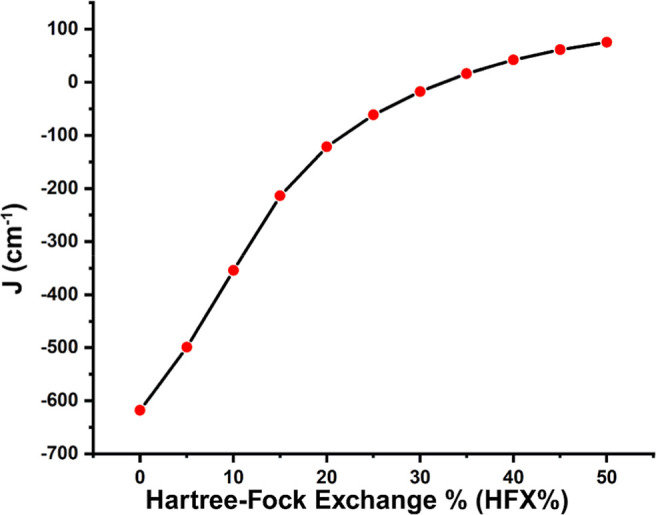 Figure 6
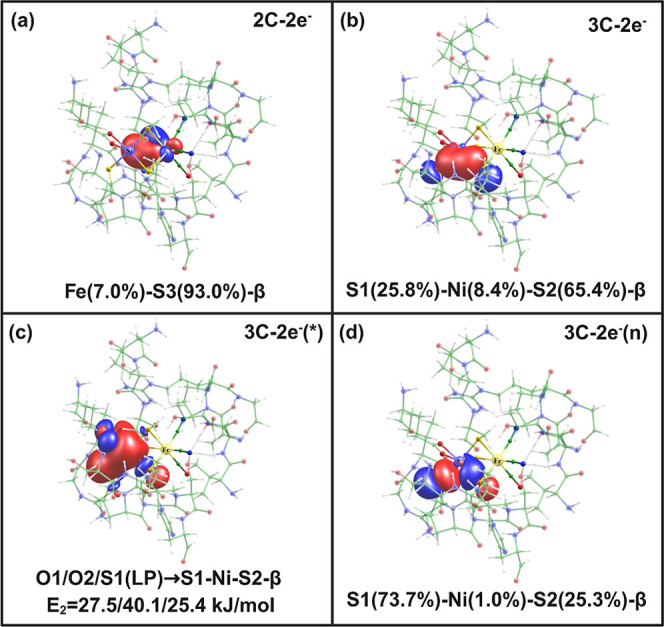 Figure 7
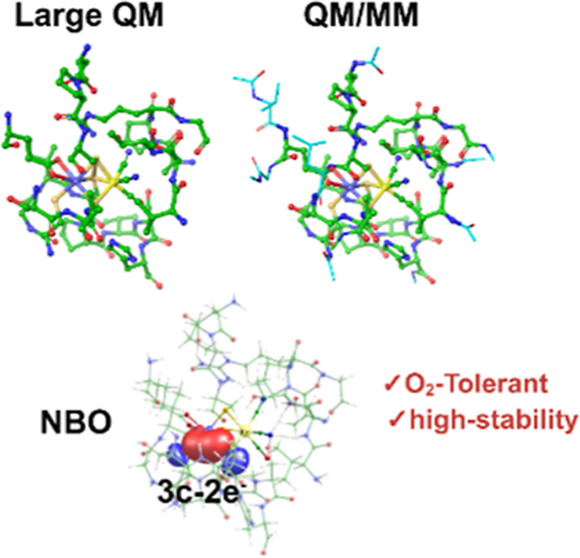 Figure 8
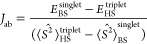 Figure 9
 Figure 10
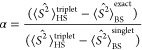 Figure 11
 Figure 12
Peer Reviews
No public reviews on file for this paper yet. If you reviewed it on a platform where reviews are public (OpenReview, ICLR, NeurIPS, ICML), you can paste yours below so the community can read it here.
Videos
No videos yet. Explain this paper in a talk, walkthrough, or lecture? Add one.
Taxonomy
TopicsMetalloenzymes and iron-sulfur proteins · Hydrogen Storage and Materials · Electrocatalysts for Energy Conversion