Evaluating the between-day reliability and likelihood of change of a test battery incorporating vastus lateralis muscle thickness, ankle-brachial pressure index, maximal voluntary torque, and six-minute walk test in patients with claudication
Thomas Parkington, David Broom, Thomas Maden-Wilkinson, Shah Nawaz, Markos Klonizakis

TL;DR
This study assesses the reliability of a test battery for monitoring patients with claudication, finding it highly reliable for tracking changes in muscle thickness, ABI, torque, and walking distance.
Contribution
The study introduces a reliable test battery for claudication patients to monitor therapeutic interventions with minimal measurement error.
Findings
VL-MT, ABI, MVT, and 6MWT showed excellent between-day reliability with ICC values above 0.95.
Minimum likely changes were calculated for each test to distinguish true changes from measurement error.
The test battery is suitable for evaluating the effectiveness of exercise and therapeutic interventions in claudication patients.
Abstract
The study aims to evaluate the between-day reliability of a proposed test battery for patients with claudication that can be used for monitoring the effectiveness of exercise interventions and other therapeutic strategies tailored to this patient population. Twenty-five men with claudication were recruited. The test battery consisted of the Vastus Lateralis muscle thickness (VL-MT), ankle-brachial pressure index (ABI), unilateral isometric knee extension maximal voluntary torque (MVT) and 6-minute walk test (6MWT). A single investigator conducted the tests for each patient on two separate testing sessions (T1 and T2) 5–7 days apart. Good to excellent reliability was observed for VL-MT (ICC = 0.95, 95% LOA = ±3.10 mm, SEM = 0.81 mm), ABI (ICC = 0.97, 95% LOA = ±0.10, SEM = 0.02), MVT (ICC = 0.97, 95% LOA = ±24.0 N·m, SEM = 6.31 N·m), 6MWT distance (ICC = 0.99, 95% LOA = ±39.6 m, SEM =…
Genes, proteins, chemicals, diseases, species, mutations and cell lines named across the full text — each resolved to its canonical identifier and authoritative record.
Click any figure to enlarge with its caption.
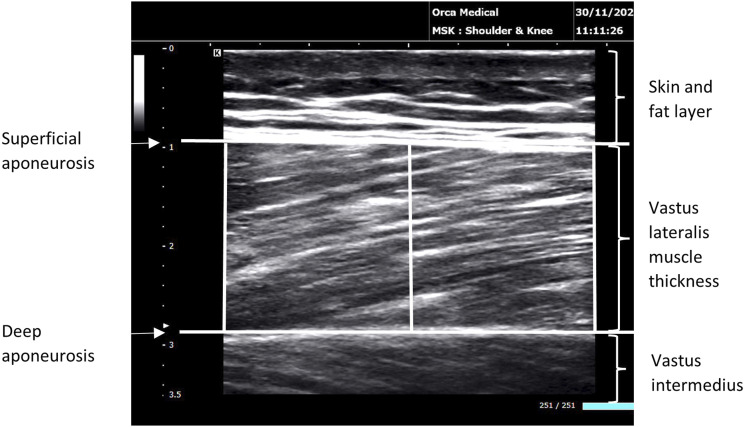 Figure 1
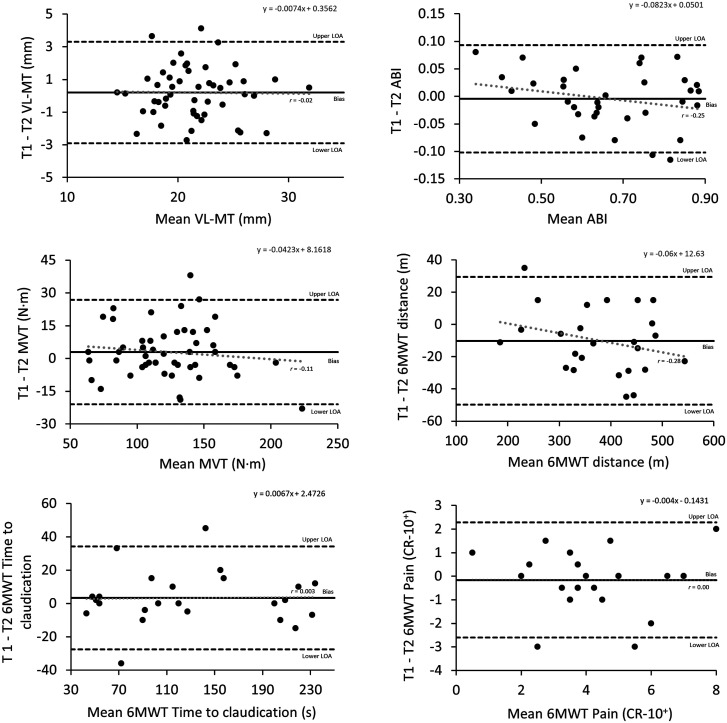 Figure 2
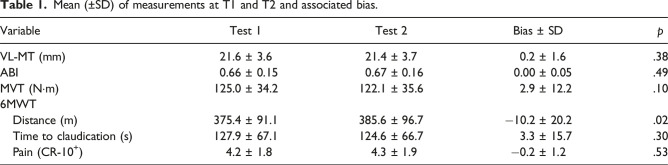 Figure 3
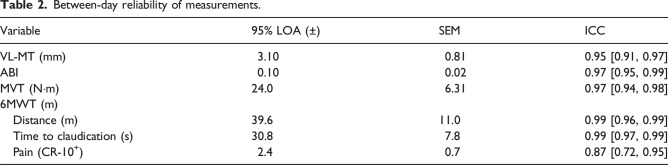 Figure 4
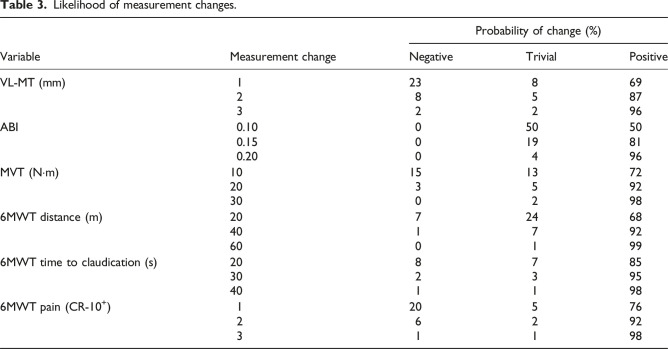 Figure 5
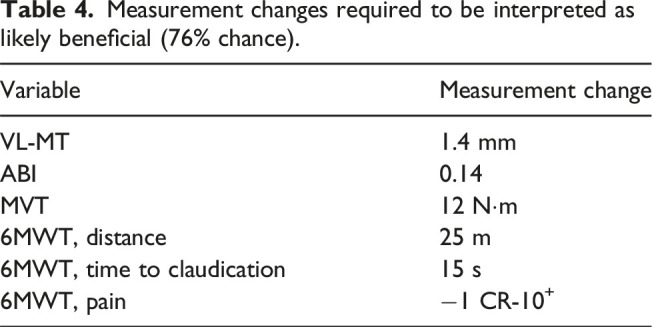 Figure 6
Peer Reviews
No public reviews on file for this paper yet. If you reviewed it on a platform where reviews are public (OpenReview, ICLR, NeurIPS, ICML), you can paste yours below so the community can read it here.
Videos
No videos yet. Explain this paper in a talk, walkthrough, or lecture? Add one.
Taxonomy
TopicsPeripheral Artery Disease Management · Stroke Rehabilitation and Recovery · Musculoskeletal pain and rehabilitation