AI-assisted identification of disability patterns within identical EDSS grades
Martina Greselin, Po-Jui Lu, Magdalena Mroczek, Nuria Cerdá-Fuertes, Anastasios Demirtzoglou, Athina Papadopoulou, Jens Kuhle, David Leppert, Sophie Arnould, Manar Aoun, Ludwig Kappos, Cristina Granziera, Marcus D’Souza

TL;DR
AI helps identify different disability patterns in MS patients with the same EDSS score, revealing more detailed insights into their conditions.
Contribution
Applying AI to clinical data to distinguish subscore patterns within identical EDSS grades in multiple sclerosis.
Findings
EDSS scores ⩾4.0 can be differentiated into four distinct subscore patterns using AI clustering.
Machine learning algorithms revealed diverse disability patterns not captured by traditional EDSS assessments.
The approach utilized high-quality clinical data from the EXPAND trial to identify new subscore patterns.
Abstract
The Neurostatus-Expanded Disability Status Scale (EDSS) is the most frequently used measure of disability in multiple sclerosis (MS) trials. However, EDSS scores ⩾4.5 are mainly based on ambulation and may fail to capture relevant disability patterns in other functional domains. The objective was to determine how assessments categorized with the same EDSS score may reflect distinct disability patterns. We analysed 13,103 assessments from 1636 people with secondary progressive MS, from the EXPAND trial. The data set is composed of Functional System scores (FSS) and their corresponding subscores, Ambulation scores and EDSS scores. We performed a descriptive analysis to define the relevant Functional Systems (FS). The subscores were then binarized based on the Neurostatus definition and grouped by respective EDSS scores. Finally, we applied two consecutive machine learning algorithms, to…
Genes, proteins, chemicals, diseases, species, mutations and cell lines named across the full text — each resolved to its canonical identifier and authoritative record.
Click any figure to enlarge with its caption.
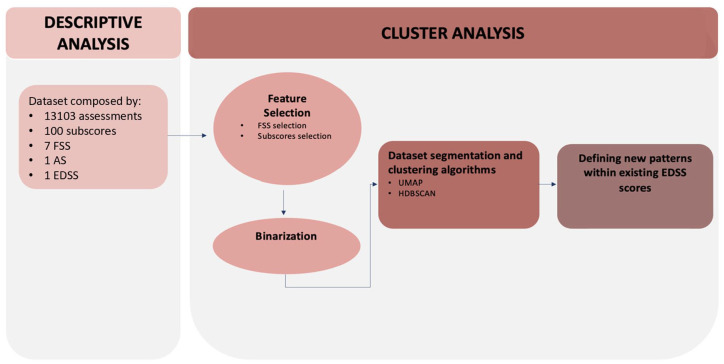 Figure 1
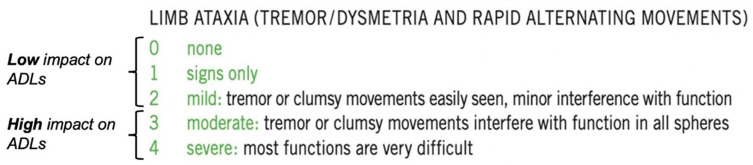 Figure 2
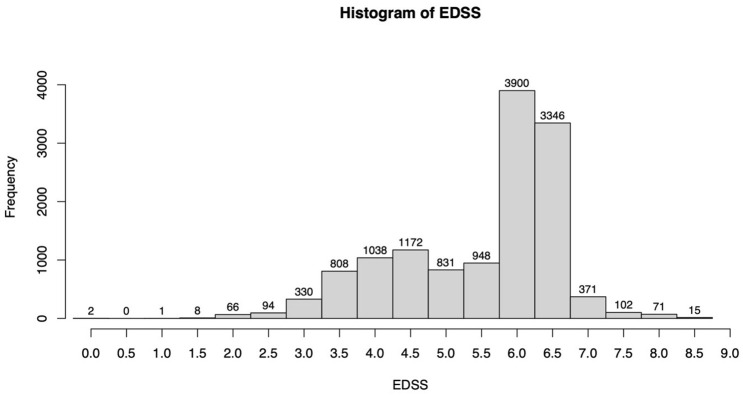 Figure 3
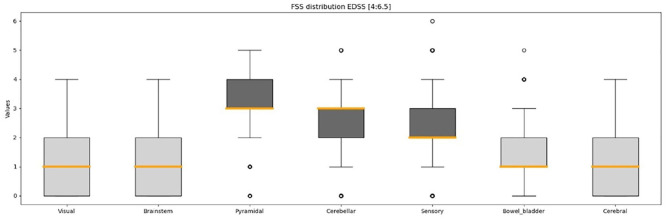 Figure 4
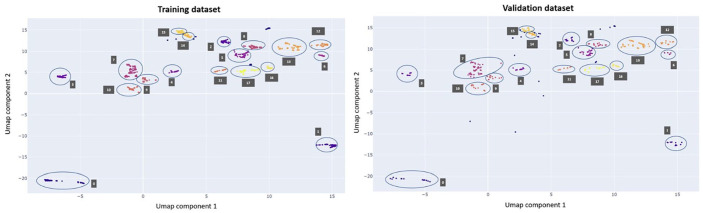 Figure 5
 Figure 6
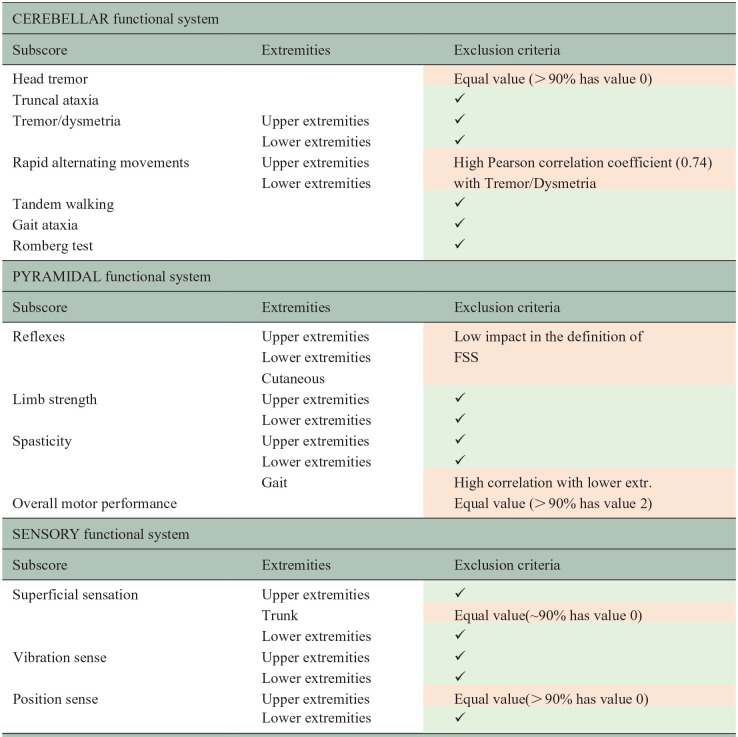 Figure 7
 Figure 8
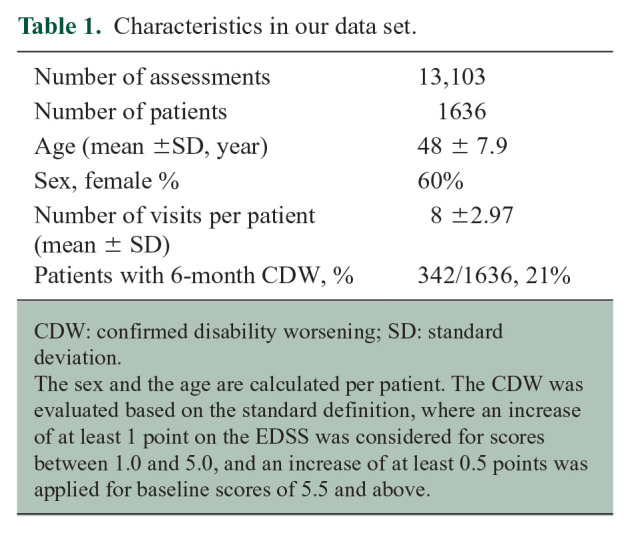 Figure 9
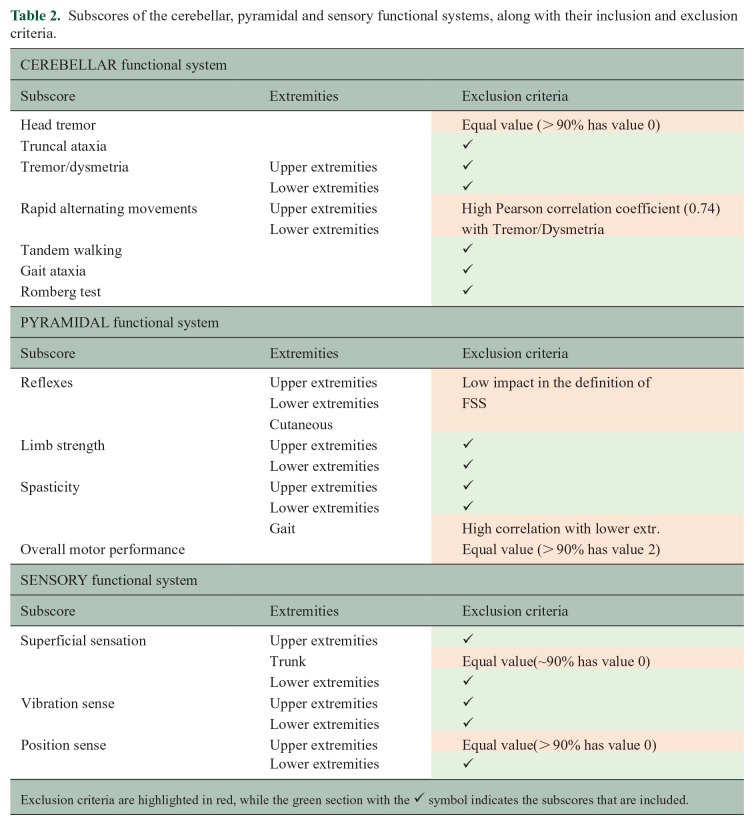 Figure 10
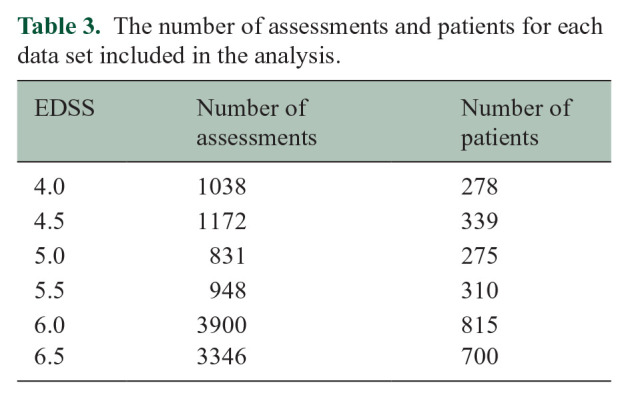 Figure 11
 Figure 12
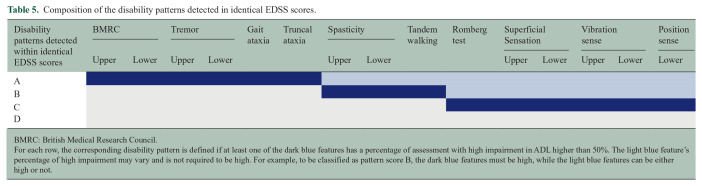 Figure 13
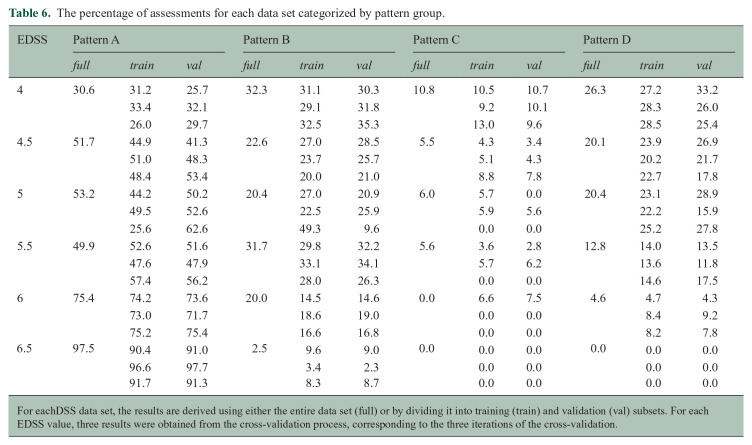 Figure 14
Peer Reviews
No public reviews on file for this paper yet. If you reviewed it on a platform where reviews are public (OpenReview, ICLR, NeurIPS, ICML), you can paste yours below so the community can read it here.
Videos
No videos yet. Explain this paper in a talk, walkthrough, or lecture? Add one.
Taxonomy
TopicsMultiple Sclerosis Research Studies · Systemic Sclerosis and Related Diseases