Uncertainty Estimation for Dual View X-ray Mammographic Image Registration Using Deep Ensembles
William C. Walton, Seung-Jun Kim

TL;DR
This paper introduces deep ensemble techniques to estimate uncertainty in dual-view mammographic image registration, helping clinicians better assess lesion correspondence.
Contribution
The novel contribution is the use of deep ensembles with a modified CNN architecture to provide uncertainty estimates for dual-view lesion registration.
Findings
Ensemble-based uncertainty ellipses correlate with registration accuracy in mammographic views.
Uncertainty estimates help reduce false alarms in computer-aided detection by matching CC/MLO lesion detects.
The techniques improve diagnostic capability by aiding multi-view lesion correspondence.
Abstract
Techniques are developed for generating uncertainty estimates for convolutional neural network (CNN)-based methods for registering the locations of lesions between the craniocaudal (CC) and mediolateral oblique (MLO) mammographic X-ray image views. Multi-view lesion correspondence is an important task that clinicians perform for characterizing lesions during routine mammographic exams. Automated registration tools can aid in this task, yet if the tools also provide confidence estimates, they can be of greater value to clinicians, especially in cases involving dense tissue where lesions may be difficult to see. A set of deep ensemble-based techniques, which leverage a negative log-likelihood (NLL)-based cost function, are implemented for estimating uncertainties. The ensemble architectures involve significant modifications to an existing CNN dual-view lesion registration algorithm. Three…
Genes, proteins, chemicals, diseases, species, mutations and cell lines named across the full text — each resolved to its canonical identifier and authoritative record.
Click any figure to enlarge with its caption.
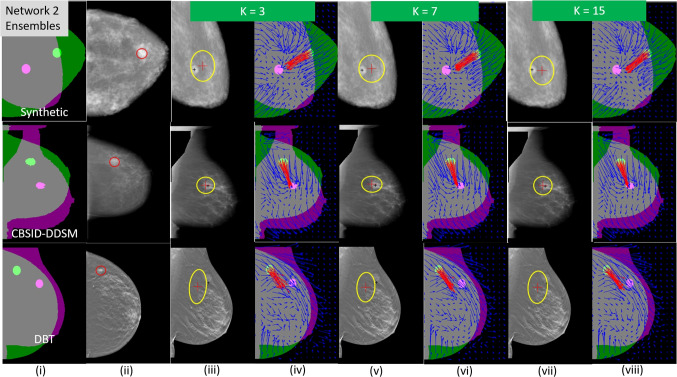 Figure 10
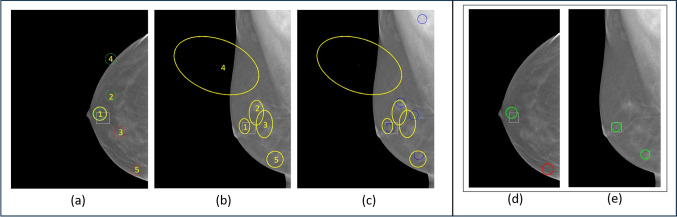 Figure 11
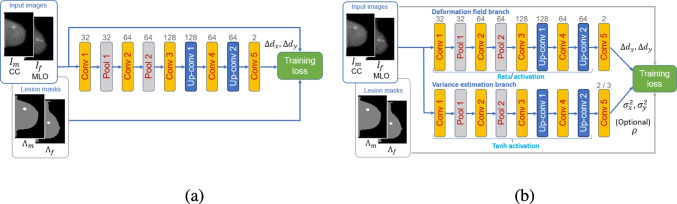 Figure 1
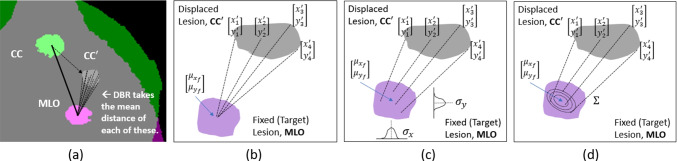 Figure 2
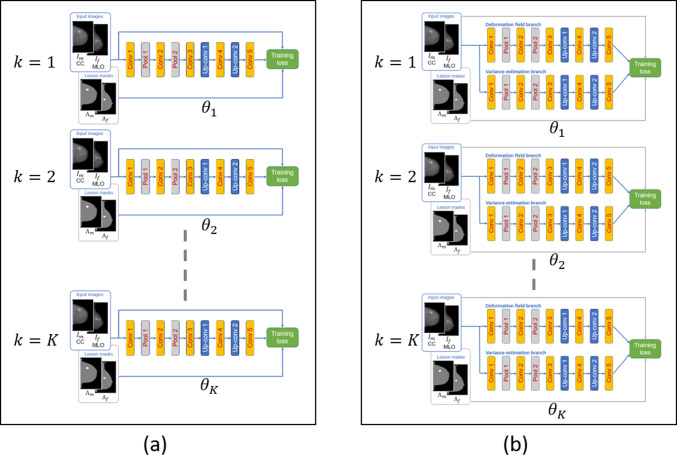 Figure 3
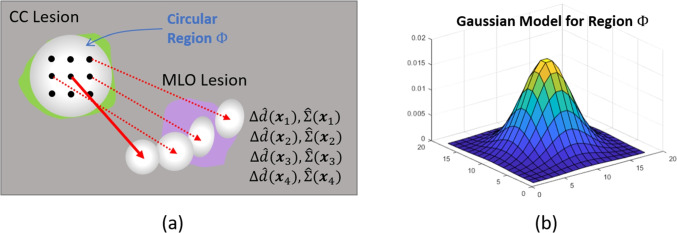 Figure 4
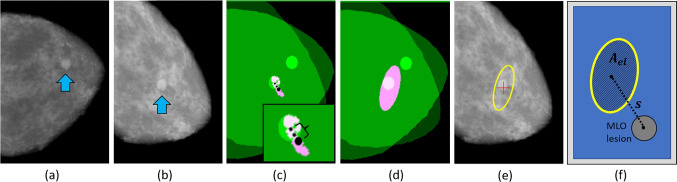 Figure 5
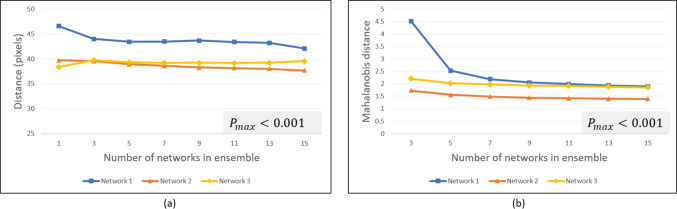 Figure 6
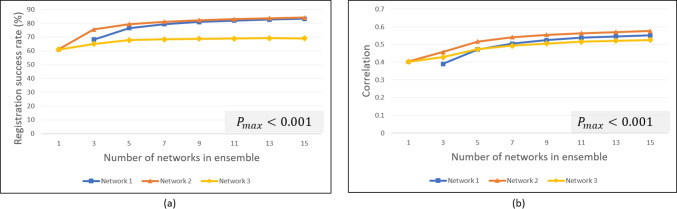 Figure 7
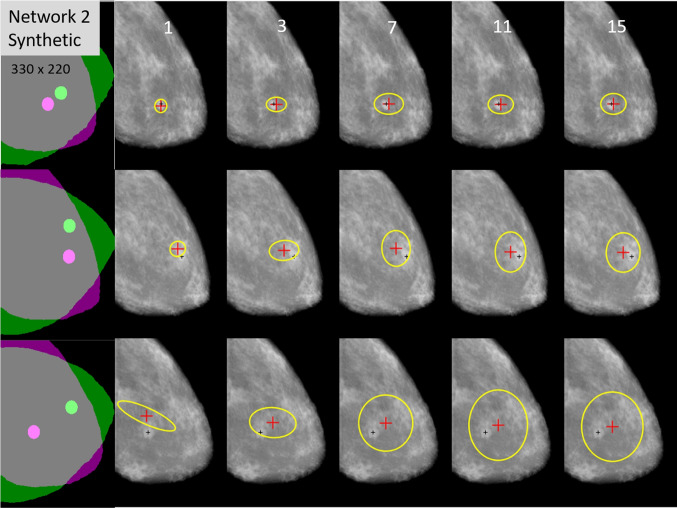 Figure 8
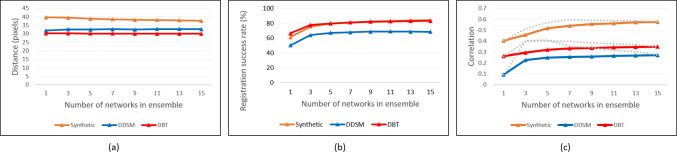 Figure 9
Peer Reviews
No public reviews on file for this paper yet. If you reviewed it on a platform where reviews are public (OpenReview, ICLR, NeurIPS, ICML), you can paste yours below so the community can read it here.
Videos
No videos yet. Explain this paper in a talk, walkthrough, or lecture? Add one.
Taxonomy
TopicsAI in cancer detection · Medical Image Segmentation Techniques · Generative Adversarial Networks and Image Synthesis